

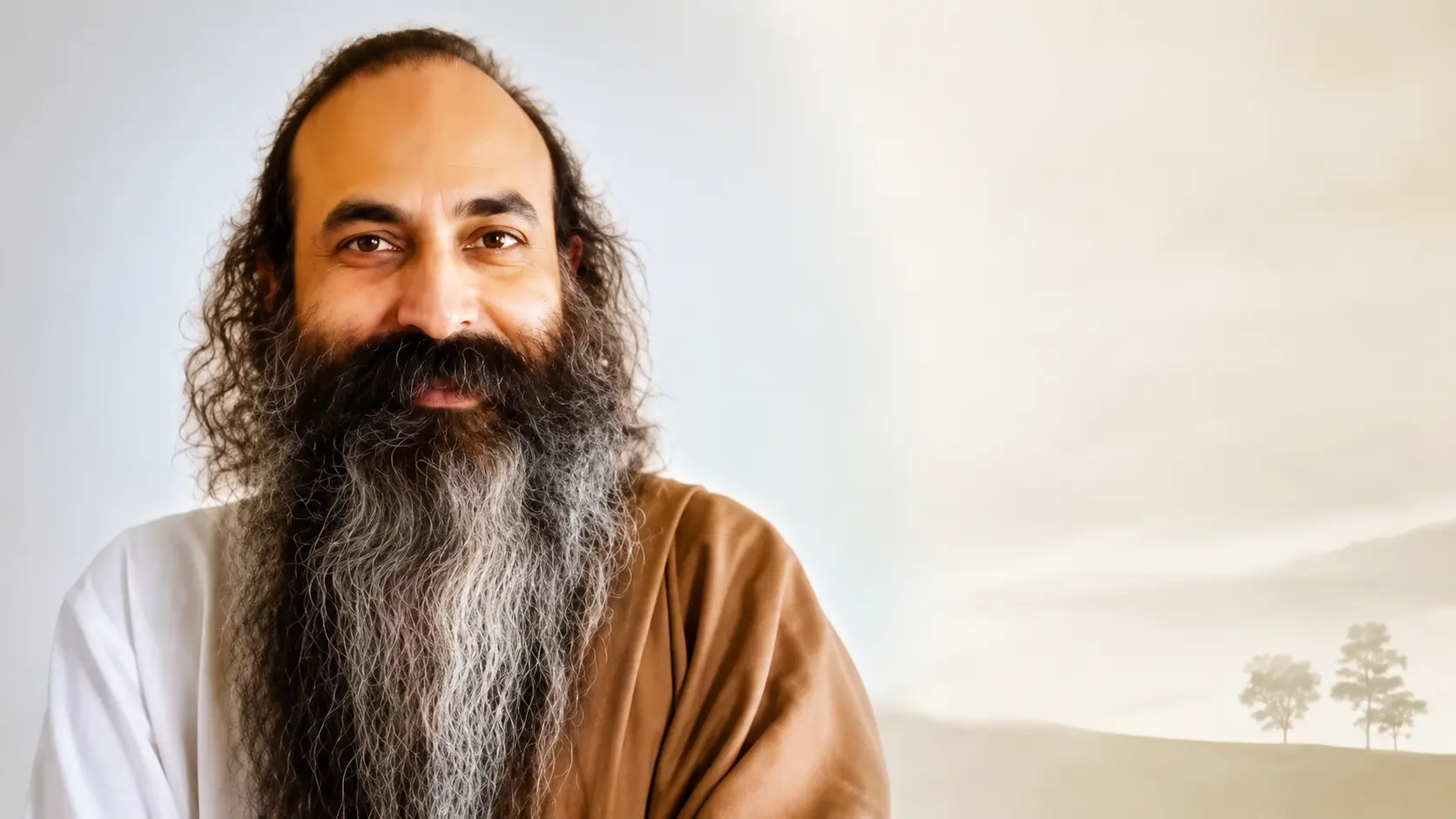
“A spiritual journey is very personal and individual. If we listen to our own truth we’ll find the path designed for us”.
Most corporate success stories follow a recognisable arc: education, career, company, recognition, more recognition. Sri Anish’s story follows that arc for exactly thirty years — and then takes a turn that very few people in India’s corporate world have made, or had the courage to make.
In 2007, Sri Anish was at the peak of what the corporate world considers success. He had co-founded People Strong, an HR solutions company that was building genuine market relevance. He had an MBA, a track record of serial entrepreneurship, and the social applause that accompanies both. By most measures, the story was going exactly as planned.
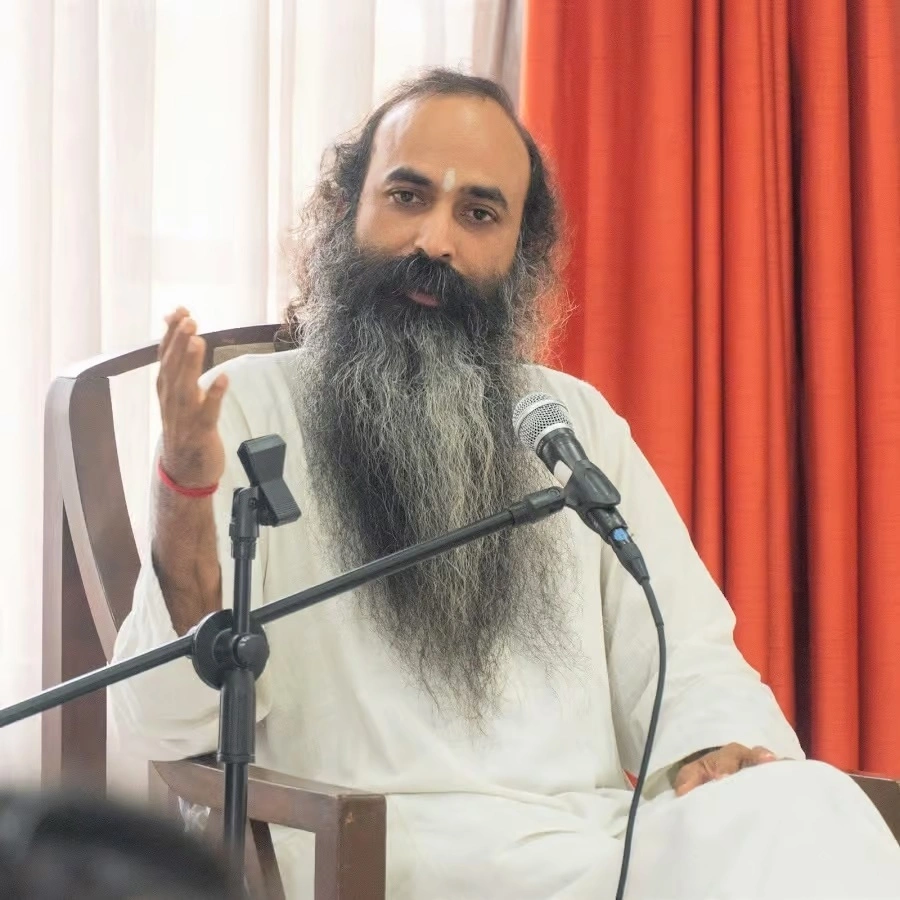
Then he left. Not for another company, not for a sabbatical, not for a startup in a new sector. He went to the Himalayas. And he stayed there for ten years.
The question nobody asks: why would you leave?
It is the question that hangs over Sri Anish’s story for anyone who encounters it through a corporate lens: why would someone at the peak of their career, with a functioning company and a promising future, walk away from all of it?
The honest answer, as Sri Anish has spoken about publicly, is that the pull toward the Himalayas was not a reaction to failure. It was a response to a series of what he describes as mystical experiences that had been occurring since childhood and that were becoming impossible to ignore. The corporate success was real. The social recognition was real. And so was the persistent awareness that none of it was answering a deeper question about the nature of consciousness, the purpose of human existence, and the disconnect between external achievement and internal coherence.
This is not a story about burnout. It is a story about a very specific kind of clarity — the clarity that arrives when the external achievements have been secured and the internal work has not yet begun.
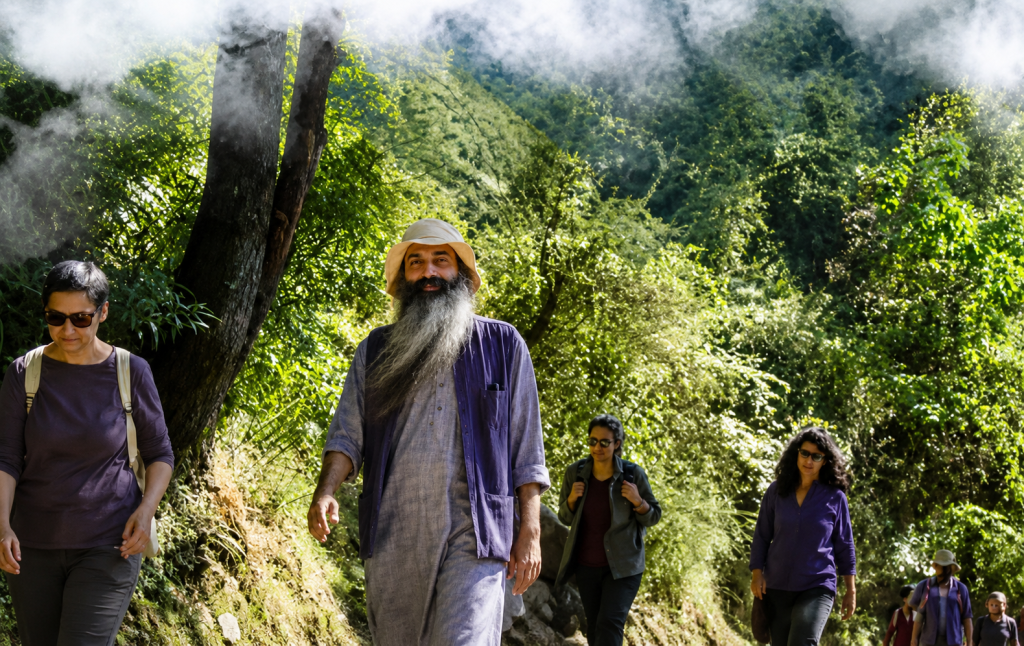
Ten years in the Himalayas: what sadhana actually means
Sri Anish’s decade in the Himalayas was not a retreat from the world in any passive sense. It was an intensive engagement with a different kind of knowledge system — one that India has been producing for thousands of years and that the corporate world rarely has language for.
He studied across multiple spiritual traditions, learned from teachers both ancient and contemporary, and spent extended periods in solitude retreats. The specific practice is called sadhana — a Sanskrit term that translates roughly as disciplined spiritual practice, but whose actual content spans meditation, chanting, philosophical inquiry, and the gradual dissolution of the mental formations that most people spend their lives reinforcing.
In 2019, after a decade of this work, Sri Anish was guided — as he describes it — to return to the world. Not to return to the corporate world exactly, but to bring what he had found there back into contact with it. He founded Saadho Sangha in Dharamshala, a community of spiritual aspirants, and became its CEO. The title is intentionally ironic and intentionally not ironic: Sri Anish understands organisations, and he understands that vision without structure does not scale.
He also built a Shiva temple and meditation space in Dharamshala. Wrote and published his first book, Let the Mud Settle. Initiated the production of Sone Ki Chidiya, a web series on conscious living, whose first two episodes on YouTube impressed Doordarshan enough that the national broadcaster commissioned the full series. And he began travelling — to corporate boardrooms, leadership retreats, and youth programs — carrying a set of ideas that are difficult to reduce to a slide deck but remarkably easy to absorb when delivered in person.
What Sri Anish’s triangular model of transformation means in practice
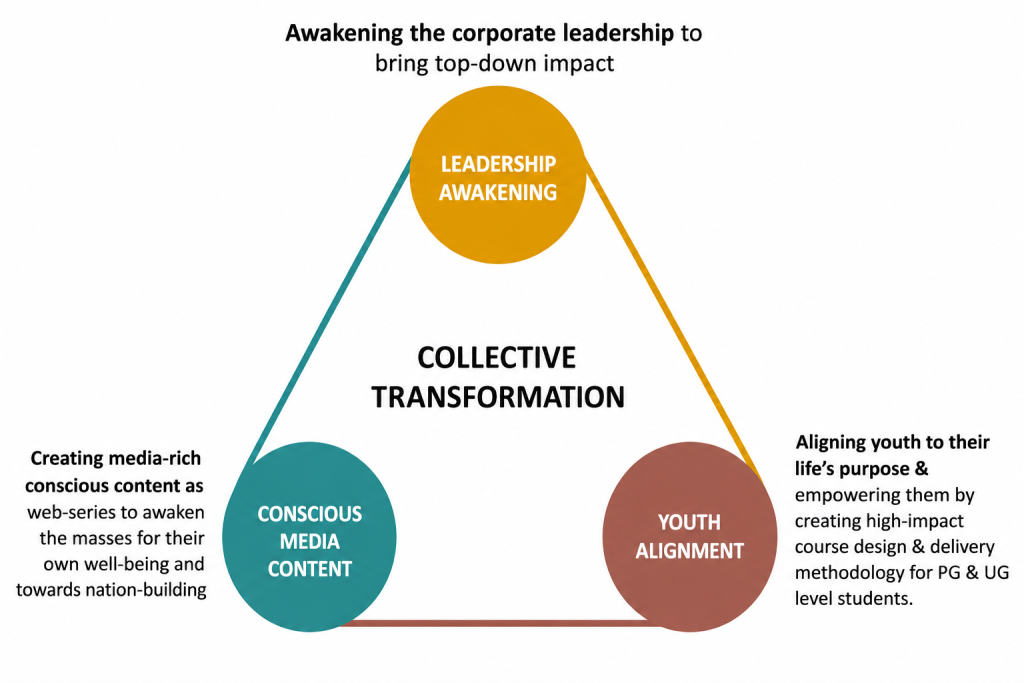
Sri Anish operates through what he calls a triangular model of collective transformation. The three points are Corporate Leadership, Youth, and Media. The logic is sequential: if you awaken the leaders at the top of organisations, that change cascades downward. If you align young people to a sense of purpose before the corporate world shapes them in its own image, you change what kind of leaders emerge. And if you create media content that carries these ideas into the mainstream, you change the ambient culture within which both organisations and young people operate.
It is a systems-level approach to change — which is what you would expect from someone who has spent time both building organisations and studying the deeper structures that shape human behaviour. Sri Anish is not anti-corporate. He is pro-consciousness, which is a different thing entirely, and one that corporate leaders often find more actionable than they expect.
Awakening corporate leadership
Sri Anish works directly with senior leadership through retreats, round-table discussions, and keynote sessions. The focus is not on productivity or performance metrics — it is on what he calls awakened leadership: the capacity to lead from a place of genuine clarity about one’s values, purpose, and the impact of one’s decisions on the systems one operates within. For a CXO audience, this is often experienced as both uncomfortable and clarifying, which is the precise combination that produces lasting change.
Aligning youth to purpose
Sri Anish designs and delivers programs for undergraduate and postgraduate students — specifically targeting the moment before career formation hardens into career identity. His argument is that the corporate world is most effectively changed not only at the top but at the entry point: by sending people into organisations who already have a relationship with their own values, rather than people who will spend twenty years trying to find time to develop one.
Creating conscious media
Sone Ki Chidiya — the web series Sri Anish is developing for Doordarshan — is the media arm of the triangular model. The vision is to carry the ideas that emerge from his retreats and talks into the homes of people who will never attend a corporate keynote. Doordarshan’s decision to broadcast the series nationally is both a validation and a scale opportunity that no corporate speaking circuit could replicate.
What Sri Anish brings to a corporate stage that most speakers cannot
There is a category of corporate speaker that is impressive without being useful — who generates applause and produces no observable change in the room. Sri Anish is in a different category, and the reason is specific: he has actually done the thing he talks about.
He did not study consciousness from a distance. He pursued it for a decade, in conditions that required him to give up everything his corporate identity was built on. He is not talking about letting go as an abstract principle. He let go — of a company, of a career, of the social recognition that most people in a corporate audience spend thirty years accumulating.
What this produces on a corporate stage is a particular quality of authority that is difficult to manufacture and impossible to fake. When Sri Anish speaks about the relationship between external achievement and internal coherence, the leaders in the room are listening to someone who has lived the experiment at scale.
At engage4more, Sri Anish’s sessions consistently produce what we test every speaker against: the Monday Morning Rule. A room that walks away from his session is not just moved — it is changed in some specific way that shows up in how people approach their work the following week. If you are building a leadership event where the brief is genuine transformation rather than entertainment, Sri Anish is among the most precisely suited speakers on our roster for that brief. Browse his full profile and session formats on our Sri Anish speaker page.
Considering Sri Anish for your next leadership retreat, offsite, or annual event? Availability and session formats are on his speaker profile page. Alternatively, contact engage4more’s team directly — we will respond with availability, session options, and transparent pricing within 3 hours. Since 2010, 5,000+ events. Every recommendation goes through the STRIVE framework before it reaches you.
Frequently asked questions about Sri Anish
Who is Sri Anish?
Sri Anish is a spiritual teacher, author, and keynote speaker based in Dharamshala, India. Before his spiritual journey, he co-founded People Strong, an HR solutions company, and built a corporate career in entrepreneurship and business leadership. In 2007, at 30, he left corporate life for the Himalayas, where he spent a decade in intensive spiritual practice. He returned to public life in 2019, founding Saadho Sangha and beginning his work as a speaker and mentor for corporate leaders and youth. His first book, Let the Mud Settle, was published in 2021.
What does Sri Anish speak about at corporate events?
Sri Anish’s corporate sessions focus on what he calls awakened leadership — the intersection of high performance and inner clarity. His talks address the specific tension that senior leaders experience between external success and internal coherence: why achievement alone does not produce fulfilment, how dharmic principles apply to business decision-making, and what it looks like to lead an organisation from a place of genuine purpose rather than reactive pressure. He is particularly effective at leadership retreats, annual day events, and CXO conclaves where the brief is depth rather than entertainment.
How do I book Sri Anish for a corporate event?
Sri Anish is available to book through engage4more. Visit his speaker profile page to fill out an enquiry form, or contact the engage4more team directly at activities@engage4more.com or +91-8044186906. We will confirm availability and send a detailed proposal within 3 hours of receiving your brief.
What makes Sri Anish’s story relevant to a corporate audience?
Most speakers who address corporate audiences talk about success. Sri Anish is rare in having deliberately walked away from it — and spent a decade finding out what was on the other side. His story is directly relevant to a corporate audience because it addresses the question that many senior leaders carry privately: what is all this for? He does not provide a religious answer to that question. He provides a human one, grounded in direct experience and articulated in contemporary language that corporate leaders find accessible rather than alienating.