

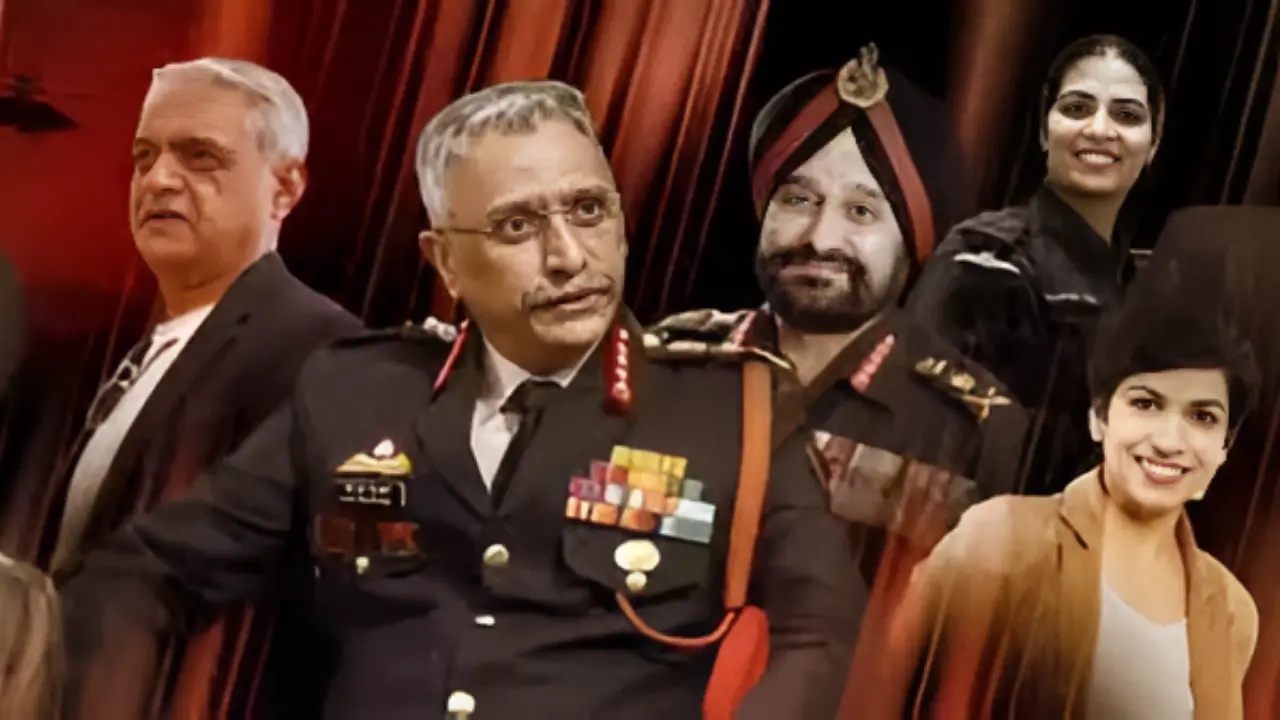
Timeless wisdom from lifelong experiences of the veterans in uniform
There is a kind of leadership knowledge that cannot be acquired in a classroom, a case study, or a 360-degree feedback report. It is the kind that comes from making a decision when the decision has irreversible consequences for people you are responsible for — and when the information you have is incomplete, the time you have is short, and the cost of being wrong is not a missed quarter but something that cannot be undone.
The veterans below are available to speak at your corporate event through engage4more. If one of their stories maps to a challenge your team is facing, browse the full roster and check availability on our army veteran speakers page. Every speaker has been STRIVE-vetted by engage4more’s team before being recommended to a client.
India’s army, navy, and air force have been producing leaders of this kind for generations. What distinguishes the officers below is not their rank or their medals — it is the specific quality of the decisions they made and the specific insight those decisions produced. At engage4more, we have placed several of these voices on corporate stages over 15 years. The lessons they carry are not motivational in the generic sense. They are functional — they describe, specifically, how to lead when the conditions are genuinely hard.
Below are eight of those lessons, drawn from eight officers whose careers produced them. This is not a ranking. It is a reading list.
On authority, ambiguity, and the will to move when nothing is certain
The first cluster of lessons addresses the conditions that most corporate leaders find most disorienting: when the authority of position is insufficient, when the situation is genuinely unclear, and when the only option is to act without the certainty you were trained to require.
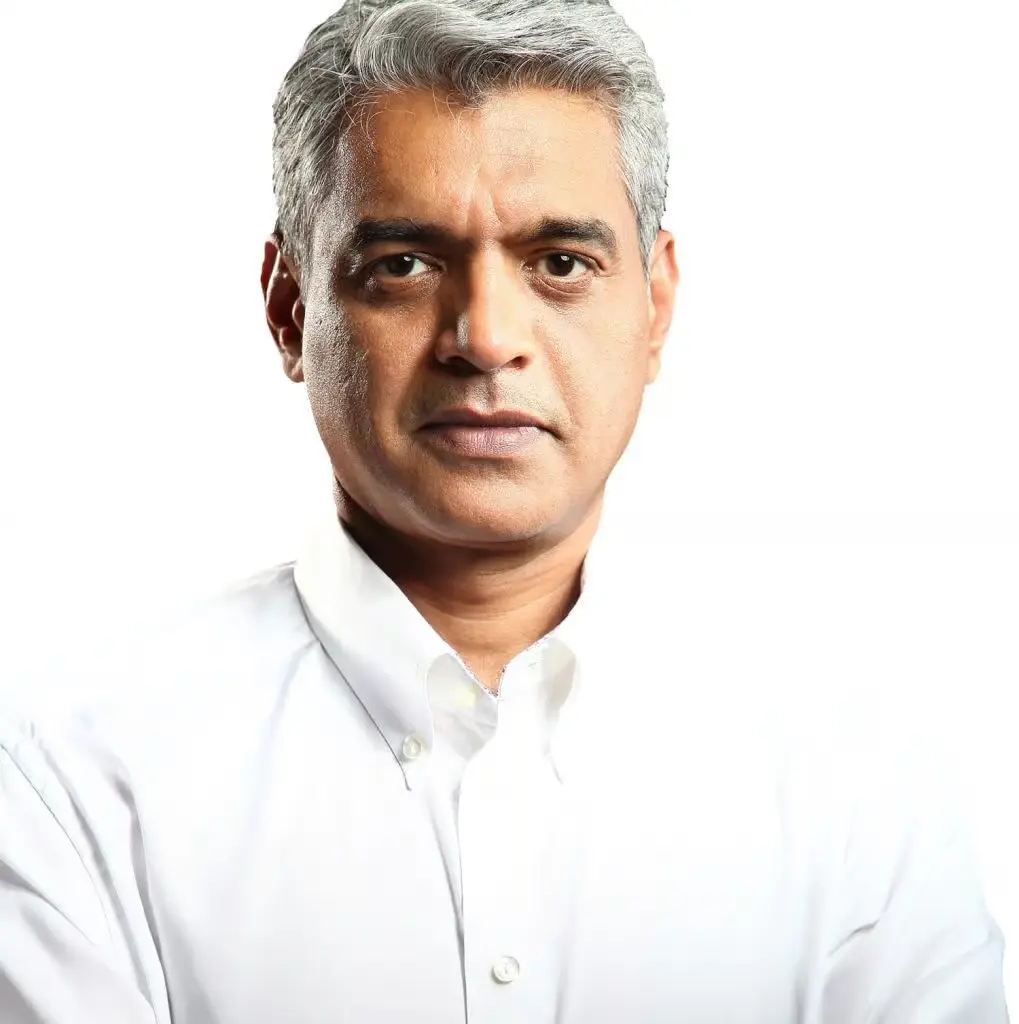
1. Capt. Raghu Raman
“When people want to follow you, they give you their best. When they only have to follow you, they give you the minimum.”
Capt. Raghu Raman’s career is unusual in the specificity of its parallel tracks. More than a decade in the Indian Armed Forces. Another decade as CEO of three companies in the Mahindra Group. Several years advising the Government of India on national security. He has, in other words, led across every context where authority operates differently — the military hierarchy, the corporate structure, and the government apparatus. The conclusion he has drawn from all three is consistent: the leaders who produce the best outcomes are not the ones whose authority is most unambiguous. They are the ones whose people genuinely choose to follow them.
The leadership lesson: Authority granted by position produces compliance. Authority earned by character produces commitment. The workforce of the coming decade will not distinguish between the two as patiently as previous generations did.
What they bring to a corporate stage: Capt. Raghu Raman is the speaker for leadership teams grappling with the management of younger, more autonomous workforces — particularly organisations where the traditional command-and-control model is visibly losing effectiveness. He speaks from lived experience across three of India’s most demanding institutional environments, not from theory.
View Capt. Raghu Raman’s full profile and check availability
2. Major D.P. Singh
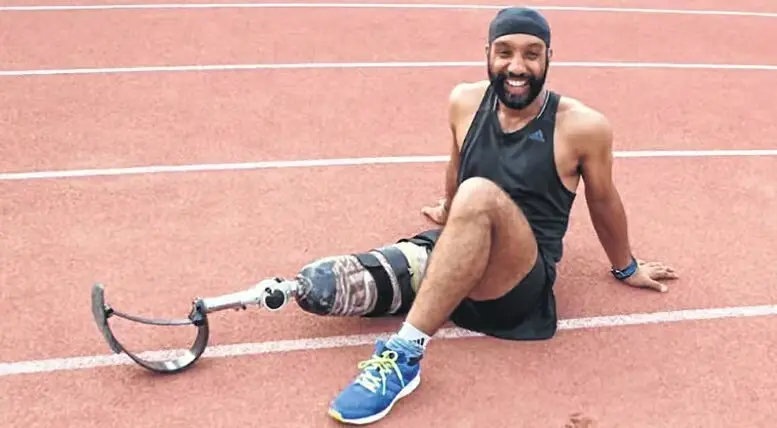
“If you ever wish to give up anything, give up giving up.”
In July 1999, during the Kargil War, Major D.P. Singh was declared dead in an army hospital. He was revived. Three days later, he was told his right leg would be amputated below the knee because gangrene had set in from shrapnel wounds. His response, as he has described it publicly, was not grief. It was a decision: ‘Now I will show the world how disabled people live.’ He ran his first marathon on a prosthetic leg in 2009. He has since completed multiple marathons and half-marathons, becoming India’s first blade runner — an athlete who competes on a carbon-fibre prosthetic blade. He has been recognised by the Limca Book of Records for completing a half-marathon as a war-disabled soldier.
The leadership lesson: Ambiguity is not the enemy of action. The refusal to act under ambiguity is. The only response to a situation where the path is unclear is to take the next step and update from there.
What they bring to a corporate stage: Major D.P. Singh is the speaker for teams navigating a crisis with no clear endpoint — a restructuring, a market contraction, a product failure with no obvious recovery path. He does not speak about disability. He speaks about the specific cognitive process of continuing when continuation is objectively difficult. The corporate room does not need to relate to a battlefield to understand what he is describing.
View Major D.P. Singh’s full profile and check availability
On integrity, inclusion, and the long game of institutional change
The second cluster addresses the conditions that determine whether an organisation can sustain its principles under pressure — and whether it is building the kind of institution that attracts and retains genuinely excellent people across all dimensions of difference.
3. Lt. Gen. Deependra Singh Hooda
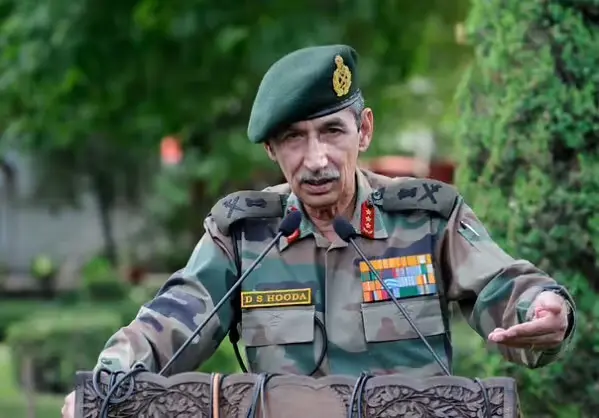
“There is an essential minimum requirement of soldiers, but with advances in technology and AI, many areas could be made human-free.”
In September 2016, Lt. Gen. Deependra Singh Hooda was the Northern Army Commander when India conducted surgical strikes across the Line of Control in response to the Uri attack. The operation was, as he has described it, without precedent — there was no established playbook for what was being authorised. The decision required not just strategic planning but a specific quality of integrity: the willingness to carry full personal responsibility for an action whose consequences, had they gone differently, would have been entirely his to account for. His 40-year career spanned both the Northern and Eastern borders of India — the two most operationally demanding postings in the Indian Army.
The leadership lesson: Integrity is not the refusal to act under pressure. It is the willingness to act, and to own the full consequences of that action, without distributing the responsibility to the institution or the chain of command.
What they bring to a corporate stage: Lt. Gen. Hooda is the speaker for senior leadership audiences — CXOs, board members, and senior managers — who are navigating decisions with significant institutional, regulatory, or reputational consequences. His specific experience of making a high-stakes, historically unprecedented call and carrying ownership of it is precisely the E-E-A-T that corporate leadership programs rarely find in a speaker.
View Lt. Gen. Deependra Singh Hooda’s full profile and check availability
4. General M.M. Naravane
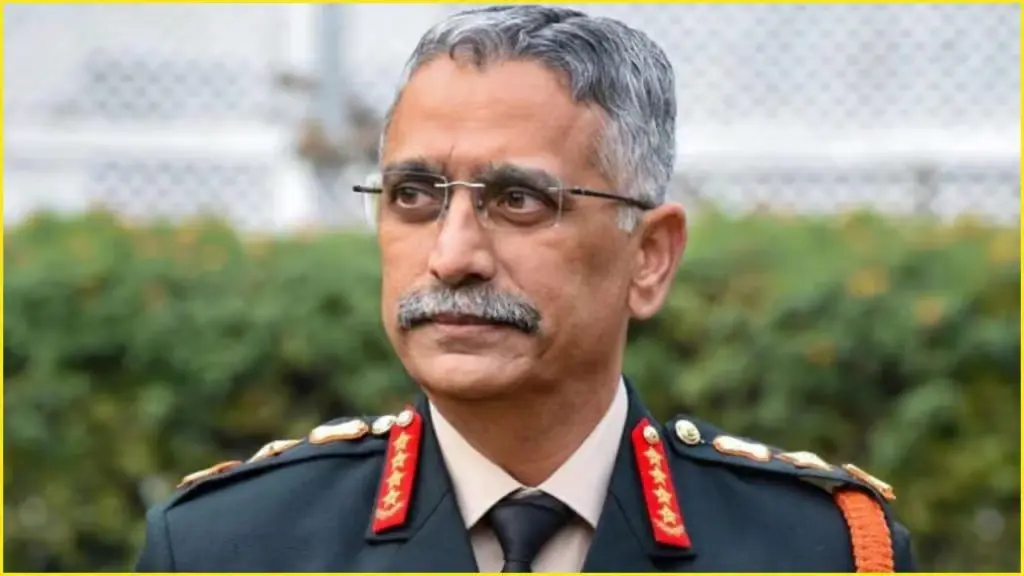
“Forty years down the line, they could be standing where I am standing now.”
General Manoj Mukund Naravane served as the 28th Chief of the Army Staff — the most senior uniformed position in the Indian Army — with a career spanning more than four decades. During his tenure as Chief, the Indian Army inducted women soldiers into the Corps of Military Police for the first time, admitted women pilots into the Army Aviation Corps, and opened the National Defence Academy to women cadets. These were not symbolic gestures. They were structural policy changes in an institution with a 75-year history of excluding women from combat and near-combat roles. General Naravane’s observation at the time — that women inductees of his tenure could one day stand where he was standing — was a statement about institutional trajectory, not aspiration.
The leadership lesson: Diversity is not a policy objective. It is a talent strategy. Institutions that exclude systematically are not just ethically deficient — they are strategically depleted. The Indian Army’s inclusion of women in operational roles is evidence that no institution is too deeply traditional to change.
What they bring to a corporate stage: General Naravane is the speaker for organisations building or accelerating a gender and diversity program — particularly organisations in traditionally male-dominated industries where the resistance to inclusion is framed as cultural rather than strategic. His specific experience of implementing structural inclusion in the world’s second-largest army gives him an authority on this topic that few DEI practitioners can match.
View General M.M. Naravane’s full profile and check availability
On calling, protection, sport, and the obligation to contribute
The third cluster addresses the quieter but equally important leadership questions: how to build a life that means something beyond the career, how to take the protection of others seriously, how sport and physical culture build leadership capacity, and what it means to lead at a scale that connects individual action to collective purpose.
5. Major Vandana Sharma

“Work on your epitaph, not on your resume.”
Major Vandana Sharma’s choice of the Indian Army was not the obvious path. It was not the path her social context or her professional opportunities were pointing her toward. She chose it because it was where she believed she was supposed to be — and that choice, made in the face of the considerable personal and professional costs that choosing the army over a civilian career represents, is the specific lesson her corporate audiences receive. She subsequently transitioned to the corporate sector and reached senior industry leadership, carrying with her the discipline and purpose-orientation that her army career instilled.
The leadership lesson: The difference between a career and a calling is the willingness to choose the harder path because it is the right one for you — not because it is the easier, safer, or more socially approved option. The leaders who produce the most sustained and distinctive results are almost always the ones who were following something internal rather than something external.
What they bring to a corporate stage: Major Vandana Sharma is the speaker for leadership and HR audiences addressing the challenge of purpose and retention — specifically, organisations where high performers are leaving not for better pay but for work that feels more meaningful. Her dual identity as an army officer and a senior corporate leader gives her a unique ability to speak to both the institutional and the individual dimensions of purpose at work.
View Major Vandana Sharma’s full profile and check availability
6. General Bikram Singh
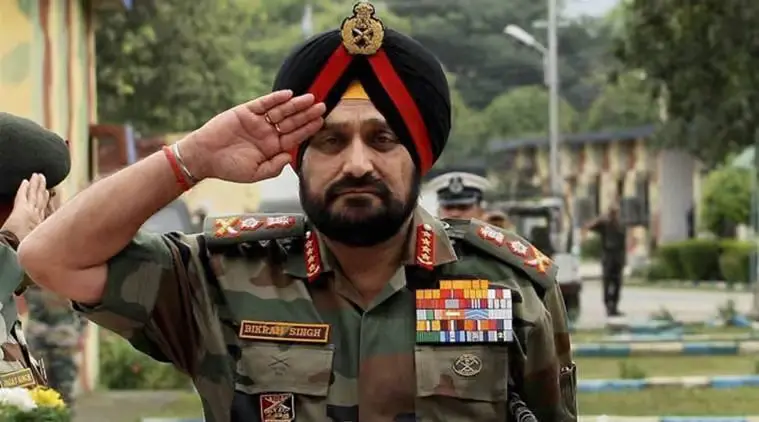
“We have to create a mechanism in our country which safeguards the interest of the captain or major carrying out operations today, so that ten years down the line, this mechanism takes care of him.”
General Bikram Singh served as the 24th Chief of the Army Staff of the Indian Army. His career of over four decades spanned India’s most demanding operational theatres, including leadership roles in both counterterrorism and conventional military operations. The quote above is not about patriotism — it is about systems. It is a statement about the institutional responsibility of a senior leader to build structures that protect the people who take the most risk at the most exposed positions in the organisation. The general who protects his captains and majors is building an institution where people will take the risks necessary to win. The general who does not is building an institution that self-preserves at the top and burns out at the bottom.
The leadership lesson: The most important thing a senior leader can protect is not the organisation’s reputation or the share price. It is the people who are carrying the most operational risk at the front line. Organisations that extract value from their front-line people without building protective structures for them are consuming their most important asset.
What they bring to a corporate stage: General Bikram Singh is the speaker for senior leadership audiences in organisations with large operational workforces — manufacturing, logistics, retail, financial services — where the relationship between leadership protection of front-line staff and long-term operational performance is a live strategic question.
View General Bikram Singh’s full profile and check availability
7. Lt. Gen. Balbir Singh Sandhu
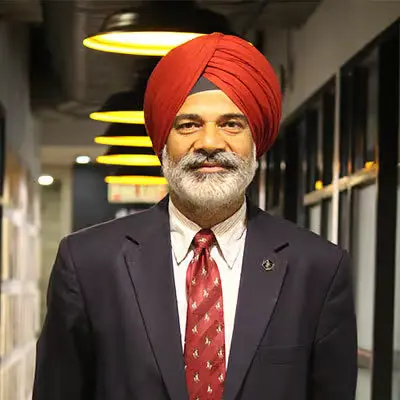
“There is a soldier in every citizen. We don uniforms in school, we cheer for our teams — this is what I call the universal concept of soldiering.”
Lt. Gen. Balbir Singh Sandhu is an army veteran who, in his post-service life, has channelled his leadership philosophy into sport — specifically polo, through his role as Vice President of the Indian Polo Association, and equestrian sport, through his advisory role with the Equestrian Federation of India. His thesis is specific and interesting: that sport and soldiering are not separate domains but expressions of the same underlying set of leadership capacities — team cohesion, rules-based competition, the acceptance of both victory and defeat as data rather than identity, and the commitment to a shared objective that transcends individual performance. His argument is that every Indian who has ever played a team sport, worn a school uniform, or cheered for a national team has already experienced the foundational elements of the military ethos.
The leadership lesson: Leadership development does not begin in a boardroom. It begins in any context where you are part of a team pursuing a shared goal under pressure, where the rules are clear, where the result is uncertain, and where your contribution is visible. Sport is the most accessible version of that context, and organisations that build it into their culture are building leadership capacity at scale.
What they bring to a corporate stage: Lt. Gen. Sandhu is the speaker for organisations building a sports-based culture or a culture of play — and for leadership development programs that want to address the connection between athletic experience and leadership character. His polo and equestrian context gives him a distinctive and memorable framing for a point that most leadership development speakers make abstractly.
View Lt. Gen. Balbir Singh Sandhu’s full profile and check availability
8. Wing Commander Namrita Chandi

“We no longer need to revolutionise or reinvent. We just need to repair, because so much damage has been done by our misconceptions of what progress really is.”
Wing Commander Namrita Chandi is the first woman in the world to have flown in the Siachen Glacier — the world’s highest battlefield, at altitudes above 18,000 feet, in conditions that ground most aircraft and most pilots. The Siachen is not a posting you are sent to for career advancement. It is a posting that asks something specific of the person who accepts it: the willingness to operate at the absolute boundary of what is technically and physically possible, for reasons that have nothing to do with personal recognition. She flew there as an Indian Air Force helicopter pilot. She did it, as she has said, because it needed to be done and she could do it.
The leadership lesson: The most important leadership question is not ‘how do I build something new?’ It is ‘what is broken, what is causing harm, and what can I specifically do about it?’ The leaders who produce the most durable change are not the ones with the most ambitious visions. They are the ones who are willing to do the specific, often unglamorous work of repair.
What they bring to a corporate stage: Wing Commander Namrita Chandi is the speaker for organisations navigating a cultural reset, a recovery from a significant failure, or any situation where the leadership challenge is to rebuild trust and repair damage rather than launch something new. Her Siachen experience gives her a literal and figurative relationship with operating in the most demanding conditions to restore something that matters.
View Wing Commander Namrita Chandi’s full profile and check availability
What these eight stories have in common
None of these officers were working from a playbook. What they share is a specific quality that is more useful in a corporate room than any framework: they are people who acted under conditions of genuine consequence, carried full personal responsibility for the outcomes, and learned something specific from the experience that they can articulate and transfer.
That is the standard engage4more applies to every army veteran speaker we recommend — the STRIVE framework’s Monday Morning Rule: does your team walk away with something they can actually use the next day? Applause is easy to generate. The specific cognitive shift that changes how a leader approaches a decision is not. The eight veterans above consistently produce the second kind of outcome.
Browse the full roster of decorated officers, Kargil War veterans, and defence experts available to book through engage4more on our army veteran speakers page. Or read more about how we evaluate every speaker recommendation through the STRIVE framework.
Planning a leadership event, AOP rollout, or offsite where a veteran’s perspective is the right fit? Browse India’s top decorated officers and Kargil War veterans — with verified availability and transparent pricing — on our army veteran speakers page. One brief to engage4more is all it takes. We respond with a STRIVE-vetted shortlist within 3 hours. Since 2010, 5,000+ events across India.
Frequently asked questions
What leadership lessons can Indian army veterans teach corporate teams?
Indian army veterans bring eight categories of insight that apply directly to corporate leadership: leading without positional authority (Capt. Raghu Raman), navigating genuine ambiguity (Major D.P. Singh), integrity and absolute ownership in high-stakes decisions (Lt. Gen. Hooda), building diversity as a strategic strength (General Naravane), following a calling rather than a career path (Major Vandana Sharma), protecting front-line people as a leadership obligation (General Bikram Singh), using sport and play as leadership development tools (Lt. Gen. Sandhu), and the obligation to contribute to repair rather than just to build (Wing Commander Namrita Chandi). All eight lessons are drawn from operational experience, not theory.
Why are Kargil War veterans particularly effective as corporate speakers?
Kargil War veterans carry a specific authority that comes from decisions made under conditions that corporate leaders recognise as extreme but can relate to directionally — resource scarcity, incomplete information, time pressure, and the weight of responsibility for people in your team. Major D.P. Singh’s story is the most visible example: his decision to continue after being declared dead and losing his leg is not about military tactics. It is about the specific cognitive process of continuing when continuation seems objectively irrational. Every leader in a corporate room has faced a version of that moment. Major D.P. Singh’s version is simply more vivid and more unambiguous.
How do I book an army veteran motivational speaker for a corporate event?
Browse the full roster of veterans and decorated officers on our army veteran speakers page. Click Enquire Now on any profile, or contact engage4more’s team directly at activities@engage4more.com or +91-8044186906. We will confirm availability and provide a transparent fee quote within 3 hours of receiving your brief. Every speaker recommendation goes through the STRIVE framework before it reaches you.