


In 1996, eight climbers died on Mount Everest in a single storm. One of those who survived was Jamling Tenzing Norgay — son of Tenzing Norgay, the man who first summited Everest with Edmund Hillary. Jamling has spoken publicly about the decisions made that day: who to wait for, when to turn back, when the calculus of saving others became the calculus of not dying yourself. He made those decisions at 28,000 feet, in a whiteout, with equipment failing and teammates incapacitated.
No business decision carries that weight. But the cognitive and psychological processes that mountaineers use to function under those conditions are precisely the same ones that distinguish good leaders from average ones under corporate pressure: the ability to hold incomplete information, make irreversible calls, maintain team cohesion under stress, and continue moving when the outcome is genuinely uncertain.
At engage4more, we have placed mountaineers and Everest summiteers on corporate stages for 15 years. What follows is what we have consistently observed these speakers teach — not as metaphor, but as functional parallel. Ten things that elite mountaineers know about pressure that most corporate leaders do not.
How to make decisions when you don’t have enough information

At high altitude, the information available to a mountaineer is almost always incomplete. Weather forecasts become unreliable above certain elevations. Equipment gives partial readings. The body sends contradictory signals. The mountaineer makes the call anyway — because not deciding is also a decision, and usually a worse one. These three parallels speak directly to the corporate challenge of decision-making under uncertainty.
Parallel 1: The peak looks close. The route is not.
Your next deal, your next product launch, your next quarter — all look more manageable from a distance than they are up close. Not because the goal is wrong, but because proximity reveals complexity that was invisible at the planning stage. The corporate teams that handle this best are the ones that build in route-finding time — the equivalent of the acclimatisation camps — rather than assuming the path between here and the goal is as straight as the goal appears.
On the mountain: From base camp, the summit of Everest appears reachable within a day’s climb. It is not. The actual route involves traversing the Khumbu Icefall, ascending through four progressively higher camps, and navigating the Death Zone above 8,000 metres — each stage with its own hazards that are invisible from the distance at which you first see the peak. Arjun Vajpai, who became the youngest person to summit multiple 8,000-metre peaks, speaks about this specifically: the summit looks near because you cannot see the terrain between you and it.
Parallel 2: The weather window is narrow. You move when it opens. → Corporate windows work identically. A market entry moment, a hiring period before a competitor fills the talent pool, a customer whose budget cycle closes in six weeks. The leader who understands that windows exist, who has prepared thoroughly enough to move when the window opens, and who does not mistake preparation for the thing itself — that is the summit mindset applied to business timing.
On the mountain: Everest has a summit window — a period, usually a few days in May and sometimes in autumn, when the jet stream lifts enough that conditions are survivable at the summit. Miss the window and you wait another year. The Malik Twins — Tashi and Nungshi, the world’s first twin sisters to summit Everest — have spoken about the specific discipline of being ready precisely when the window opens: not before (the conditions will kill you), not after (the window will close). All the preparation exists to be maximally ready for a moment you cannot fully control.
Parallel 3: Descent kills more climbers than ascent.
Post-launch, post-merger, post-funding, post-peak-quarter: these are the descent phases of corporate life, and they carry disproportionate risk precisely because teams relax at the moment the headline goal is achieved. The integration fails. The new product underperforms post-launch. The culture erodes after the acquisition closes. The summit mindset requires applying the same rigour to consolidation as to pursuit.
On the mountain: Statistically, more mountaineers die on the way down than on the way up. The physiological reason is clear: the body is depleted, oxygen reserves are lower, and judgement is impaired by altitude and exhaustion. The psychological reason is equally important: climbers relax after the summit, believing the hard work is done. Krushnaa Patil, the youngest Indian woman to summit Everest at 23, has spoken about the discipline required to maintain exactly the same standard of attention on descent as on ascent — when every instinct says you can relax.
How to maintain team function under genuine stress

High-altitude expeditions operate under conditions that strip away everything social convention uses to hold teams together — comfort, convenience, personal space, communication, and the ability to leave. What remains is the team’s actual architecture: who defers to whom, who panics, who holds, who communicates clearly when everything else is failing. These parallels speak to team dynamics under real organisational pressure.
Parallel 4: You cannot get to the top without the people who are not going to the top. The revenue team, the product team, the leadership team — these are the summit team in most organisational narratives. But the summit is made possible by finance, operations, HR, legal, and every function that does not appear in the headline. The corporate leaders who understand this are the ones who build the support infrastructure with the same intentionality they apply to the front-line team.
On the mountain: A summit team of four or five climbers is supported by a logistics chain of Sherpas, base camp managers, equipment handlers, route fixers, and medical staff — most of whom will never stand on the summit. The summit is not possible without them, and the best mountaineers are acutely aware of this. Jamling Tenzing Norgay has spoken at length about the relationship between the summit team and the support chain — not as gratitude but as operational reality: the summit team’s performance is a direct function of the quality of the support infrastructure.
What happens when the plan stops working
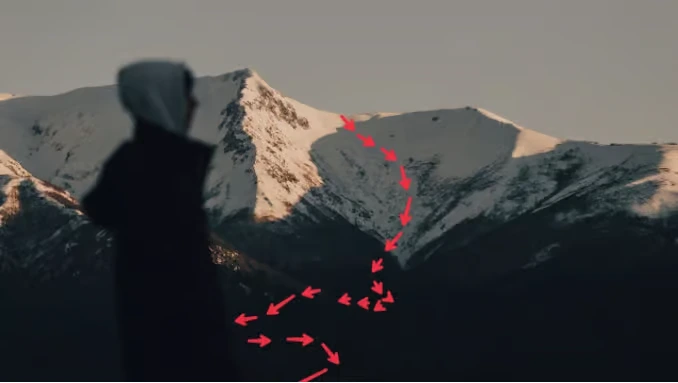
Every mountaineer operates with a plan and then adapts when the plan meets reality. At altitude, the adaptation has to happen fast, with impaired cognitive function, under physical duress, with other people’s lives depending on the quality of the call. These parallels speak to the corporate challenge of resilience and reinvention when the original strategy no longer applies.
Parallel 7: Something soft might be a deep pit.
The most dangerous opportunities in business are the ones that look straightforward. The partnership that seems like a natural fit. The market that appears uncontested. The product extension that looks obvious. The discipline of probing before committing — validating assumptions before scaling investment — is the corporate equivalent of the mountaineer’s ice axe tap on the snow bridge. Easy-looking opportunities that have not been stress-tested are disproportionately likely to be traps.
On the mountain: Snow bridges — structures formed by snow accumulating over crevasses — look identical to solid ground. They are not. A mountaineer stepping onto a snow bridge may be stepping onto something that will hold or onto something that will collapse beneath them with no warning. Experienced mountaineers probe ahead before committing weight. They have learned to distrust surfaces that look secure simply because they look secure.
Parallel 8: Small steps, repeated without interruption, cover impossible distances.
The corporate parallel is not about working slowly. It is about the compounding value of consistent, undramatic progress against a goal that feels far away. The organisations that make the most sustained progress on hard problems — culture change, technical debt, market repositioning — are rarely the ones that move in dramatic bursts. They are the ones that move incrementally and do not stop. The discipline of the small step in the Death Zone is the discipline of the quarterly milestone in the long-term transformation.
On the mountain: The way high-altitude mountaineers move in the Death Zone is not the way most people imagine. At 8,000 metres, with oxygen at one-third of sea-level concentration, a climber may take a step, stop, take three breaths, and then take the next step. The pace is almost incomprehensibly slow by normal standards. And yet, maintained without interruption, that pace covers the ground. Arunima Sinha — the first female amputee to summit Everest, doing so on a prosthetic leg — has spoken about this specifically: the summit is not achieved by moments of heroic effort. It is achieved by the refusal to stop completely.
Parallel 9: What you encounter on the way up tells you something about the route ahead.
Organisations that treat each phase of a project as purely an execution phase, rather than also a learning phase, miss the information that the current stage is providing about the next one. The sales cycle reveals something about the implementation challenge. The pilot reveals something about the scale-up. The first year in a new market reveals something about the second. The mountaineer’s habit of continuous route-reading is the corporate habit of treating operational data as strategic intelligence.
On the mountain: High-altitude expeditions are run in stages deliberately — not just for acclimatisation but for reconnaissance. Each camp provides information about the terrain above it. The conditions at Camp 3 tell you something about what Camp 4 will be like. The weather pattern on the South Col tells you something about the summit window. Mountaineers are trained to read the mountain continuously, updating their model of what lies ahead based on what they are experiencing now.
Parallel 10: The decision to turn back is the hardest and most important skill.
Corporate sunk-cost fallacy is the summit pull in business form. The project that has consumed two years of investment, the acquisition that has absorbed a year of integration effort, the strategy that the leadership team has publicly committed to — these all exert a pull that makes the turn-back decision feel like failure rather than intelligence. The organisations that build genuine turn-back capability — explicit criteria for reconsidering, psychological safety for raising the abort signal — are the ones that avoid the most expensive mistakes.
On the mountain: Most mountaineering deaths happen because climbers did not turn back when they should have. The summit pull — the psychological force exerted by proximity to a goal you have sacrificed enormously to reach — overrides the risk assessment that would otherwise send you back down. The mountaineers who survive long careers at extreme altitude are the ones who have made the turn-back decision multiple times. Ajeet Bajaj, the first Indian to ski to both the North and South Poles, has spoken about the specific discipline of the abort decision — the ability to treat a turn-back not as a failure but as the correct execution of the plan under updated conditions.
What the mountain teaches that the boardroom cannot
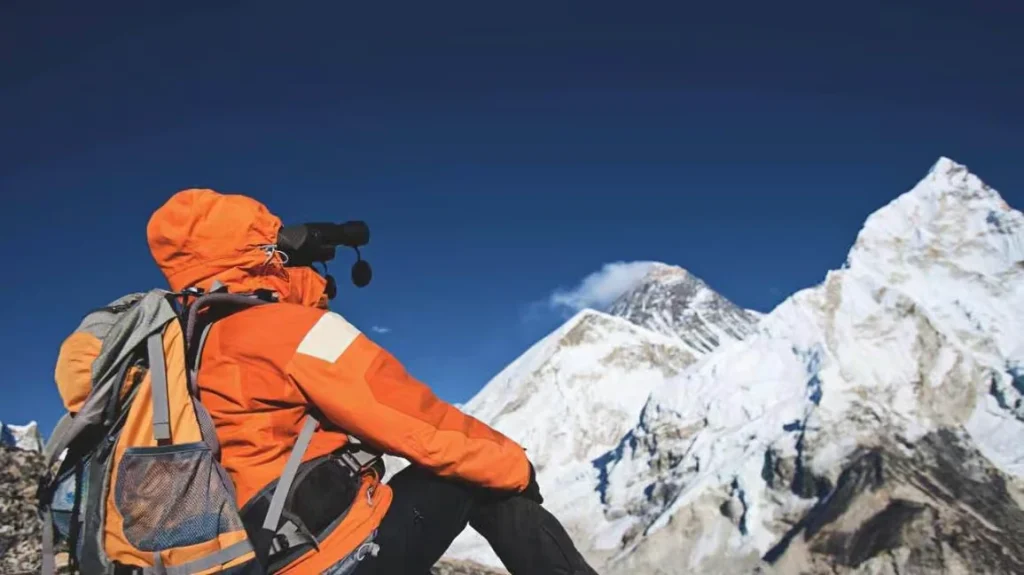
The reason mountaineers make effective corporate speakers is not that the metaphors are vivid — though they are. It is that the experiences are real, the stakes were genuine, and the lessons were learned under conditions where getting them wrong had immediate and irreversible consequences.
In 15 years of placing speakers at corporate events, engage4more has observed that the sessions that produce the most sustained behavioural change in a corporate room are the ones where the speaker’s story is not a narrative device but a lived experience. The audience does not need to believe the speaker is credible. They can see it.
The mountaineers above — Jamling Tenzing Norgay, Arunima Sinha, Arjun Vajpai, The Malik Twins, Baljeet Kaur, Krushnaa Patil, Ajeet Bajaj — carry that credibility in the specific, verifiable way that matters to a corporate audience. Not because they climbed Everest, but because the decisions they made to get there and back map so precisely onto the decisions your leadership team will face this quarter.
At engage4more, every mountaineering speaker we recommend has been assessed through our STRIVE framework — specifically for their ability to translate extreme experience into actionable insight for a corporate audience. The test is the Monday Morning Rule: does your team walk away with something they can actually use the next day? If the answer is not clearly yes, we do not recommend the speaker.
Planning an event where a mountaineer’s perspective would be the right fit? Browse India’s top Everest summiteers and high-altitude adventurers — with verified availability and transparent pricing — on our mountaineering speakers page. One brief to us is all it takes. We respond with a STRIVE-vetted shortlist within 3 hours. Since 2010, 5,000+ events across India.
Frequently asked questions
Why do mountaineers work better as corporate speakers than most professional motivational speakers?
Because the experience is irreversible and verifiable. A mountaineer who summited Everest made a set of decisions under conditions that were genuinely life-or-death — and the fact that they are alive and standing on your stage is evidence that those decisions were right. This is what engage4more calls a Virgin Story: an experience so specific and high-stakes that it cannot be manufactured or generalised. The parallels to corporate decision-making — incomplete information, team dependency, resource scarcity, irreversible calls — are structural, not cosmetic. That is why a mountaineer’s story produces a different quality of attention in a corporate room than a business practitioner telling a business story.
What kind of corporate events are mountaineering speakers best suited for?
They work across a wide range of formats but are particularly effective at three: Annual Operating Plan (AOP) rollouts, where the theme is about committing to a difficult climb; leadership offsites, where the team needs to recalibrate its relationship with risk and decision-making; and resilience or culture-change events, where the organisation is navigating a difficult transition. They are less effective as opening keynotes for product launches or sales events where the energy required is high and the message needs to be immediately actionable — for those, business practitioners or comedians tend to work better as an opening act.
How far in advance should I book a top mountaineering speaker in India?
For speakers like Arunima Sinha, Arjun Vajpai, or Jamling Tenzing Norgay — 8 to 12 weeks minimum, especially around conference season (January to March and September to November). For less-booked but equally compelling speakers from engage4more’s roster, 3 to 4 weeks is generally sufficient. The most common mistake event planners make is approaching the bureau two weeks before the event date after a first-choice speaker falls through. Share your brief early — even if the event is months away — and we will hold availability on your behalf. Contact us via the mountaineering speakers page or call directly for urgent bookings.