

Strategic White Space: How Purposeful “Timepass” Builds Trust, Loyalty, and High-Performing Workplace Cultures
To engage employees, let them waste time.
Yes, you read that correctly. To a traditional CFO, “wasting time” is a cardinal sin. But in my years of engineering corporate cultures, I’ve learned a hard truth: what looks like “timepass” to a novice manager is actually the highest form of Strategic Downtime.
Wasting time together gives managers a unique opportunity to bond with their subordinates and break down stubborn departmental silos. Traditional rewards and the “Annual Day Tamasha” are important, but it is in the non-work, unstructured moments that psychological safety is built.
Think about your childhood. Did you bond with your parents when they were auditing your homework, or when you were playing in the park? Did you make your best friends staring at a math textbook, or during the unstructured chaos of the playground and school plays?
Corporate life is no different. The classroom is your daily KPIs; the playground is your informal team building.
The Industry Proof: Why Global Giants Invest in “Timepass”
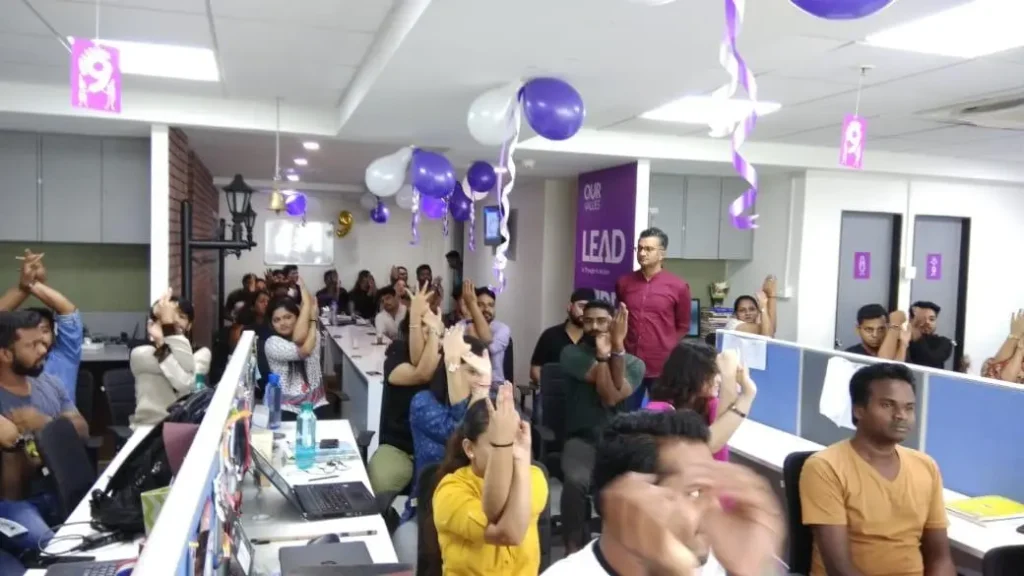
If you think unstructured collaboration is just HR fluff, look at the companies leading the market.
“Being the Chief Fun Officer, my job is to create a culture of fun for our 1 lakh employees and their families. And that means a company culture that includes their respective interests… we are always looking at stretching the boundary.” > — Murali MS, Capgemini
“Our employees are like a family… Initiatives like these may seem trivial or encroaching on precious business time, but for us, they have proved to be investments in enhancing employee productivity and building a ‘Family of Champions’.” — Moonmoon Roy, Mahindra Rural Housing Finance Ltd
The 5 Rings of Engagement: Structuring the Unstructured
You cannot just tell people to “go waste time” and expect magic. The fine art of Strategic Downtime must be planned.
After a decade of working in this field, we have developed the 5 Rings of Engagement to help HR leaders build a perfectly balanced calendar.
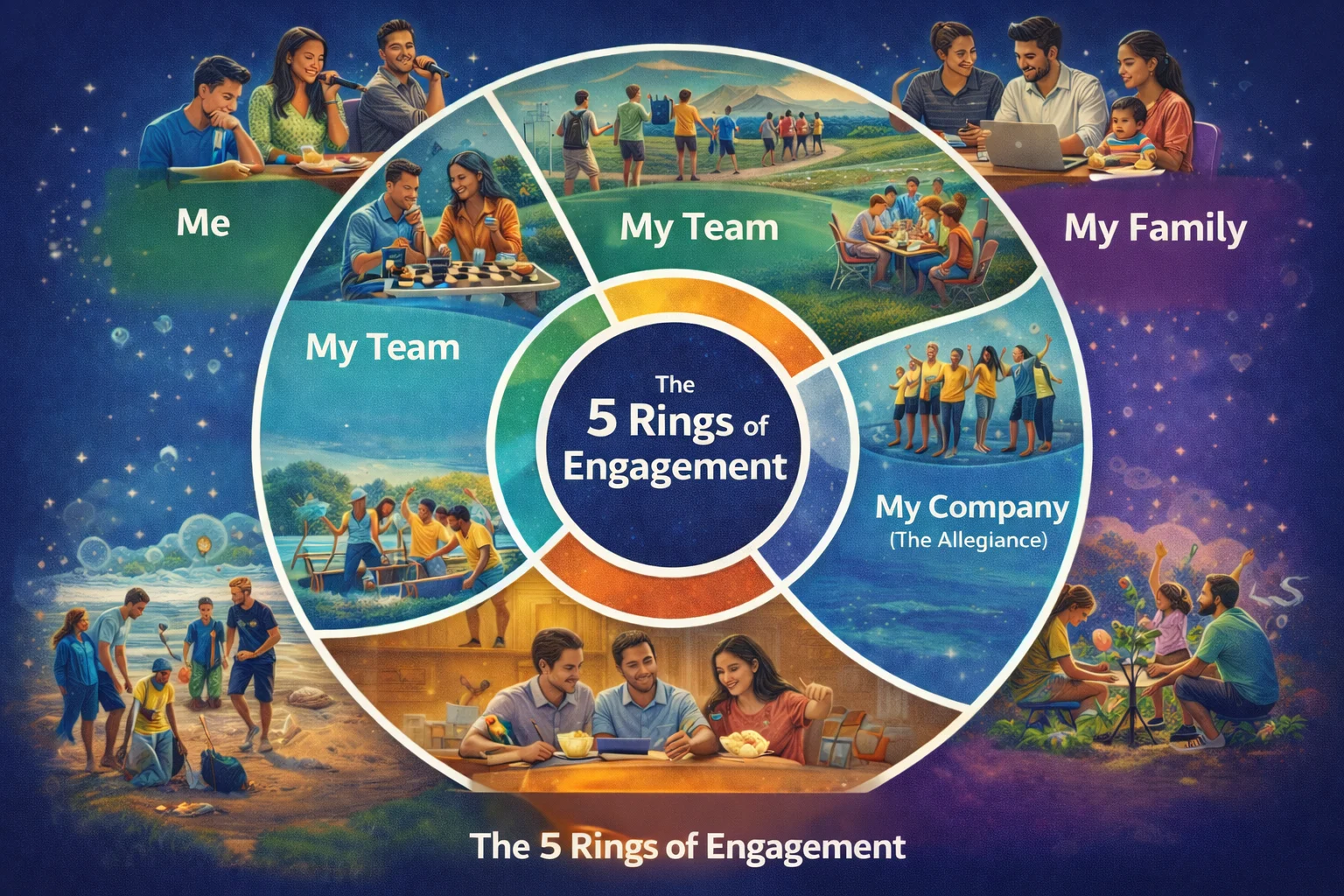
1st Ring: ME (Personal Identity)
This is the personal area focused on the individual employee’s hobbies and passions outside of their JD. Whether it’s cooking, chess, or fashion, allowing employees to showcase their personal identity connects like-minded people across different levels of seniority.
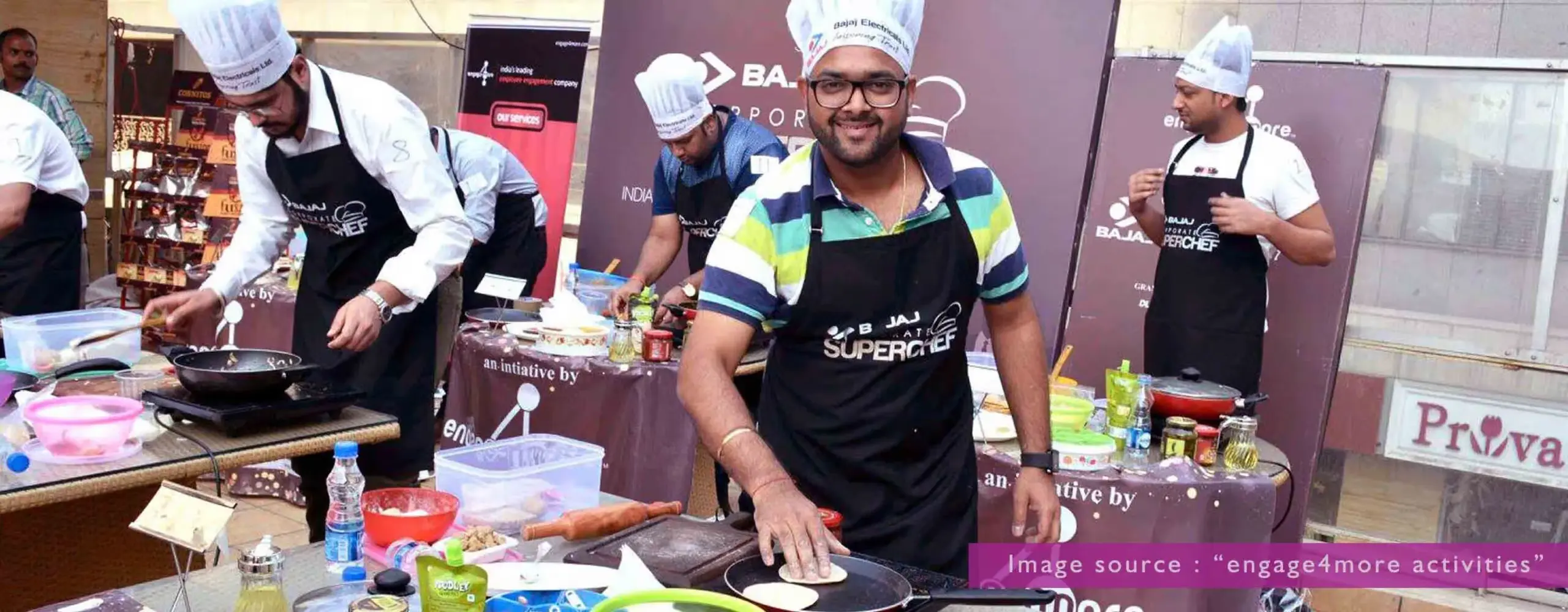
The engage4more Solution: Stop guessing what your employees like. Run a corporate Talent Hunt to map the hidden passions of your workforce and build micro-communities.
2nd Ring: MY TEAM (The Micro-Culture)
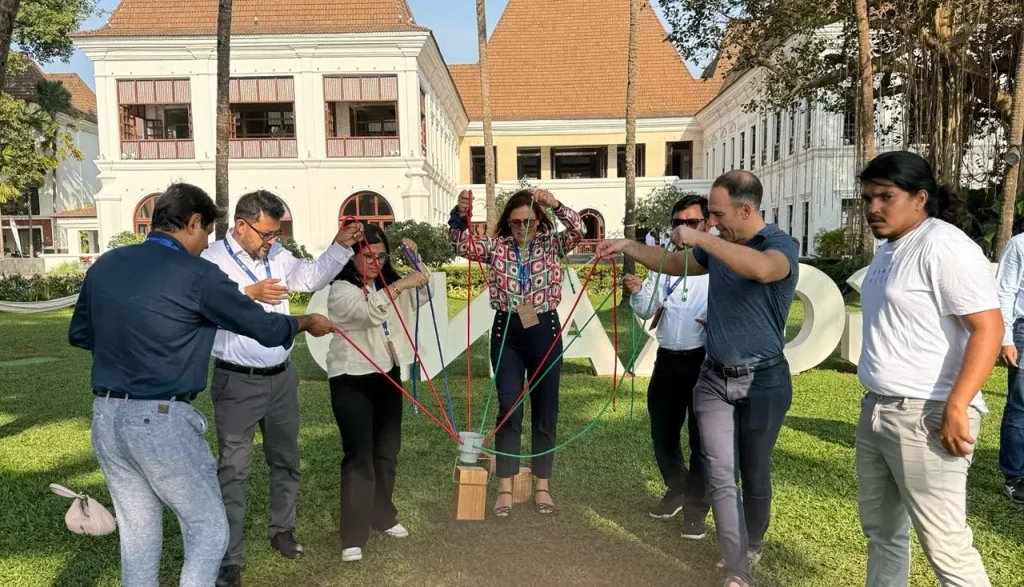
This focuses on immediate colleagues. Going out for a drink is fine, but adding an element of shared adventure accelerates trust. If the team is musical, even something as simple as banging a drum together creates rhythmic synchronization.
- The engage4more Solution: Move beyond the dinner table. Book a high-energy Drum Circle or an outdoor Adventure Offsite to build visceral, non-verbal team trust.
3rd Ring: MY COMPANY (The Macro-Tribe)
These are the massive, cross-departmental activities. Think annual day celebrations, company sports days, or inter-corporate quizzing. When an employee who doesn’t even play sports shows up to cheer on their colleague, you have achieved true allegiance to the company.
- The engage4more Solution: Turn your workforce into fans of each other. Launch a gamified Corporate Quiz like BrainBout or an Annual Sports Day managed end-to-end by our logistics team.
4th Ring: MY FAMILY (The Support System)
When an employee’s family sees their comfortable working conditions and meets their supportive managers, the family becomes the company’s biggest retention advocate. This has been massively successful in high-attrition sectors like BPOs.
- The engage4more Solution: Host a spectacular Family Day or “Bring Your Kid to Work” event that turns spouses and children into brand ambassadors.
5th Ring: MY COMMUNITY (The Higher Purpose)
The Indian workforce is getting younger every year, and they care deeply about sustainable living and societal impact. Channeling their energy into a shared cause builds a profound emotional bond that a paycheck cannot buy.
- The engage4more Solution: Transform unstructured time into lasting impact. Book a hands-on CSR Activity like a beach clean-up or a wheelchair-building workshop.
The HR Manager’s Audit
This is how a forward-looking HR team enables employees to “waste time” for the company’s betterment. By learning about a subordinate’s background, family, and hopes, you build the foundation of trust. So when push comes to shove on the work front, these very same employees will go all out for their manager, far beyond the call of duty.
So, look at wasting time in a new light. And before you plan your next calendar, ask yourself: How much strategic timepass have you done with your own team lately?
Ready to build your 5 Rings? Don’t let your team’s downtime go to waste. Book a free consultation with engage4more today to map out an informal team-building calendar that drives serious business ROI.
Why Trust This Blueprint? (The engage4more EEAT Advantage)
his strategy isn’t born from academic theory; it is forged on the ground. Nishant Parashar is the Founder of engage4more and the architect of the proprietary MORE² Philosophy—a diagnostic framework that balances human priorities with tactical business enablers.
Recognized as a Businessworld Young Entrepreneur and SIBM Alum of the Year, Nishant has spent over two decades engineering corporate cultures and managing massive human capital events. He is also the former host of the critically acclaimed Good Gobar Show, where he decoded the raw, unfiltered realities of corporate life and leadership.
Today, through engage4more, Nishant and his team execute thousands of strategic interventions. Whether you need to fix a broken silo or reward a high-performing unit, explore our master category of Team Building Activities to find the exact “Strategic Downtime” your team needs to thrive.
Outdoor Team Building Offsites
FAQs
1. What is Strategic White Space in the workplace?
Strategic White Space refers to intentionally designed non-work moments at the workplace where employees connect as humans, not roles. These moments build trust, emotional safety, and long-term engagement.
2. How does Strategic White Space improve employee engagement?
By creating space for informal interactions, employees feel seen beyond their KPIs. This leads to stronger relationships, better collaboration, and higher emotional commitment to the organisation.
3. Is “wasting time” really productive for organisations?
Yes. Strategic White Space reduces burnout, improves morale, and strengthens manager–employee trust—resulting in higher productivity when it matters most.
4. What role does HR play in creating Strategic White Space?
HR teams curate and legitimise white space through structured engagement activities like team bonding, music, family-inclusive events, and CSR initiatives aligned with company culture.
5. How often should companies invest in Strategic White Space activities?
Consistency matters more than frequency. Even small, regular white space moments, weekly or monthly, create lasting impact on culture and retention.