





How the MORE² Framework and S.P.A.R.K.S. Strategy are replacing “Fun Fridays” with measurable business ROI.
In the intense landscape of India Inc., most companies treat “Employee Engagement” as a line item for HR to “keep people happy.” They organize a potluck, hire a Zumba instructor, or host a “Fun Friday,” and wonder why productivity doesn’t move.
I see these as “Placebo Activities.” Real engagement isn’t a distraction from work; it is the fuel for it. To build a world-class culture, you must move from random acts of fun to Surgical Interventions.
At engage4more, we use the MORE² Framework to diagnose the “Engagement Gap” and the S.P.A.R.K.S. Strategy to deliver the cure through purposeful engagement games.
1. Solving for ‘Kinship’ (K): Breaking the Hierarchical Silo


The biggest barrier in Indian corporate culture is the rigid hierarchy. When an intern is afraid to speak to a VP, your Objective & Ownership (O) dies.
-
The Strategy: Use activities that serve as “Social Levelers” to build human-to-human empathy.
-
Tactical Games: We pivot from generic “Team Lunches” to Potluck Challenges (where everyone shares their culture) or Interactive Masterclasses like Harmonica Jamming and Learn with Theatre.
-
The Diagnostic: This addresses the Emotional Connect (E) pillar. By putting leadership and frontline staff in a shared “uncomfortable” learning environment, you build the Psychological Safety required for innovation.
2. Solving for ‘Altruism’ (A): Building Shared Pride

Today’s workforce—especially Gen Z—wants to know that their work contributes to a “Greater Good.” If they don’t feel a sense of purpose, they will leave for a higher Money (M) offer.
-
The Strategy: Don’t just write a check; involve the hands of your employees.
-
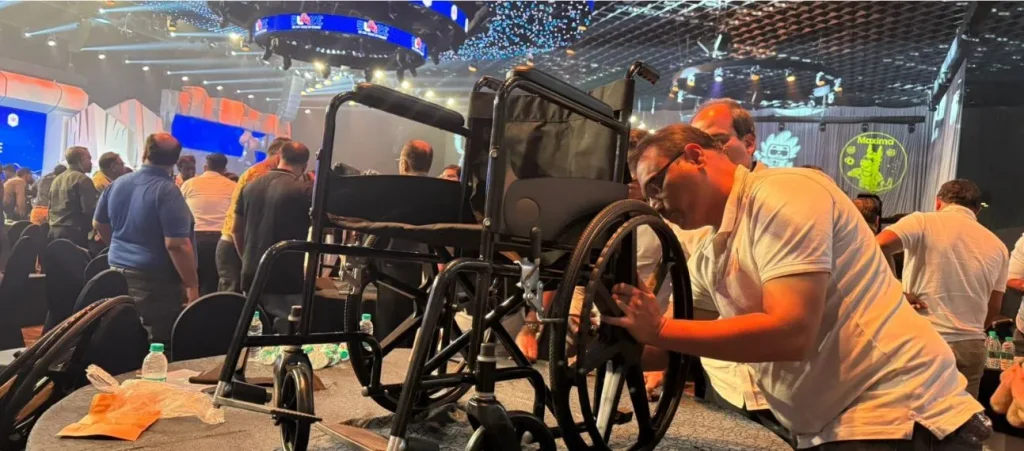
Tactical Games: We architect Bicycle Making for Charity or Wheelchair Building Challenges. We also facilitate T-Shirt Painting and Shoe Paintingfor Social Causes, where the “game” results in a tangible gift for the underprivileged.
-
The Diagnostic: This reinforces the Objective (O) and Altruism (A) pillars. When a team builds something together that changes a life, the emotional ROI is 10x higher than a standard offsite.
3. Solving for ‘Smiles & Thrills’ (S): The ROI of Joy

While “Fun” shouldn’t be the first step, it is the essential “Fuel” that prevents burnout and resets the Means (M) to perform.
-
The Strategy: High-energy “Pattern Interrupts” that focus on Validation.
-
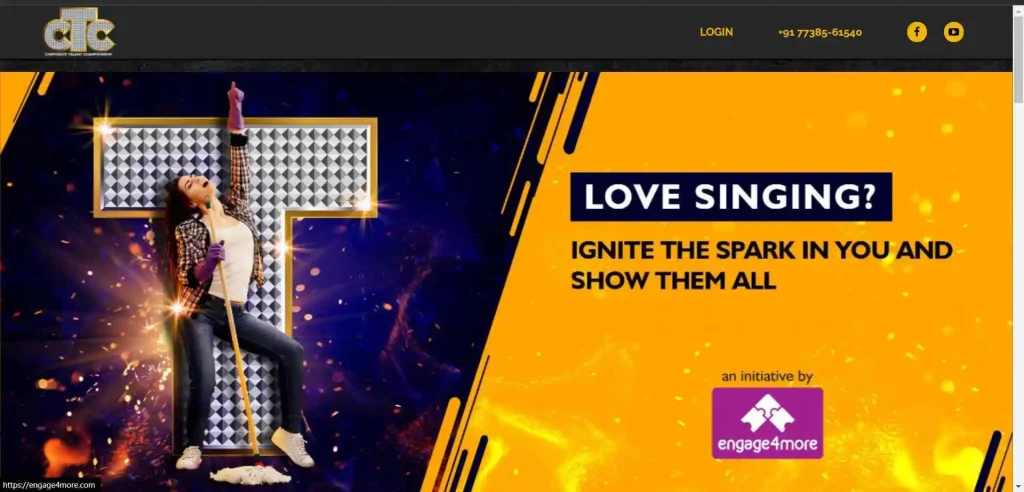
Tactical Games: We move beyond “Zumba” to professional-grade engagement like the Corporate Talent Championship (CTC), Escape Room Challenges, or tech-turbocharged Brain Bout community quizzes. Even Office Trips are redesigned as “Quest-based Scavenger Hunts” rather than passive sightseeing.
-
The Diagnostic: This satisfies the Enjoyment (E) and Recognition (R) pillars. It tells your employees: “We see your talent beyond your spreadsheet.”
The Execution Gap: From ‘Fun’ to ‘Fulfilment’
Most engagement plans fail because they are not sequenced. You cannot have a “Smile” if there is no “Kinship.” You cannot have “Ownership” if there is no “Shared Vision.”
At engage4more, we don’t just “plan games”—we architect Yearly Engagement Calendars. We ensure that every intervention—from a 10-minute floor game to a 3-day office trip—is mapped to a specific business outcome.
Stop hosting parties. Start building a legacy and events. Consult with our Strategy Team to design your MORE² engagement roadmap.
Why Trust This Blueprint? (The engage4more EEAT Advantage)
Nishant Parashar is the Founder of engage4more and the architect of the S.P.A.R.K.S. and MORE² frameworks. With two decades of experience—from managing the operational complexity of the Mumbai Marathon to driving engagement for India’s top 100 brands—Nishant specializes in turning “culture” into a measurable business engine.
Through our industry-leading digital IPs like Brain Bout and the Corporate Talent Championship (CTC), we provide the Means (M) for your team to thrive.
Explore the Good Gobar Show:
Catch Nishant Parashar on the Good Gobar Show, where he speaks with leaders who have navigated the “gobar” (chaos) of the corporate world to find the “good.”
Ready to transform your workplace? Explore our curated master catalogue of over 2,000+ Premium Corporate Team Building Activities:
FAQs
Q1: What is the most common mistake HR leaders make when planning an engagement calendar?
A: The biggest mistake is starting at the end. Many companies jump straight to the “Smiles & Thrills” phase (office parties, stand-up comedy) without establishing the foundation. If your employees lack role clarity or feel disconnected from the company’s vision, a Friday pizza party will feel like a hollow distraction rather than a genuine reward. Always start with Vision (S) and Kinship (K) before moving to the “Fun.”
Q2: How does the S.P.A.R.K.S. sequence work with the $(MORE)^2$ framework?
A: They are two sides of the same coin. The MORE² framework is your diagnostic tool—it helps you identify what your employees are lacking (e.g., do they need better ‘Means’ or a deeper ‘Emotional Connect’?). Once you diagnose the gap, the S.P.A.R.K.S. framework dictates the strategic delivery—how to sequence and execute activities in your yearly calendar to fix those specific gaps.
Q3: Can mandatory compliance and policy updates actually be engaging?
A: Yes, if you change the delivery mechanism. Instead of long, dry seminars, we use gamified experiential learning. Turning a cybersecurity policy update or a new HR mandate into a competitive Escape Room challenge ensures high participation, active problem-solving, and a much higher retention rate of the actual policy details.
Q4: We have a limited budget; should we focus on one big offsite or monthly small activities?
A: Strategic consistency beats a “one-off” event every time. A single massive offsite is a “Smile (S)” that lasts for a week. However, using your budget to build Kinship (K) and Altruism (A) through monthly micro-interventions keeps the “Engagement Engine” running all year. We help companies optimize their spend by identifying which S.P.A.R.K.S. pillar requires the most immediate attention.
Q5: How do we measure the ROI of these team-building activities?
A: By tying the activity to a specific business pillar rather than just “happiness.” For example, if you run a Vision Board activity (The ‘S’ in S.P.A.R.K.S.), you measure ROI by tracking how well frontline employees can articulate the company’s 3-year goal post-event. If you run a CSR initiative, you measure the corresponding spike in your internal “Pride in Workplace” survey metrics.