




From cricket and chess to football, boxing, and para sports, how Indian women athletes reshaped global sport
Looking to bring these journeys of resilience and championship mindset to your stage? Explore our curated Sports Motivational Speakers or visit our new Female & IWD Speakers for current booking charges and vetted practitioners.

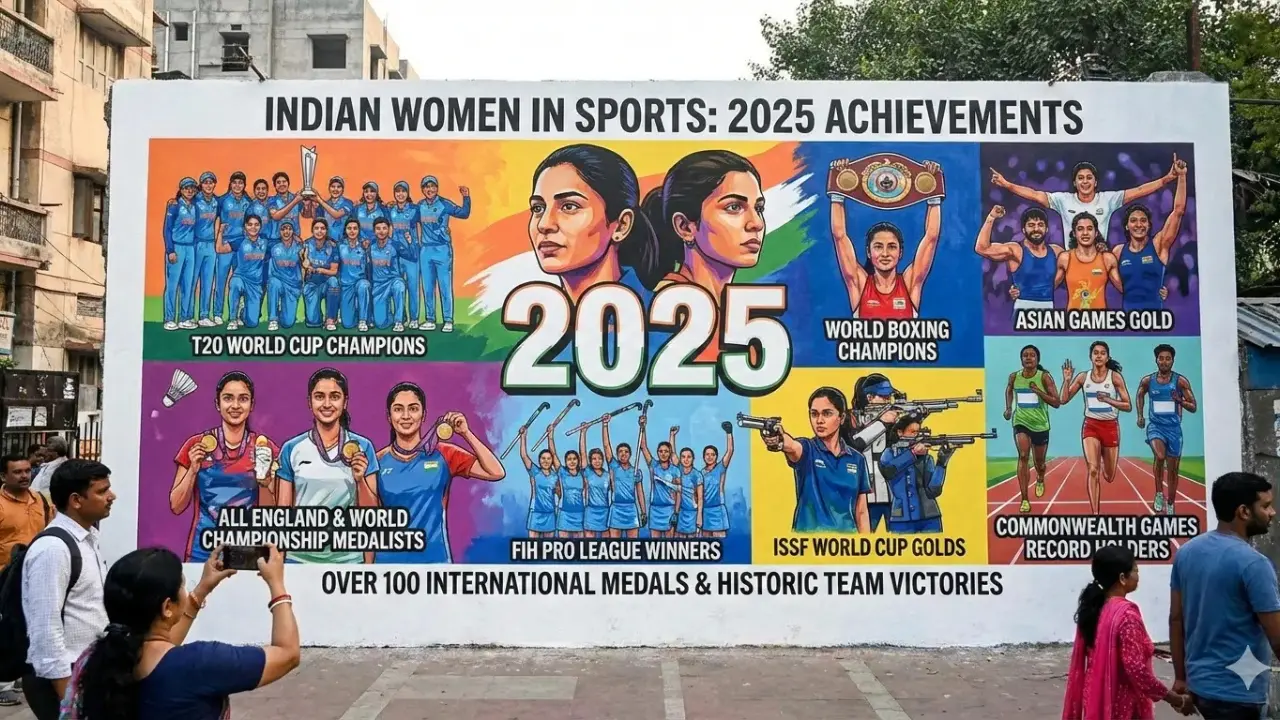
Last year, something quietly irreversible happened in Indian sport. Across cricket stadiums, chess halls, football pitches, boxing rings, and para arenas, Indian women stopped being stories of promise and became stories of proof. They didn’t wait for better systems, louder applause, or perfect conditions. They showed up anyway, and won. What followed wasn’t just a collection of medals or firsts, but a visible shift in how Indian women in sports are seen, funded, and believed in. This wasn’t a breakthrough moment. It was the beginning of a new normal.
Why Last Year Changed Indian Women Sports Forever
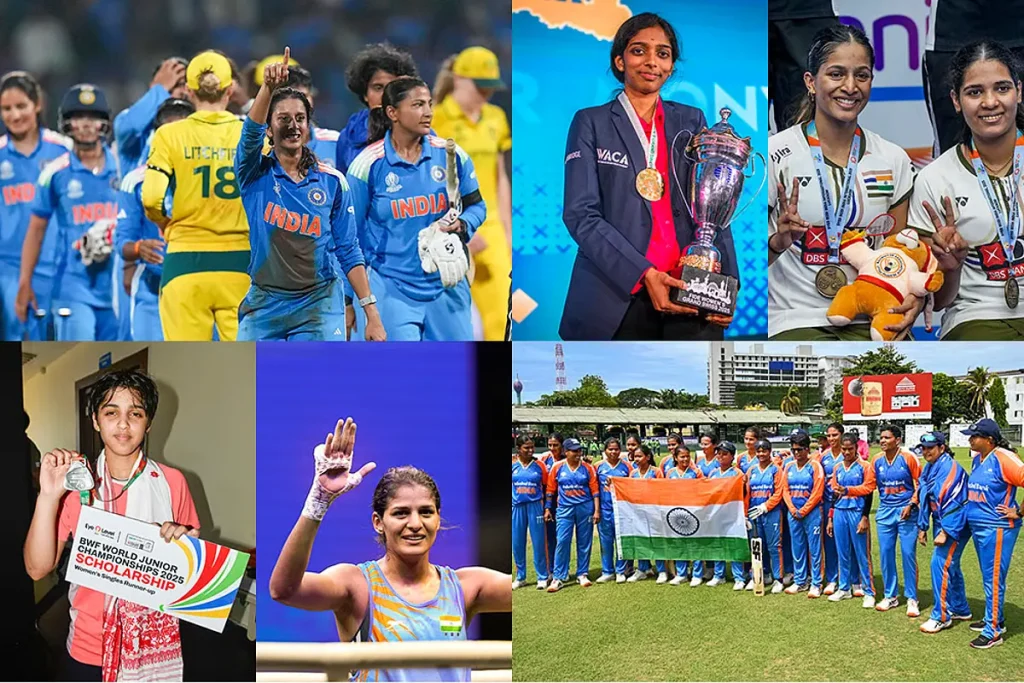

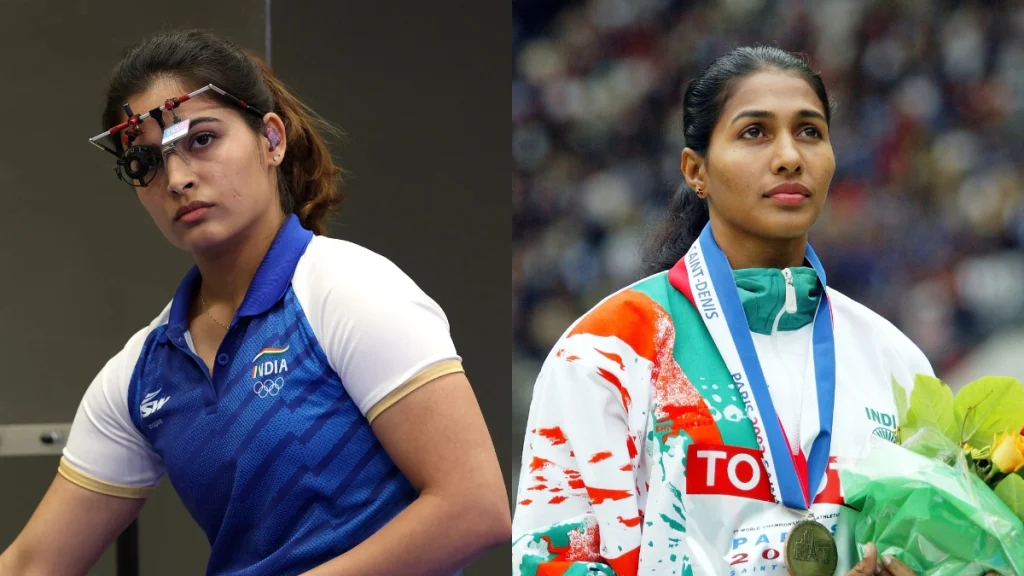
There are years when sport feels loud. And then there are years when it feels inevitable. (Image courtesy: assettype)
Last year was the latter.
It didn’t arrive with a single defining headline or one viral clip. Instead, it unfolded quietly and then all at once; across chessboards and cricket grounds, football pitches and boxing rings, para tracks and training centres that once barely made the news. By the time the year settled into history, one truth became undeniable: Indian women were no longer asking for space in sport. They had taken it, and reshaped it.
This wasn’t about representation.
It was about ownership.
The World Cup That Changed the Room for Indian Women
When the Indian women’s cricket team lifted their first-ever ICC Women’s Cricket World Cup last year, it marked more than a historic win. It reset the room.
For decades, women’s cricket in India lived on the margins; limited broadcasts, modest contracts, and careers powered more by belief than backing. Players travelled economy, trained without spotlight, and played for pride long before paychecks caught up.
From Limited Resources to Global Recognition
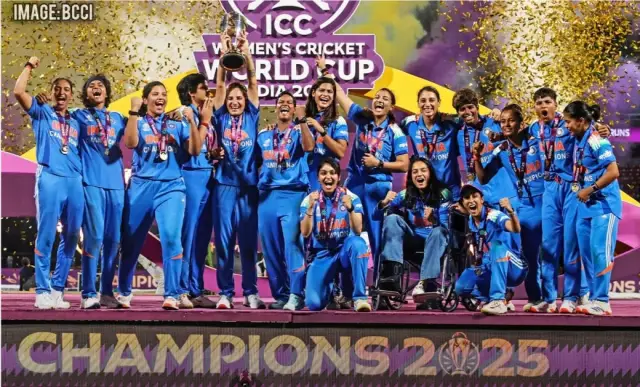

Many of these players, Smriti Mandhana included, grew up in households where sport wasn’t a career plan, just a stubborn dream. Mandhana’s early years were shaped by repetition, discipline, and sacrifice, not endorsements or privilege. Last year, she became the fastest Indian woman to cross 10,000 international runs, anchoring a team that finally commanded national attention. (Image courtesy: indiasportshub)
That World Cup win didn’t just inspire young girls. It recalibrated respect.
Chessboards, Not Shortcuts: Indian Women Redefine Mind Sports
If cricket was the roar, chess was the quiet domination.
Indian women didn’t arrive at the top of global chess through shortcuts or legacy systems. They arrived through obsession, discipline, and long hours spent thinking their way forward.
Divya Deshmukh and the Rise of Indian Women in Global Chess
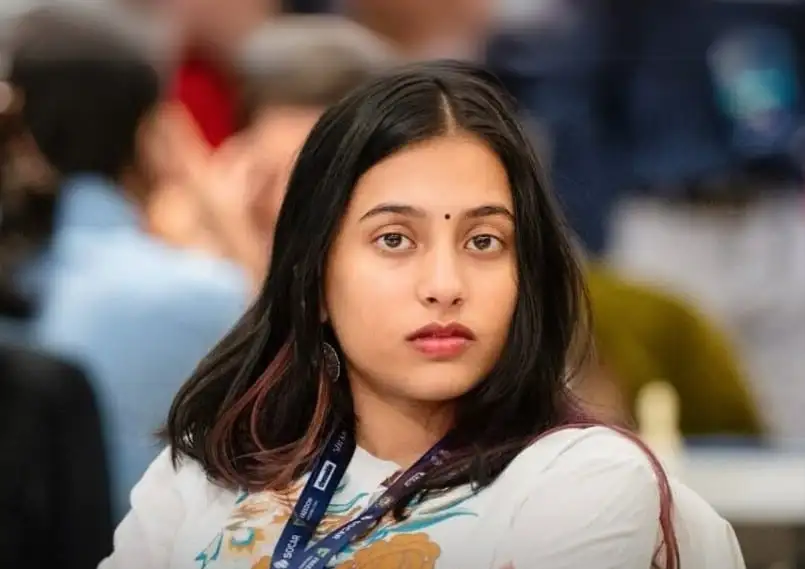

Divya Deshmukh’s ascent reads like modern sporting folklore. No elite European academy. No generational privilege. Just raw intellect, family support, and relentless work. Last year, she became the first Indian woman to win the FIDE Women’s World Cup, earning the Grandmaster title outright.
In a sport long dominated by men, and historically controlled by Europe, her victory felt seismic. Indian women weren’t just participating in thinking sports anymore. They were defining the global standard.
From school halls to international boards, gender stopped being a barrier and became just another statistic rewritten.
Indian Women’s Football Finds Its Voice on the Asian Stage
Women’s football in India has rarely enjoyed ideal conditions. Sparse funding. Limited visibility. Fragile grassroots systems.
Yet last year, the national women’s team didn’t wait for perfection. They qualified for the AFC Women’s Asian Cup on merit.
Qualification, Record Wins, and Long-Overdue Legitimacy
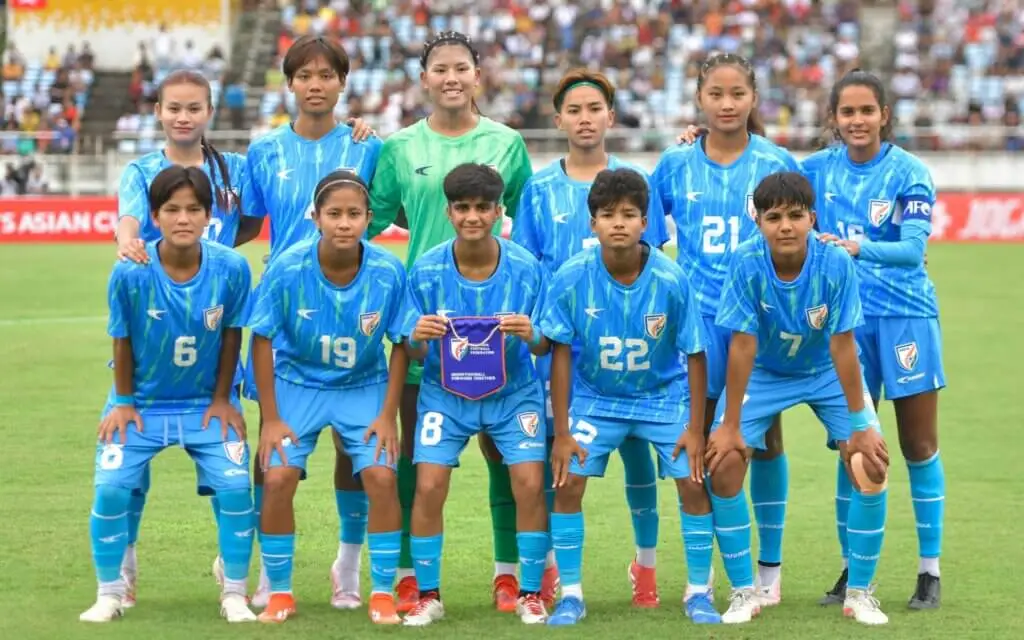

Along the way, they delivered a 13–0 win against Mongolia, India’s biggest AFC victory ever. Most players on that squad trained on uneven pitches, balanced education or employment, and chased football because it offered freedom, not security.
Their qualification wasn’t just about goals scored. It was about legitimacy earned.
Where Limits Were Redefined in Para Sports
If one space permanently altered how Indian sport understands ability, it was para sport.
Here, Indian women didn’t just break stereotypes. They erased them.
Sheetal Devi and the New Meaning of Ability in Indian Sport
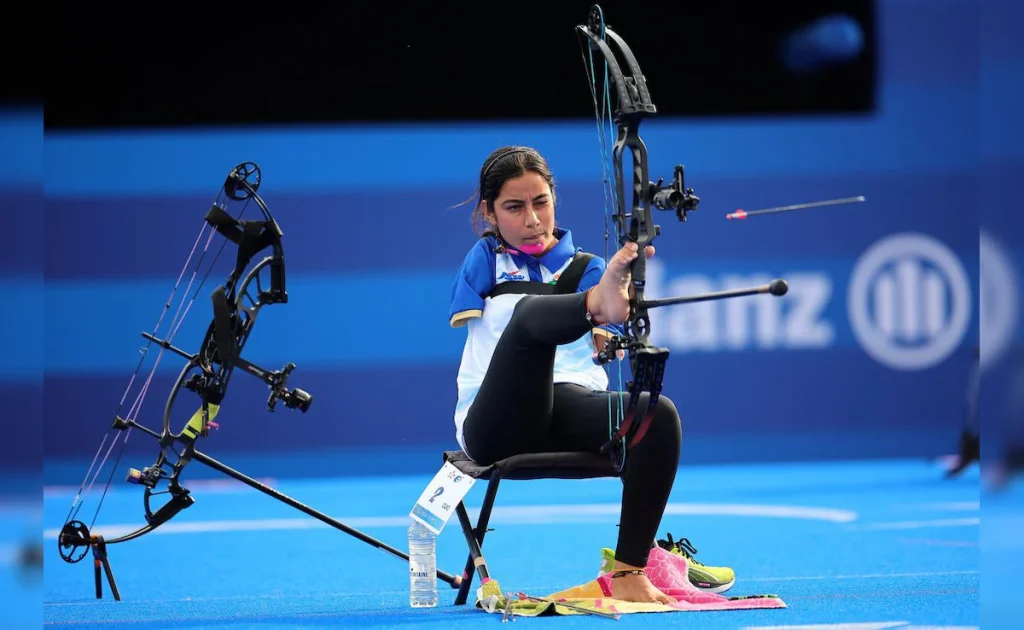

Sheetal Devi’s journey defies easy summaries. Born without arms, she taught herself archery using her feet, shoulders, and jaw; without precedent or blueprint. Last year, she became a world champion. Soon after, she competed alongside able-bodied archers at national trials. (Image courtesy: ndtvimg)
Her achievements were never framed by sympathy but by precision.
Alongside her, athletes like Deepthi Jeevanji delivered global medals, reinforcing a truth now impossible to ignore: disability in Indian sport is no longer about limitation. It is about adaptation, excellence, and respect.
Power, Precision, and Punch: Indian Women in Boxing
In boxing rings across the world, Indian women emerged as the backbone of medal tallies. At the World Boxing Cup Finals last year, they secured multiple golds, often outperforming expectations and better-funded opponents.
When Skill Beat Privilege in the Global Ring
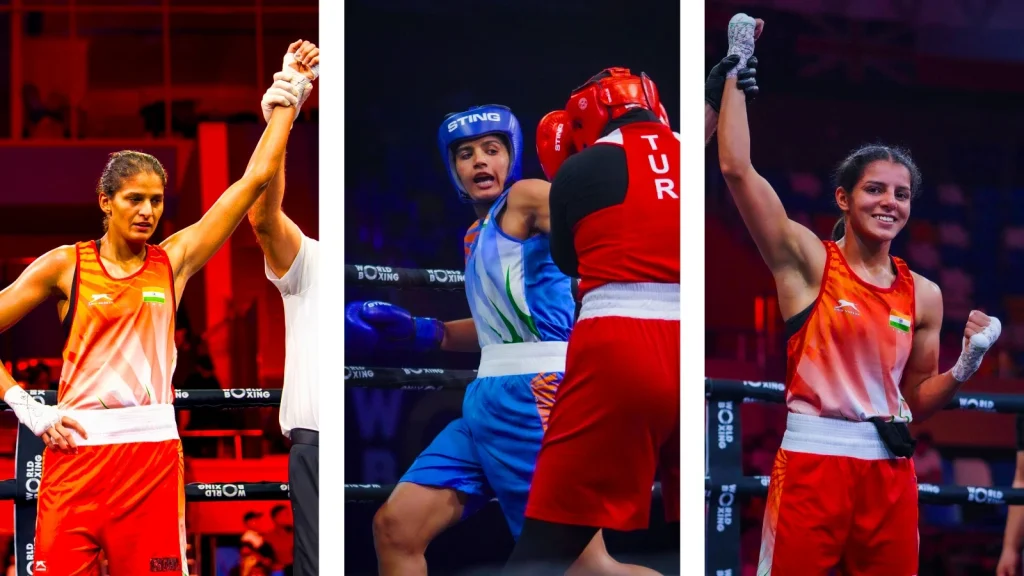
Many of these boxers come from working-class backgrounds where sport was seen as risk, not reward. They fought, literally, against financial pressure, social resistance, and limited access. (Image courtesy: indianexpress)
What carried them forward wasn’t privilege.
It was a skill sharpened by hunger.
More Stories of Indian Women Breaking the Barriers
In the realm of extreme endurance, two women redefined what the human body, and the Indian spirit, can withstand.
Kanchan Ugursandi
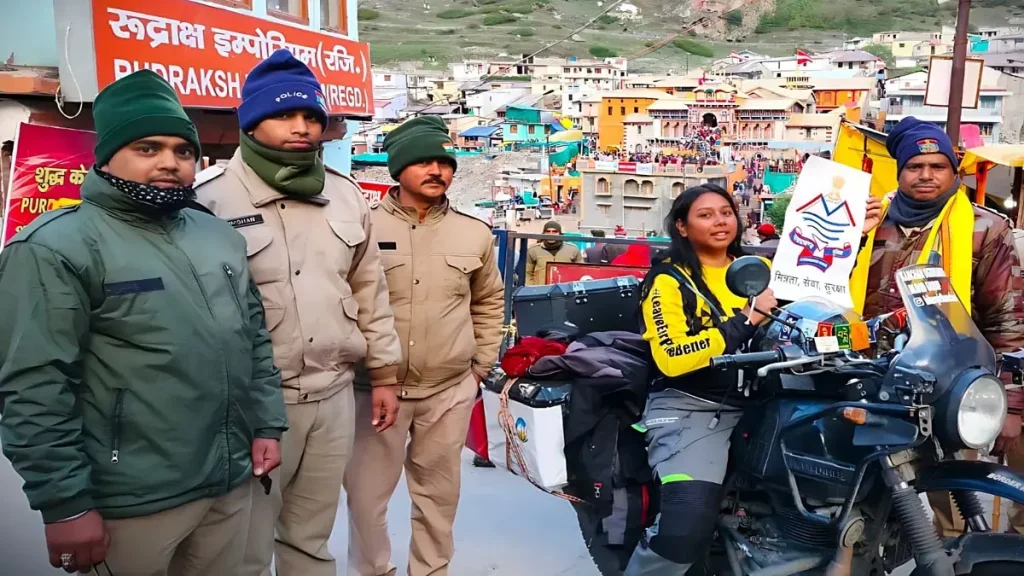
On the jagged peaks of the Himalayas, Kanchan became the first solo woman to traverse 18 high-altitude passes in a single stretch. It wasn’t just a bike ride; it was a masterclass in solitude and survival, proving that the most intimidating terrains on earth are no longer off-limits to solo Indian women. (Image courtesy: jagranimages)
Sufiya Sufi
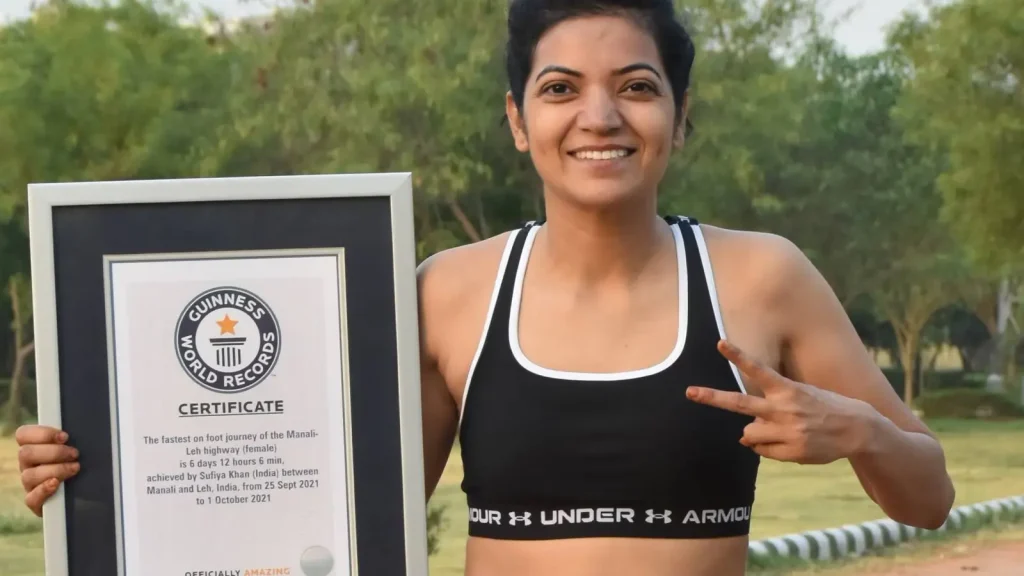
Rajasthan’s runner, Sufiya Sufi ran for 480 km over a period of 98.2 hours along the path that connects Manali to Leh. She set a Guinness World Record with that feat and showed the world that Indian women have endurance far exceeding that of nature. (Image courtesy: hindustantimes)
Precision on the Track and the Tatami
The benchmarks have shifted and Indian women are filing for a place on the world stage where timing and according to some, all techniques exist and the difference between winning and disappearing can often be determined by a few small fractions of seconds.
Jyothi Yarraji
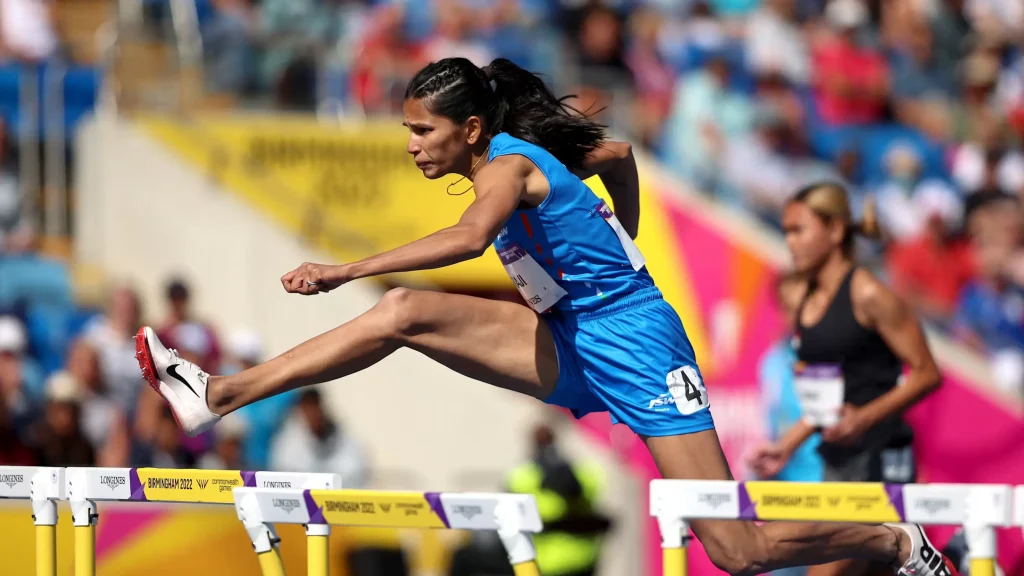
Jyothi Yarraji is currently the best-performing woman in Indian Athletics at any distance, having won gold medals in the Asian Athletics Championships in 2023 and 2025. She has also left behind a history of accomplishments where she achieved gold medal status in both championships, leaving behind her own legacy by establishing a “ New Normal” standard of performance and demonstrating that she is a world class performer. (Image courtesy: olympics)
Alisha Choudhary
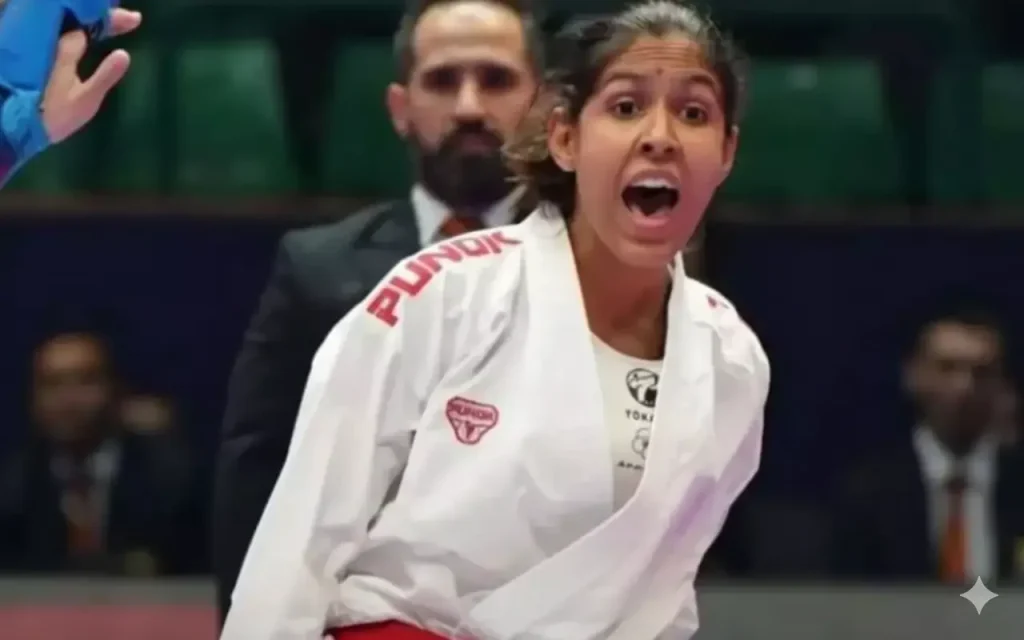

Alisha Choudhary has broken the historical ceiling in contact sports, by winning a Gold medal at Karate 1 Series A for the India Karate; announcing that not only has India entered the global karate arena, but they have become a player.
Why This Was Never Just a Year for Indian Women in Sports
What made last year extraordinary wasn’t just the medals or the firsts. It was the pattern it created.
Across disciplines, Indian women succeeded not in spite of adversity, but because they learned how to survive it. They didn’t wait for systems to evolve. They bent them and forced them to catch up.
From Representation to Ownership
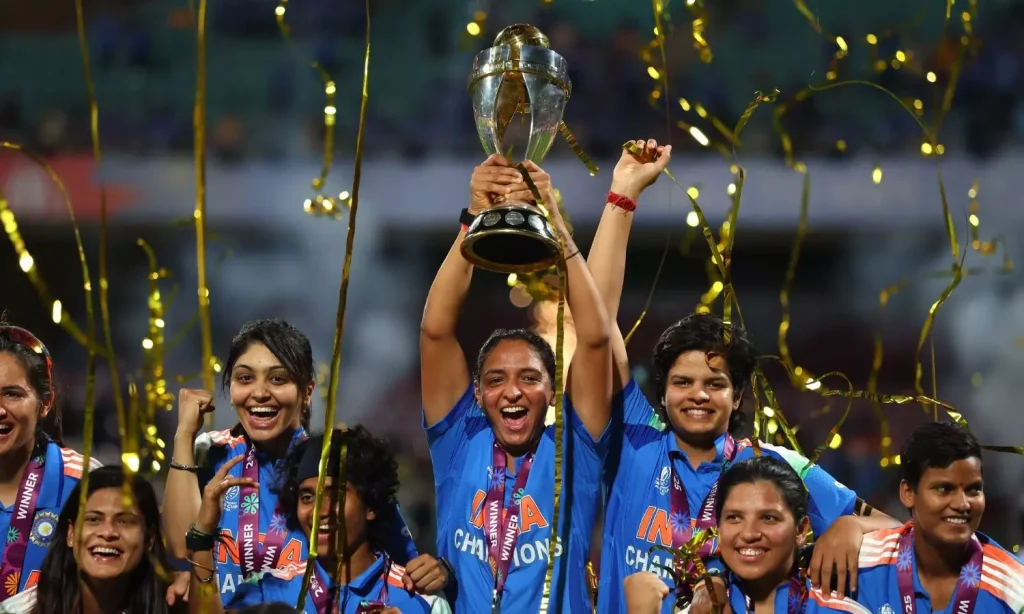

The ripple effects are already visible in grassroots participation, in sponsorship priorities, and in the way women’s sport is finally discussed without qualifiers. (Image courtesy: thebridge)
The girl watching from a small town today doesn’t just see champions anymore. She sees proof. Proof that talent doesn’t need permission. Proof that money helps, but belief lasts longer. And it is also proof that Indian women don’t need to enter men’s fields, they can redefine them entirely.
Conclusion
Indian women athletes didn’t just deliver results last year; they altered expectations. Across sports, they proved that excellence is no longer an exception waiting to be celebrated, but a standard being set. What changed wasn’t just scorelines or podium finishes, but confidence, investment, and belief.
This shift marks a long-term evolution, where Indian women are shaping systems rather than adapting to them. The legacy of this year will not be measured only in medals, but in the generations who grow up knowing that global success is achievable, sustainable, and theirs to claim.
The stories of these athletes are also why their voices matter far beyond the field.
Explore Women’s Day Special Speakers who bring these journeys of resilience and leadership to life at engage4more.com. Also, enjoy our value adds like complimentary quizzing for your events along with free publicity by our post-event coverage via our social media handles!
FAQ: Translating Sports Excellence to Corporate Success
1. Why was last year significant for Indian women in sports?
Last year marked a shift from potential to consistent global performance, with Indian women delivering historic wins across multiple sports including cricket, chess, football, boxing, and para athletics.
2. Which Indian women athletes made the biggest global impact recently?
Athletes like Smriti Mandhana, Divya Deshmukh, Sheetal Devi, and India’s women football and boxing teams played defining roles in reshaping India’s sporting reputation worldwide.
3. How have Indian women athletes influenced grassroots sports participation?
Their success has boosted visibility, inspired young athletes, improved sponsorship interest, and encouraged families to see sports as a viable career option for girls.
4. What role did para athletes play in changing Indian sports narratives?
Indian women para athletes redefined ability by competing and winning at the highest levels, shifting focus from disability to excellence and innovation.
5. How are Indian women athletes influencing leadership beyond sports?
Many have emerged as role models, speakers, and change-makers, using their journeys to inspire conversations around resilience, equality, and leadership in corporate and social spaces.
6. Why are Indian women athletes considered top-tier motivational speakers for corporate events?
Athletes are the ultimate practitioners of peak performance under pressure. They share raw ‘Virgin Stories’ of training through limited resources and winning on the global stage. Their lived experience provides Strategic Proof that resilience and discipline can overcome any systemic barrier.
7. How does a sports-based keynote provide a ‘tangible roadmap’ for my employees?
Beyond the “cheerleading,” these practitioners break down the mechanics of a winning mindset. Every session booked via engage4more is audited through the STRIVE Framework to ensure your team walks away with a Monday morning execution roadmap for goal setting and mental toughness.
8. Can I book these sports icons specifically for International Women’s Day (IWD) events?
Yes. Sports legends are among our most requested voices for March 8th. You can explore their availability and specialized IWD themes on our Female & IWD Motivational Speakers Mega-Hub.
9. What is the benefit of hiring a para-athlete like Sheetal Devi for a corporate session?
Para-athletes redefine the very concept of “ability” and “innovation”. Their stories are a masterclass in adaptation and strategic resilience, providing profound insights for teams navigating massive organizational change. Browse our Sports Motivational Speakers to view their full profiles.