


There’s so much that the corporate world can gain from Comedy
The “Uncomfortable” Boardroom Truth
Imagine a high-stakes boardroom in 2026. The air is thick with the hum of high-performance servers, the frantic clicking of keyboards, and the unspoken weight of “Hyper-Productivity.” We are surrounded by AI tools that predict our every market move and data dashboards that track our employees’ “sentiment” in real-time. Yet, walk into that room and you’ll likely find a group of people who are technically proficient but emotionally depleted. We have optimized our workflows, automated our logistics, and digitized our communication, but in the process, we have sterilized our culture. We’ve become so obsessed with the “Bottom Line” that we’ve forgotten the “Human Line.” Six years ago, when the world was a very different place, we argued that humour belonged in the workplace. Today, as we navigate a post-pandemic, AI-saturated landscape, that argument has evolved from a “nice-to-have” suggestion into a high-stakes strategic imperative. If your corporate strategy feels like a dry instruction manual rather than a living, breathing culture, it’s time to stop and ask: Why so serious?
The Great Human Disconnect of 2026

We are currently living through what experts call the “Great Human Disconnect.” Despite being more “connected” via fiber-optics and 5G than ever before, the modern employee feels more isolated. The rise of FOBO (Fear of Becoming Obsolete) due to generative AI, coupled with the fragmented nature of hybrid work, has created a workforce that is perpetually “on edge.” This is the “Seriousness Trap”—the belief that to be professional, one must be sombre; to be productive, one must be humourless. But here is the reality: a sombre workplace is a brittle workplace. When tension is high and laughter is low, innovation dies. Why? Because innovation requires risk, and risk requires the psychological safety that only a shared sense of humanity can provide. Humour is the ultimate “pattern interrupt.” It breaks the cycle of stress, disrupts the “doom-scrolling” mentality of the modern office, and acts as a strategic dose of dopamine that re-energizes a team’s creative engine. In 2026, comedy isn’t just a break from work; it is the work that makes all other work possible.
The ROI of Laughter: Data-Driven Engagement
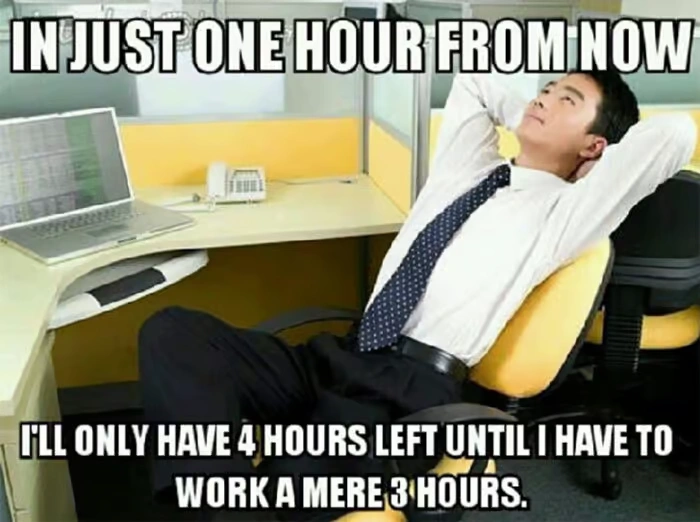
Decision-makers often view comedy as “fluff”—something to be relegated to the annual Christmas party or a Friday happy hour. However, the ROI of Laughter is backed by hard organizational science.
When a team engages in corporate strategy humour, they aren’t just “having fun”; they are building Psychological Safety. According to recent 2025 studies on workplace dynamics, teams that report a high frequency of “affiliative humour” (humour that brings people together) show a 30% increase in problem-solving efficiency. Why? Because laughter physically lowers cortisol levels and increases oxytocin. It literally changes the chemistry of the room.
From an Employee Engagement ROI perspective, humour is the most cost-effective retention tool available. Employees don’t leave companies; they leave environments that feel like sterile pressure cookers. By integrating humour into your leadership style, you reduce “Resenteeism” (employees staying in roles but resenting their work) and replace it with genuine advocacy.
Humour as a Shield Against FOBO and Burnout

As AI continues to automate technical tasks, the “Human Frontier” is where the value lies. This is where the concept of Mental Fitness comes into play. Unlike “Mental Health,” which often focuses on recovery, Mental Fitness is proactive.
Humour is a mental fitness tool. It allows employees to process the absurdity of modern work life—the endless pings, the “hallucinating” AI bots, and the shifting goalposts. When we laugh at a shared struggle, we take the power away from the stressor. This is the ultimate burnout prevention strategy for 2026. It turns “us vs. the problem” into “us laughing at the problem until we solve it.”
But don’t just take our word for it. Look at the icons of leadership. From Barack Obama’s tactical mic drops that humanized the Oval Office, to Warren Buffett’s self-deprecating wit that made him the world’s most trusted investor, humor has always been the ‘secret sauce’ of authority. Even PM Narendra Modi uses narrative wit to simplify complex national visions, while Elon Musk leverages meme culture to dominate the global tech conversation. Historically, even Charles II understood that a nation (or a company) cannot be led by gravity alone—it needs the levity of a ‘Merry Monarch’ to thrive.
The “Power User” Profile: Leadership & The Wit Factor
If you think humour diminishes authority, look at the world’s most influential figures. They don’t use comedy to be “funny”; they use it as a tactical weapon to disarm opponents, build rapport, and humanize their massive brands.
Barack Obama
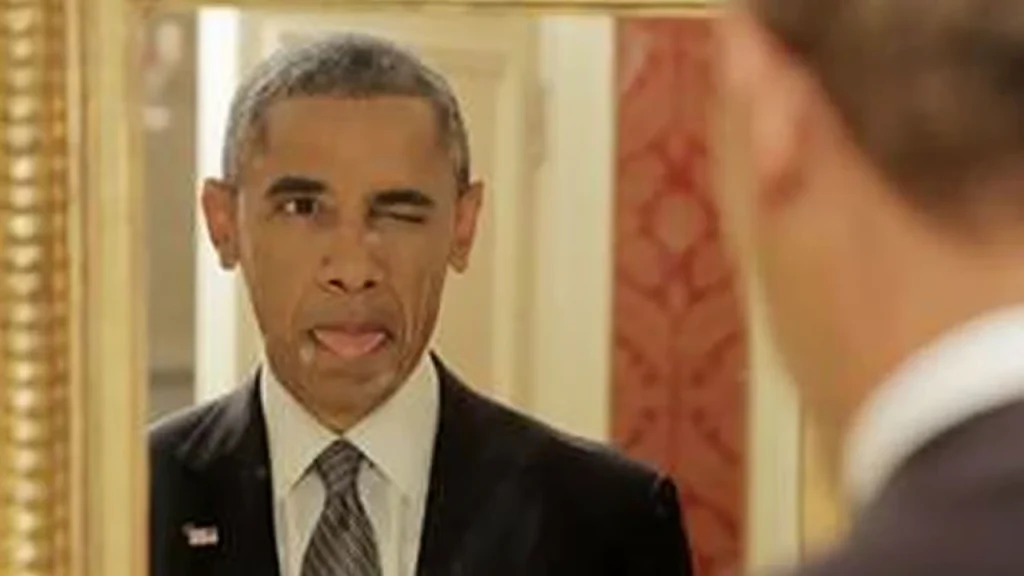
“We should also make sure everyone has something to eat on Thanksgiving. Of course, except the Turkeys, beause they’re already stuffed.”
The master of the “mic drop.” Obama famously used the White House Correspondents’ Dinner and “Between Two Ferns” to bridge the gap between the presidency and younger generations. His use of humour is a masterclass in Affiliative Humor—using wit to make a high-pressure role feel accessible.
Warren Buffett

“I buy expensive suits. They just look cheap on me”
The “Oracle of Omaha” is known for his dry, self-deprecating wit. By joking about his own mistakes or his simple lifestyle, he builds Trustworthiness. He proves that you don’t need to be somber to manage billions; you just need to be authentic.
Narendra Modi
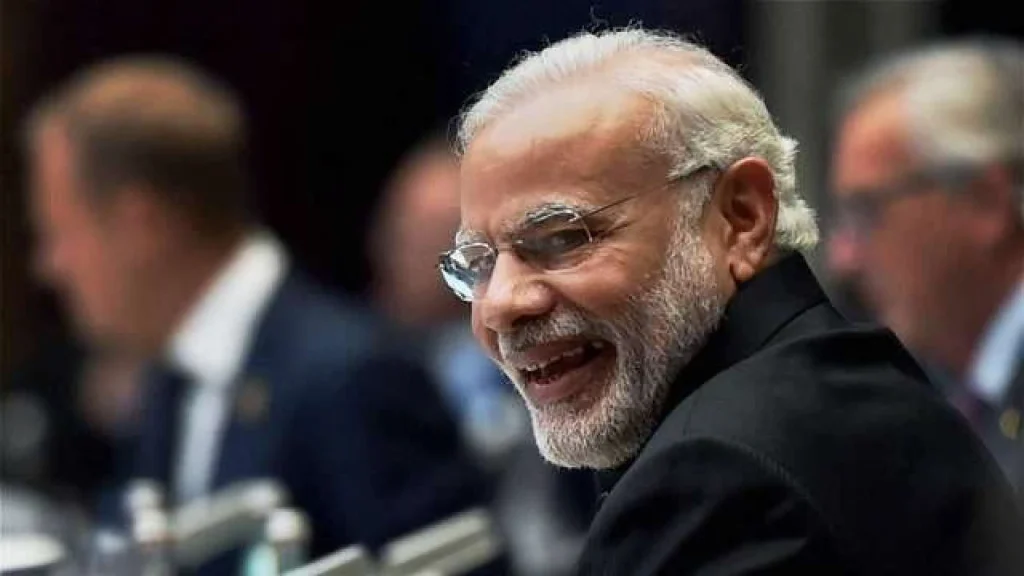
“You must be reading in newspapers, Modi is celebrating, Modi wastes money, Modi does this and that… Its a question of their livelihood, and I’m glad that I’m working to provide for their livelihood”
A master of Narrative Architecture, PM Modi often uses sharp, observational wit during his speeches to connect with the common man. His ability to use light-hearted metaphors to explain complex national shifts is a prime example of using humour to simplify Knowledge (The ‘K’ in SPARKS).
King Charles III
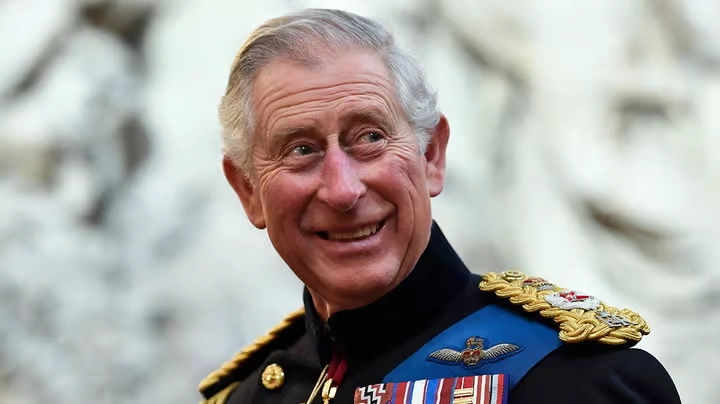
“Do you seriously expect me to be the first Prince of Wales in history not to have a mistress?”
Even historically, the “Merry Monarch” knew that after the grim, joyless years of the Interregnum, England needed a leader who embraced the arts, theatre, and wit to stabilize a fractured nation. He is the original case study for humour as a Stability Tool.
Elon Musk

“Apparently there is this thing called “Dad jokes” and I make them.”
Love him or hate him, Musk’s entire “X” (formerly Twitter) strategy is built on Meme Culture. He uses humor to stay at the center of the global conversation, proving that in 2026, the leader who wins the “Laugh Share” often wins the “Market Share.”
“I reinvented electric cars and I’m sending people to Mars on a rocket ship. Did you think I was also going to be a chill, normal dude?”
Elon Musk also appeared on SNL (Saturday Night Live), which is a famous late night live television sketch comedy show and like always killed it by exceeding expectations of the viewers. The guy is the true definition of brilliance who cannot be less than perfect at anything.
The “Human Frontier”: Why AI Can’t Joke (Yet)
We’ve all tried to ask an AI to tell a joke. Usually, the result is a sterile, “dad-joke” structure that lacks timing, context, and soul. AI cannot “read the room.” It doesn’t know that the printer has been broken for three days and that a witty comment about it would diffuse the tension of a looming deadline.
In 2026, Human-Centric Leadership is your competitive advantage. By embracing comedy, you are leaning into the one thing machines cannot replicate: the shared, often messy, but always beautiful experience of being human. This is why your corporate strategy urgently needs humour—not to distract from the work, but to celebrate the people doing it.
The “Michael Scott” Guardrails: Doing Humor Right
Of course, there is a “right way” to do comedy. We aren’t suggesting you turn your office into a 24/7 stand-up club. Strategic humour should be:
-
Affiliative: It should include, never exclude.
-
Contextual: It should relate to the shared goals of the company.
-
Vulnerable: It starts at the top. If the C-suite can’t laugh at themselves, the rest of the organization will remain “masked.”
Conclusion: Flipping the Script for a New Era
The blogs we wrote half a decade ago were a call for change. Today, this is a call for survival. A “serious” corporate strategy in 2026 is a brittle one—prone to cracking under the pressure of the modern world. A strategy that incorporates humour is resilient, agile, and—above all—magnetic.
It’s time to move past the fear that humour diminishes authority. In reality, humour amplifies authority by making it accessible. So, as you look at your KPIs, your dashboards, and your five-year plans, take a moment to look at your people. Give them a reason to smile. Inject that dose of comedy. Because a team that laughs together is a team that will conquer 2026 together.
The EEAT Authority Block: Why engage4more?
This strategy isn’t based on academic HR theory; it is forged in the fire of high-stakes logistics. Nishant Parashar, Founder of engage4more, brings over two decades of experience managing massive human capital events, from the operational intensity of the Mumbai Marathon to executing brand launches for The Times of India.
He is the architect of the proprietary MORE² Philosophy—a powerful diagnostic tool that balances human priorities (Money, Objective, Role, Emotional Connect) with tactical business enablers. Through engage4more, Nishant and his team have executed over thousands of strategic team-building interventions for India’s top 100 brands, transforming employee engagement from a “nice-to-have HR checklist” into a measurable, ROI-driven business engine.
Since 2010, we have partnered with over 5,000 corporate brands to move their cultures beyond generic ‘Fun Fridays’. Diagnosed by our proprietary MORE² matrix and executed through our S.P.A.R.K.S. delivery framework, our interventions are strategically designed to break down departmental silos, build psychological safety, and drive measurable business ROI.
Our Proprietary Engagement IPs
We have pioneered some of India’s most successful engagement platforms that prove the power of wit and play in the professional world:
-
The Good Gobar Show: Our signature podcast where we peel back the layers of corporate “seriousness” to find the authentic, human stories beneath.
-
Corporate Talent Championship (CTC): The ultimate stage for employees to showcase their “non-work” selves, proving that a funny accountant or a singing coder is a more engaged asset.
-
Brain Bout: India’s premier corporate quiz that turns knowledge-sharing into a high-energy, humorous, and competitive experience.
Explore our curated master catalogue of over 2,000+ Premium Corporate Team Building Activities, featuring tailored solutions for every corporate need:
Outdoor Team Building Offsites
FAQ
1. Is comedy appropriate for a serious corporate environment?
Absolutely. High-stakes environments (like Finance or Tech) actually require more humour to manage high cortisol levels. As seen with leaders like Warren Buffett, humour doesn’t negate seriousness; it makes the person behind the strategy more trustworthy and accessible.
2. How does humour help with “FOBO” (Fear of Becoming Obsolete) in the age of AI?
AI can process data, but it cannot authentically “read the room” or share a human inside joke. Embracing humour is a way to reinforce Human-Centric Leadership, reminding your team that their unique human personality is something a machine cannot replicate.
3. What if a joke “misses” or offends someone?
This is why we advocate for Affiliative Humour—humour that brings people together rather than pushing them apart. Our strategy focuses on “Punching Up” or self-deprecation, ensuring that the comedy builds Psychological Safety rather than eroding it.
4. Can humour actually improve my SEO and Google Discover rankings?
Yes! By refreshing old content with 2026 trends and human-centric “Experience” (the first ‘E’ in EEAT), you trigger Google’s freshness algorithm. Using a “catchy” H1 like “Why so serious?” also improves Click-Through Rates (CTR), which signals to Google that your content is valuable.
5. How do I start integrating humour into my existing MORE² strategy?
Start small. Use a light-hearted “pattern interrupt” in your next town hall or share a relatable observation on your internal Slack/Teams channel. For a larger shift, consider a structured workshop or an episode of The Good Gobar Show to set the tone for your organization.