



Top Indian storytellers inspiring audiences through authentic stories and experiences
There is something timeless about a good story. It moves from the warmth of a voice straight into the heart of a listener, almost instantly. You don’t just hear it — you live it. That instinct is exactly what separates a forgettable case study from a story a room still remembers a year later.
Want your team to learn this technique directly? Explore our Expert Masterclasses. Looking for a storyteller for your stage instead? Browse the Storytellers category, or if your need is more strategy-led than narrative-led, see our Business Strategy speakers.
But in 2026, corporate audiences are tired of recycled “Steve Jobs” anecdotes. The shift is toward “Virgin Stories” — true, personal, untold moments you can’t find with a Google search. The leaders who land best are “Practitioners”: people who share authentic, behind-the-scenes accounts of failure and hard-won “war stories” that build trust immediately. Here’s the framework behind why that works, and five very different leaders who each use it in their own way.
The TCP Framework: Time, Character, Place
A strong corporate story isn’t just “what happened” — it’s a film. To turn a case study into a story, apply the TCP Framework:
- Time (The Anchor): Specificity creates urgency. Instead of “last year,” say “It was 2:00 AM on a rainy Tuesday…”
- Character (The Avatar): Facts alone don’t move people. Every story needs a Hero (the team) and a Villain (the deadline, the legacy system).
- Place (The Stage): Ground the audience. “We were in a cramped meeting room in Bangalore…” — sensory detail lowers an audience’s defences.
The five archetypes below each lean on TCP differently — seeing the technique applied five different ways is often the fastest way to internalize it.
5 Ways Leaders Put the Framework to Work
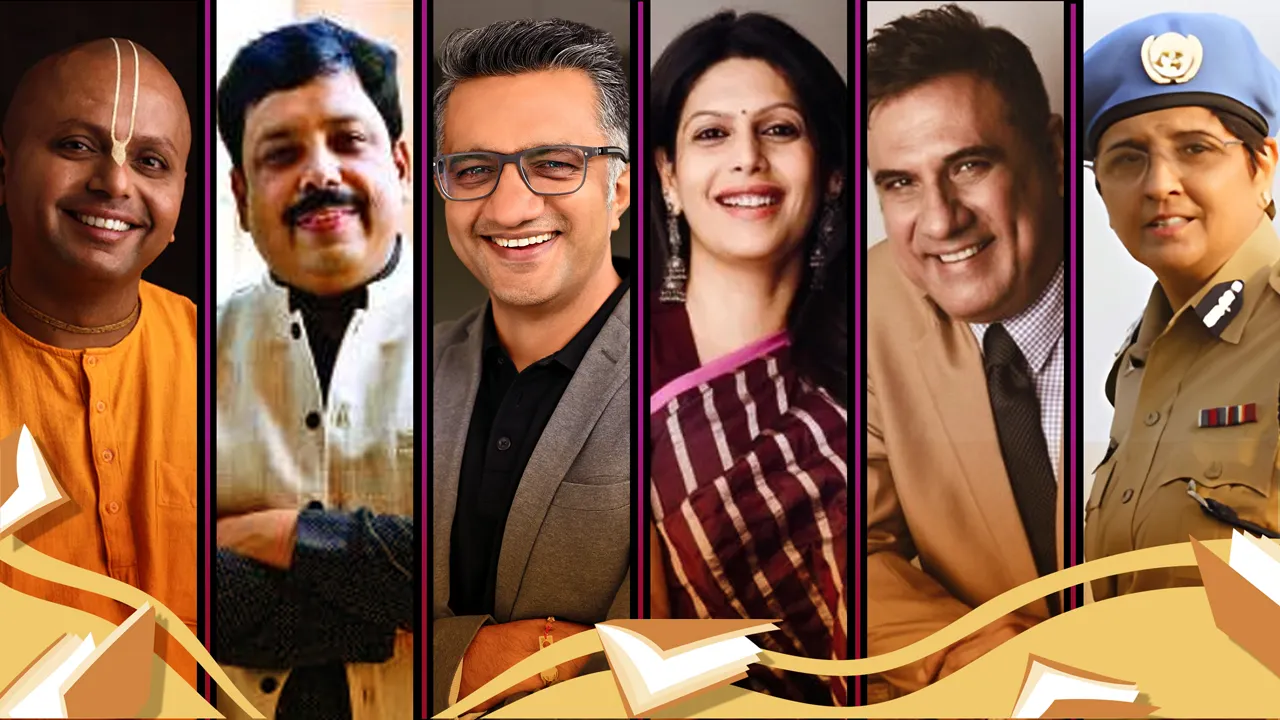
1. The Monk: Gaur Gopal Das
You’ve likely heard his calm, musical cadence before. Gaur Gopal Das doesn’t preach — he narrates. A story about a frustrated techie quietly becomes a parable about purpose. A small joke about Mumbai traffic leads to a moment of real introspection.
His gift is weaving spiritual wisdom into the chaos of modern life using Place and Character above all — he doesn’t talk at an audience, he talks with them. (Image courtesy: barrywehmiller)


2. The Mythologist: Anand Neelakantan
Anand Neelakantan has turned Indian epics inside out, giving the villain a voice in a world built for heroes. His retellings of the Ramayana and Mahabharata function less like fiction and more like mirrors. Through talks, stories, and books, he shows that these narratives were never black and white — they’re about choices, perception, and perspective.

His sessions are a masterclass in the Character half of the framework, showing how ancient epics can reshape a modern boardroom mindset. His book The Asura Way remains a strong example of how he blends mythology with modern corporate life.
3. The Boardroom Bard: Prakash Iyer
Few speakers make motivation feel this real. Prakash Iyer, a leadership coach and bestselling author, turns ordinary experiences into lessons that stick. He narrates stories about cricket, teamwork, and business setbacks with the ease of a friend rather than the distance of a mentor — Time and Place used to make abstract leadership lessons concrete.

His storytelling makes leadership personal — something felt, not something read in a manual.
4. The Creative Maverick: Gaurav Sharma
What happens when creativity meets logic? Gaurav Sharma turns music, cinema, and innovation into management lessons. His talks play out like playlists — rhythmic, insightful, full of energy.

From R.D. Burman’s experimentation to Steve Jobs’ obsession with design, Gaurav stitches together narratives that spark creativity — proof that the framework works even outside a traditional business case study.
5. The Grit Survivor: Nishant Parashar
In a world full of polished success stories, Nishant Parashar stands out for being honest. As the founder of engage4more, he’s built, fallen, and rebuilt — and tells it exactly as it happened.
He talks about failure like a friend who’s been there, not a coach speaking from a pedestal — the Character (Hero and Villain) half of TCP at its rawest. His podcast, Good Gobar Show, is a good example of the kind of stories he looks for.


Matching the Technique to the Room
Different situations call for a different balance of Time, Character, and Place:
- For spiritual and emotional reflection: a Monk-style narrator, in the vein of Gaur Gopal Das
- For mythological perspective and cultural insight: a Mythologist, in the vein of Anand Neelakantan
- For corporate leadership and management training: a Boardroom Bard, in the vein of Prakash Iyer
- For creative and innovative storytelling: a Creative Maverick, in the vein of Gaurav Sharma
- For entrepreneurial inspiration: a Grit Survivor, in the vein of Nishant Parashar
Why the Framework — Not Just the Talent — Is What Wins
The best storytelling in leadership doesn’t just inspire — it transforms. It makes an audience feel first and think second. Each leader above carries a different rhythm: some speak in silence, some in humour, some in myth, some in data. But every one of them is using the same underlying structure to get there.
Because when you hear a great story, you don’t just remember the words — you remember yourself in them. That’s the real value of the TCP Framework: it’s not a trick for one keynote, it’s a repeatable structure any leader can learn.
If you’re ready to put this into practice, our Expert Masterclasses teach the framework directly to your team, or you can bring in a speaker who embodies it via our Storytellers and Business Strategy categories, depending on whether your need is narrative-led or strategy-led.
FAQs
Q1: What’s the difference between a motivational speaker and someone using the TCP storytelling framework?
A motivational speaker typically uses high-energy delivery to shift an audience’s mood in the moment (“you can do it”). The TCP Framework — Time, Character, Place — shifts an audience’s mindset by showing how change actually happens, through a structured narrative rather than energy alone. If you need to align a team around a new strategy or culture, the framework is often more effective than pure motivation.
Q2: Can the TCP Framework be taught to a sales or leadership team directly?
Yes. It’s a skill that can be built, not just a talent some people have. A keynote session (60–90 minutes) is great for seeing it in action, but a masterclass or workshop (half-day or full-day) is what’s needed to actually teach the technique — including how to build authentic, first-person stories that help close deals and lead more effectively.
Q3: How do I choose the right storytelling style for my event?
Match the style to the business challenge: a mythologist’s approach for culture and values, using ancient wisdom to resolve modern conflicts; a grit survivor’s approach for resilience and hard times, sharing personal stories of overcoming setbacks; a creative maverick’s approach for innovation and disruption, using humour or the arts to break conventional thinking.
Q4: Are mythological narratives relevant for modern tech or finance companies?
Yes, more than ever. The core challenges of corporate life — conflict, loyalty, ambition, ethics — are timeless. Mythological storytelling doesn’t just retell epics; it decodes them for the boardroom, translating concepts like Dharma (duty) into modern frameworks for leadership and decision-making. That makes it effective for organisations facing ethical dilemmas or cultural change.
Q5: How does engage4more make sure a speaker’s storytelling style aligns with our company’s vision?
Every artist is vetted through the proprietary STRIVE Framework (Skill, Thought, Return, Insight, Vision, Engagement). We don’t just book a name — we brief the speaker on the specific “Villain” (the problem being solved) so their story delivers a strategic resolution for the audience, not just entertainment.
Q6: Does this style of storytelling work for virtual town halls?
Yes. Storytelling is one of the few formats that translates fully to a virtual screen, since it relies on the narrative rather than the stage production. Every leader in this guide has experience delivering high-impact virtual sessions that keep remote teams engaged.