

New age Indian classicist and keynote speaker’s message on woman empowerment
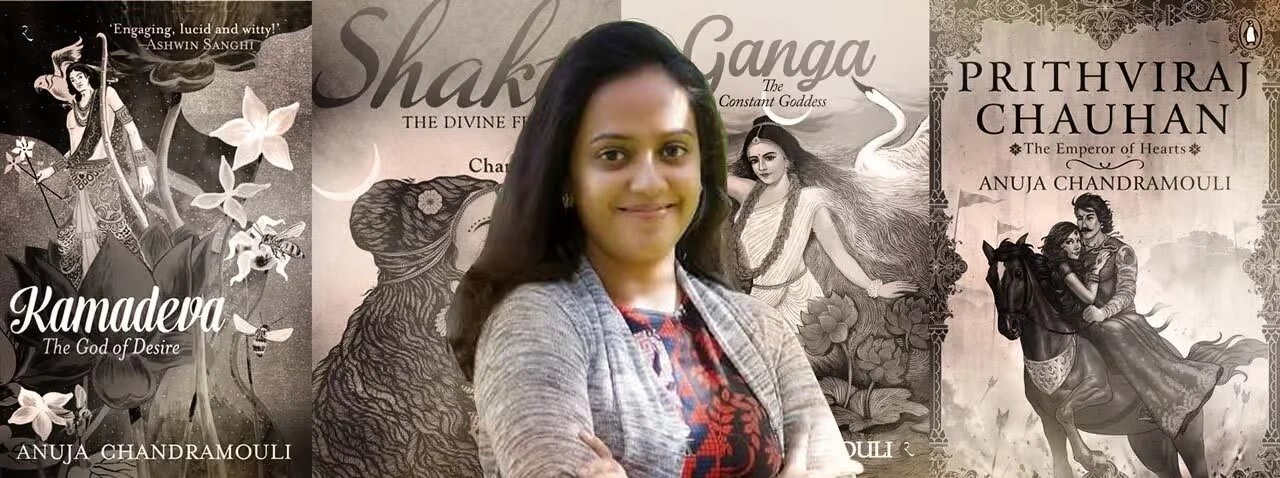
Anuja Chandramouli is one of India’s most widely read authors in mythology, historical fiction, and fantasy. She has written 12 books — including her debut Arjuna: Saga of a Pandava Warrior-Prince, named one of Amazon India’s top 5 sellers in the Indian writing category for 2012 — and has won the AutHer Award for popular choice in 2021. She is a TEDx speaker, a columnist for The New Indian Express, and a trained Bharatanatyam dancer. Her Mahabharata and Ramayana storytelling series reaches audiences on YouTube, Spotify, Apple Podcasts, and Alexa.
Anuja Chandramouli is available to speak at your corporate event through engage4more. If her perspective resonates with your audience or event brief, browse her profile and check availability on our Anuja Chandramouli speaker page.
She describes her perspective as that of a ‘new age Indian classicist’ — someone who treats ancient stories not as historical artefacts but as living frameworks for understanding the present. That instinct is what makes her empowerment work distinctive: rather than building a women’s leadership framework from research, data, or corporate case studies, she builds it from mythology. Specifically, from Shakti.
This piece, written by engage4more’s editorial team, draws on Anuja’s published writing, her TEDx talks, and her corporate speaking to explain what the Shakti framework is, where it comes from in her thinking, and why it works in a corporate room.
The Question Anuja Starts With: Why did Growing Up Female Feel Like the Lesser Option?

Anuja Chandramouli’s empowerment framework does not begin with a corporate case study or a gender statistics slide. It begins with an honest observation from her own childhood: growing up female in an Indian middle-class household, the male experience seemed plainly more aspirational. The men came home to sofas and conversation; the women came home to kitchens and invisible labour. As a child making sense of that gap, Anuja has written and spoken about wishing she had been born differently.
This starting point is deliberate and important. Anuja is not presenting a victimhood narrative. She is establishing the honest baseline that most women in a corporate room will recognise privately: that the professional world was not designed with them as the default, and that the socialisation many women received about their own capabilities and worth was shaped by that asymmetry. The reason she names it directly is that her framework argues you cannot genuinely dismantle a limiting belief without first seeing it clearly.
What changed for Anuja, she has said, was not a corporate mentor or a leadership program. It was mythology. Specifically, her encounter with the ancient Indian tradition’s understanding of feminine power — which, she argues, is fundamentally different from the diminished version of femininity she observed in her childhood kitchen.
The Mythological Foundation: What Ardhanarishwara Teaches About Power
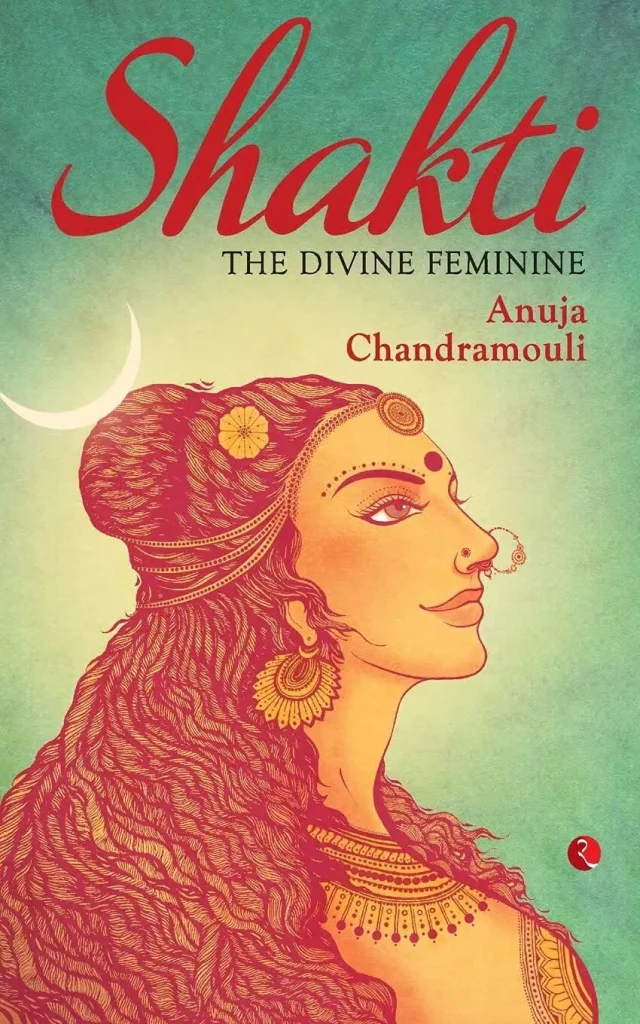
The central myth in Anuja’s empowerment framework is Ardhanarishwara — the composite deity who is half Shiva and half Parvati, representing the inseparability of the masculine principle (purusha) and the feminine principle (prakriti). In Indian philosophical tradition, these are not opposites in the sense of adversaries. They are complementary forces that together constitute wholeness. The world is understood to be in disorder when they are separated and in harmony when they are integrated.
Anuja draws on this myth to make a specific argument: that the problem with how women’s power is often discussed — in both traditional and modern contexts — is that it is framed as either submission (suppressing the feminine in favour of the masculine) or inversion (replacing masculine values with feminine ones). The Ardhanarishwara tradition offers a third option: integration. Neither force is subordinate. Neither is erased. The goal is not to become more masculine to succeed in a masculine-coded world. The goal is to become genuinely whole.
This reframing has a specific practical implication in Anuja’s corporate sessions. The conventional IWD conversation often frames empowerment as the acquisition of traits associated with male leadership — assertiveness, directness, strategic thinking — by women who have been socialised away from them. Anuja’s framework challenges that premise. She argues that what most organisations are actually missing is not more masculinity — they already have a surfeit of it. What they are missing is the full integration of both principles: the Shakti that has been systematically undervalued.
What Shakti Actually Means in Anuja’s Framework — and What it is Not
Shakti is frequently misunderstood in popular culture as a synonym for ‘feminine energy’ in a vague, aspirational sense. Anuja’s framework is more precise. In her work, Shakti refers to the primordial creative and transformative force — the energy that makes creation itself possible. It is not gentle. It is not decorative. It is the force that, in Hindu mythology, destroys what needs to be destroyed so that something new can emerge. Kali is Shakti. Durga is Shakti. The creative force in the universe is Shakti.
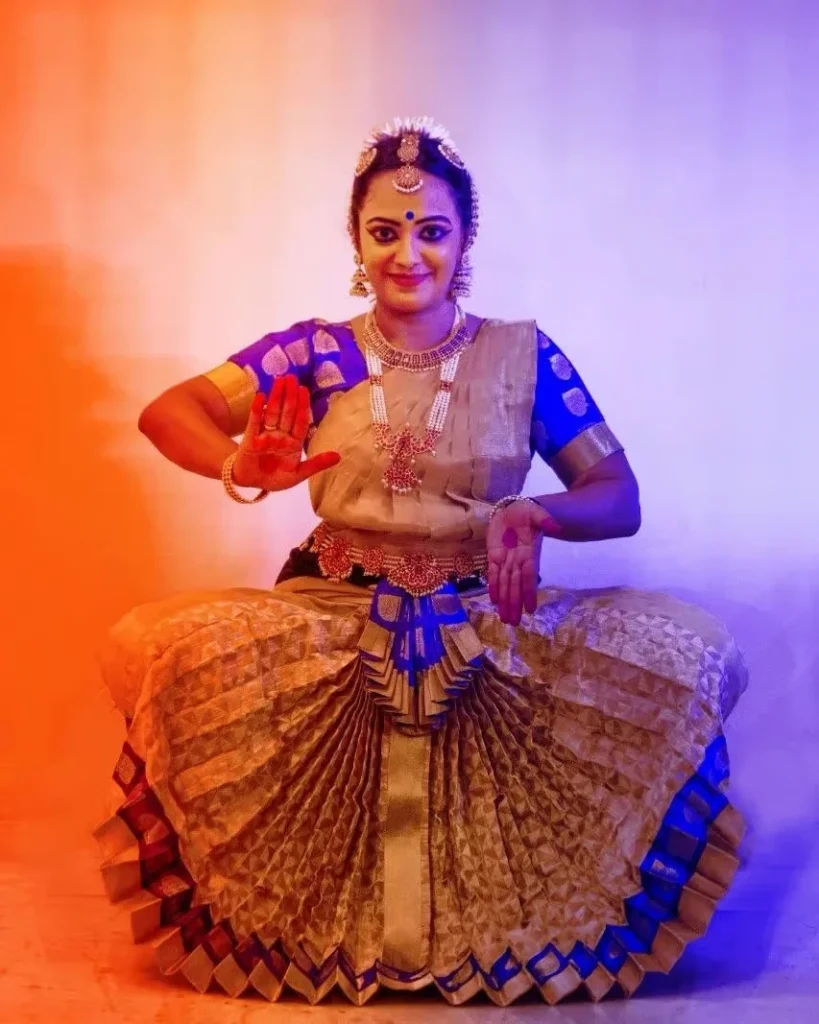
Anuja’s argument is that this force exists in every person — not as a gendered characteristic but as a human one — and that it is disproportionately suppressed in women because of the social conditioning that frames feminine energy as secondary, decorative, or dangerous. The empowerment journey she describes in her books and on stage is the journey of recognising that suppression, understanding where it came from, and deliberately choosing to release the Shakti within.
The corporate relevance of this argument is grounded in something Anuja returns to consistently in her sessions: that organisations which systematically suppress or undervalue this quality — in women specifically but also in anyone who operates outside the dominant masculine leadership template — are suppressing the very force that makes genuine innovation, transformation, and resilience possible. The business case for Shakti, as Anuja frames it, is not a social justice argument. It is an organisational effectiveness argument.
The Journey as the Framework: Why Anuja Teaches Process, Not Prescription
What distinguishes Anuja’s empowerment framework from most corporate DEI content is that it does not present a checklist. It presents a journey. And the journey is her own: from childhood self-doubt about the value of the feminine, through mythology and literature, to the specific realisation that the limitation was not in her but in the story she had absorbed about what it meant to be female.
In her corporate sessions, Anuja does not tell the audience what to do differently. She invites them to locate themselves in the journey she is describing — which stage feels familiar, which realisation feels imminent, which myth or story resonates with where they are. This is consistent with her belief, expressed across her writing, that genuine empowerment cannot be given. It can only be found, through a process that is necessarily personal and that no framework can shortcut.

The paradox at the heart of her teaching is this: Anuja argues that the goal of the journey she describes is not a destination of perfect wholeness — an endpoint where the masculine and feminine are permanently integrated and the work is done. It is the journey itself that produces the transformation. The Shiva-Shakti union in mythology is not a permanent state; the myth describes the two forces being pulled apart by practical necessity and finding their way back to each other, over and over. That cycle of integration, separation, and return is, Anuja argues, the actual structure of a meaningful life.
Why this framework works in a corporate room
Most speakers who address women’s empowerment in corporate settings work from one of two positions: the data-and-case-studies approach (here are the statistics, here is the pipeline problem, here is what organisations should do), or the personal-resilience approach (here is my story of overcoming adversity, here are the habits that helped me). Both are valuable. Neither is what Anuja does.
Anuja works from mythology — from a knowledge system that predates modern management theory by several thousand years and that addresses the same fundamental questions about power, identity, and human potential that corporate leadership frameworks address, but from a completely different angle. The effect on a corporate audience is distinctive: listeners who are entirely accustomed to data-driven empowerment presentations find themselves in a different kind of conversation. The guard comes down in a different way. The permission to examine one’s own assumptions about power feels different when it comes through a story about Shiva and Shakti than when it comes through a gender pay gap slide.
At engage4more, Anuja’s sessions consistently produce what we test every speaker against — the Monday Morning Rule: does the audience walk away with something they can actually use the next day? For Anuja, the ‘something’ is usually a shift in the question a woman is asking herself about her own capabilities: from ‘why am I not performing the way the organisation wants me to?’ toward ‘what in me has been unnecessarily suppressed, and what would it look like to release it?’ That is a different and more productive question — and it is one that her sessions reliably generate. Browse her speaking videos and session formats on her speaker profile page.
Considering Anuja Chandramouli for your next IWD event, leadership offsite, or annual day? Browse her full profile, speaking videos, and availability on her speaker page. Contact engage4more for a transparent fee quote within 3 hours. Since 2010, 5,000+ events across India. Every recommendation goes through the STRIVE framework before it reaches you.
Frequently asked questions about Anuja Chandramouli
Who is Anuja Chandramouli?
Anuja Chandramouli is a bestselling Indian author who has written 12 books in mythology, historical fiction, and fantasy. Her debut Arjuna: Saga of a Pandava Warrior-Prince was named one of Amazon India’s top 5 sellers in Indian writing for 2012. She won the AutHer Award for popular choice in 2021 and is a TEDx speaker, columnist for The New Indian Express, and trained Bharatanatyam dancer. She speaks at corporate events on mythology, women’s empowerment, creativity, and leadership. She is available to book through engage4more.
What is Anuja Chandramouli’s Shakti empowerment framework?
Anuja Chandramouli’s empowerment framework draws on the myth of Ardhanarishwara — the mythological union of Shiva (masculine principle, purusha) and Shakti (feminine principle, prakriti) — to argue that genuine power comes not from suppressing either force but from integrating both. She applies this to corporate audiences by arguing that the professional world systematically undervalues Shakti — the creative, transformative, and relational intelligence that is disproportionately suppressed in women — and that releasing it produces not just personal fulfilment but measurable organisational effectiveness.
What kinds of corporate events is Anuja Chandramouli best suited for?
Anuja works best at International Women’s Day events, leadership programs for women, mythology and literature festivals, and annual days where the brief is empowerment and purpose rather than skill-building or technical development. She is particularly effective with audiences who have intellectual curiosity and an appetite for ideas that go beyond conventional motivation. Her sessions are always tailored to the specific audience and event brief.