

How AI in Live Music Is Transforming Concerts, Elevating Fan Experience, and Redefining Performances
If you have watched a live concert this year, chances are you didn’t just watch a performance, you witnessed the beginning of a cultural shift. It became undeniable the moment Sonu Nigam stepped on stage and performed a jugalbandi with the AI-generated voice of Mohammed Rafi. The auditorium wasn’t just cheering for a legendary singer-meets-legendary-icon moment. They were cheering the arrival of a new era; one where AI in live music is no longer a gimmick but the next big revolution in entertainment.
And honestly, that does make sense. Fans today want more than just music from them.
They want magic, immersion, connection, and surprise. And AI, quietly but with great force, is the new engine driving that change.
From A.R. Rahman painting the stage with AI-generated visuals, to Taylor Swift using AI to protect and understand her fans, to Katy Perry, Major Lazer, DJ Snake, Anirudh, and Harris Jayaraj reshaping electronic and cinematic soundscapes… the wave is no longer coming.
It’s here.
This is a deep dive into how AI in live music changes concerts, artists, and audience experiences forever.
Why Everyone’s Talking About AI in Live Music Right Now
Because the Sonu Nigam–Rafi experiment did what no hologram tribute or remix has ever done; it felt alive.
AI didn’t replace an artist.
AI expanded one.
It raised a question now ringing in the ears of every musician, producer, and concert promoter:
If AI can resurrect voices, remix sound in real time, and produce visuals that breathe with the music, what else could it do?
Turns out. a lot.
But let’s check out how artists all around the world are making concerts an experience with technology.
Artists Leading the Global Wave of AI in Live Music
1. Sonu Nigam: AI Jugalbandi With Mohammed Rafi: A Moment That Defined 2025
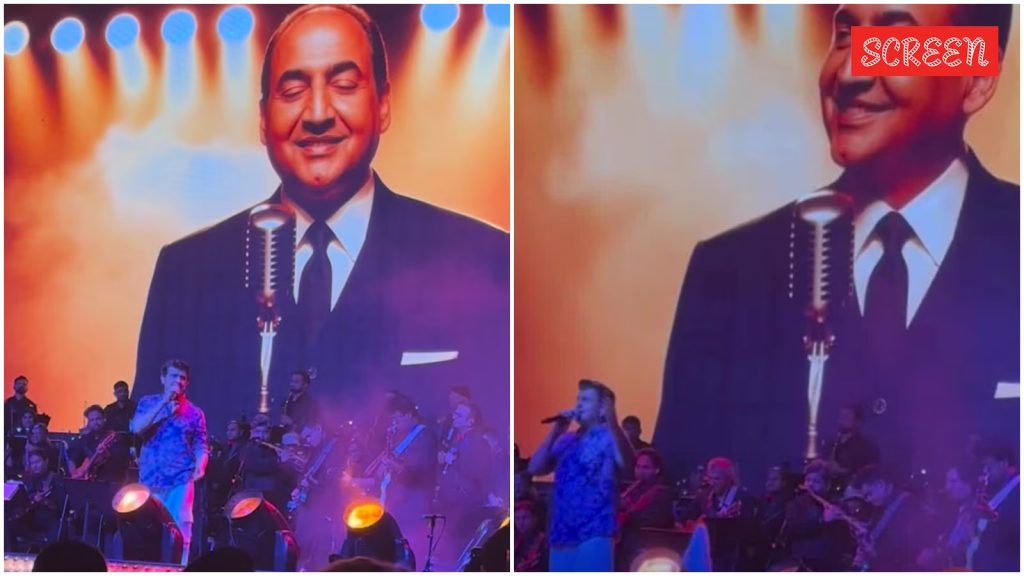
Sonu Nigam is not one who has ever shied away from risks, but this time, he didn’t just experiment; he started a movement. (Image courtesy: indianexpress)
When that time came, sharing the stage with an AI-generated reproduction of Mohammed Rafi’s voice, he did so not as a replacement but as a tribute engineered with precision-capturing nuances, vibratos, emotional timbre-not to imitate but to reimagine.
It was as if the audience itself was transported back in time.
To the industry, this was the future.
Success, which was heralded by this performance, opened the way to:
AI-based legacy revivals:
- Collaborative “impossible duets”.
- Multi-era musical storytelling
- Custom concert arrangements
This isn’t nostalgia.
It’s a new creative canvas.
2. A.R. Rahman: Turning Stages into AI-Driven Cinematic Universe
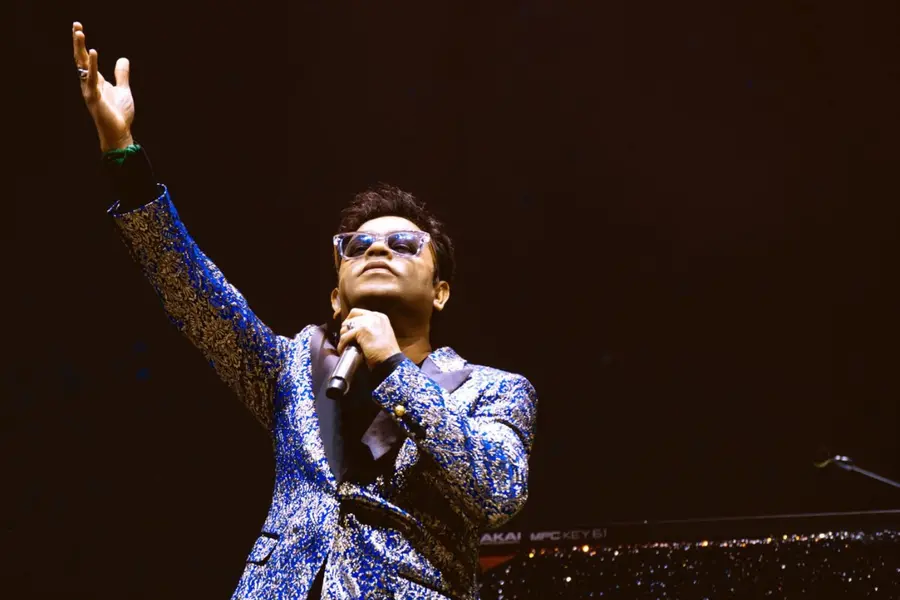
No discussion of AI in live music could be complete without A.R. Rahman, a composer who does seem to run a decade ahead of his time. (Image courtesy: mathrubhumi)
Well before most artists understood its creative potential, Rahman had been experimenting with AI.
His breakthrough moments include:
- Intel AI concert project 2017: The visuals would respond to the performance by Rahman as it was happening.
- Collaboration with IBM Watson: the making of “Kaiva,” an AI tool to assist musicians in exploring new compositions.
- AI-Powered Immersive Lighting: Where stage visuals adapt to mood, tempo, and instrument choices.
He doesn’t use the abbreviation AI.
He uses it as an orchestra.
His concerts feel much less like musical events and more like interactive digital galaxies, each responding uniquely to every note that he plays.
3. Taylor Swift: AI in Music as a Layer of Safety, Storytelling, and Fan Intimacy
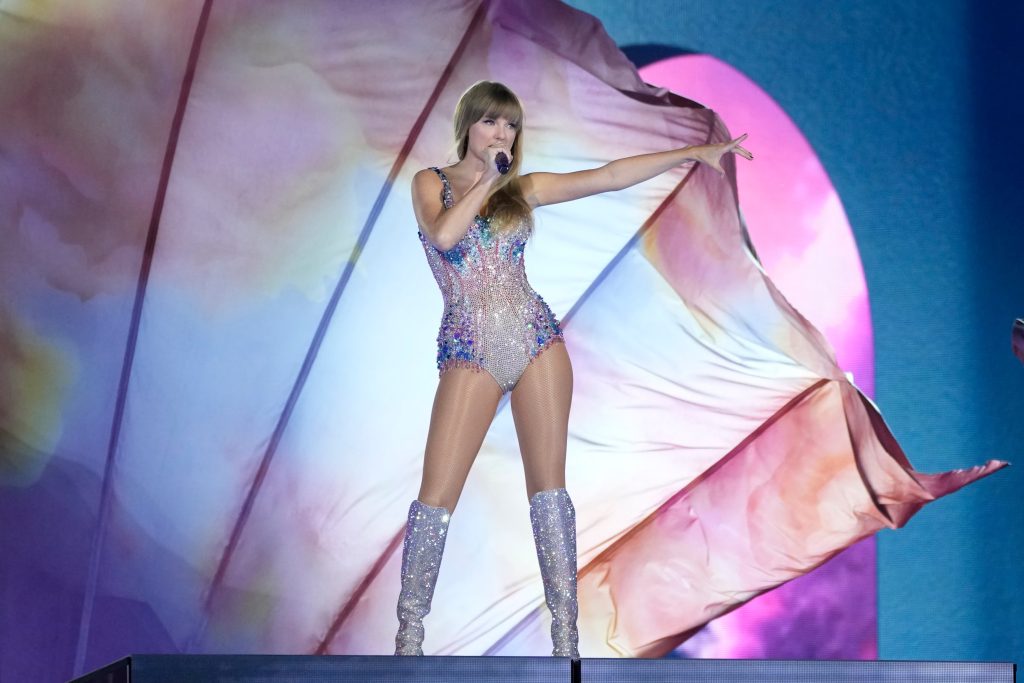
But Taylor Swift isn’t necessarily using it to AI remix vocals on stage; she’s doing it to deepen two things that matter most to her: connection and security. (Image courtesy: independent)
During the Reputation Stadium Tour, Swift deployed:
- AI-powered face recognition technology
- Identifying known stalkers
- Monitoring crowd safety
- Identifying fan behavior patterns
But beyond security, Swift uses AI tools to:
- Study fan preferences
- Optimize setlists
- Personalize digital interactions
- Analyze fan engagement across platforms
Fundamentally, her concerts are data-driven emotional experiences that ensure the fans feel seen, heard, and understood, even in the stadium of 80,000 people.
4. Katy Perry: Immersive AI Visuals That Turn Shows into Spectacle
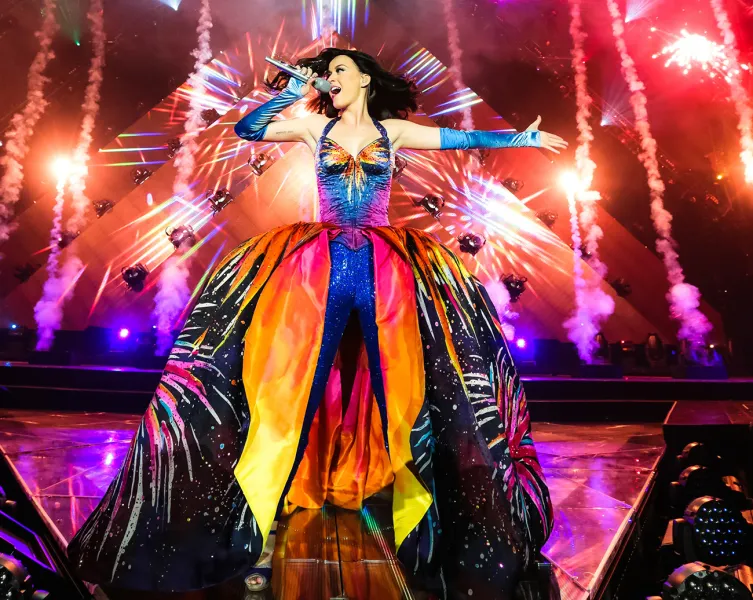
Not only does Katy Perry sing, but also does a lot more. (Image courtesy: wwd)
She designs stages.
On Witness: The Tour, she added:
- AI-powered lighting
- Motion-activated stage projections
- AI-synced visuals that change with her pacing and mood.
The stage becomes an intelligent organism, breathing with her, following her and amplifying her presence.
She also pushed the envelope with:
- AI-powered interactive music videos
- Her visuals, powered by 360° AI for Chained to the Rhythm, allowed fans to explore and interact with the music world she constructed.
For Perry, AI is not an assistant.
It’s a visual director.
5. Major Lazer × Justin Bieber: Where AI Meets Electronic Experimentation
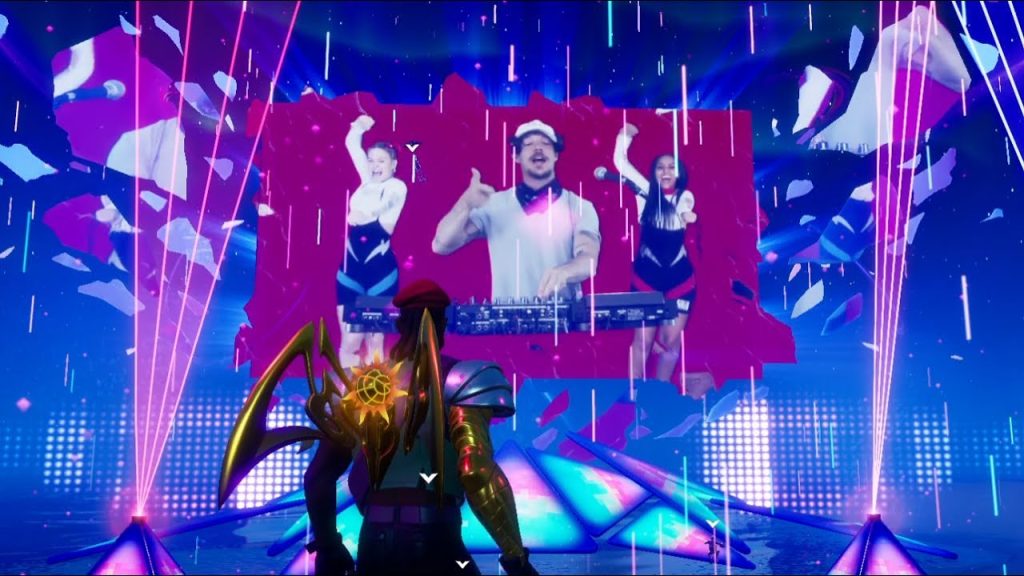
From the very beginning, whenever electronic giants such as Major Lazer join their powers with those of pop superstars, in this case, Justin Bieber, it is all about innovation. But Cold Water was particularly ground-breaking since it: (Image courtesy: ytimg)
- AI algorithms mapped emotional arcs
- The system suggested unusual beat patterns.
- AI hinted at melody structures that defied typical EDM grammar.
It didn’t just create a hit song.
It created a template for AI-driven sonic exploration.
6. DJ Snake: Using AI to Break Genre Barriers
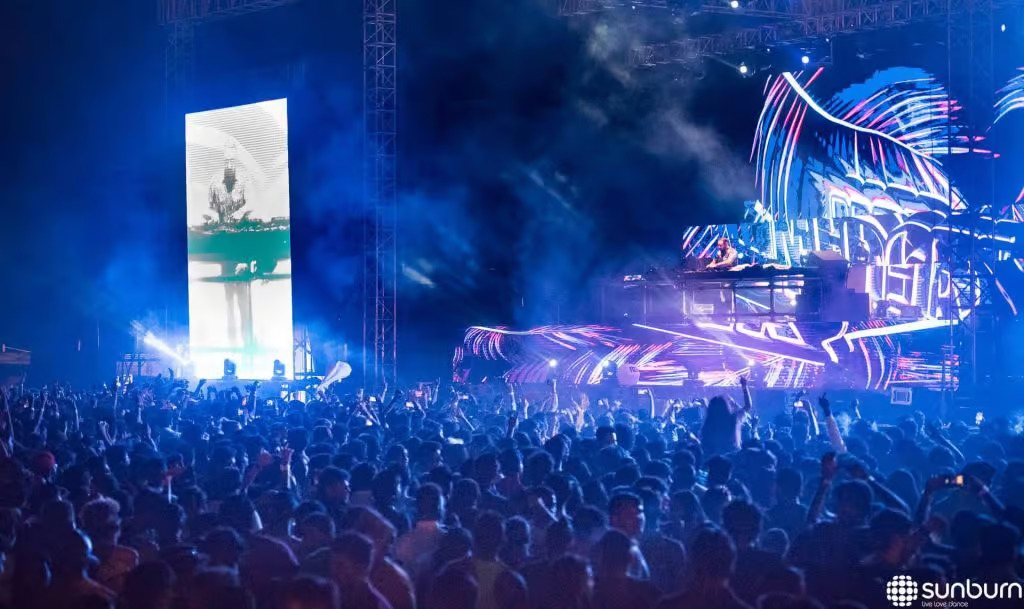
DJ Snake lives for the unexpected. And AI is his new secret weapon.
He uses AI tools for the following:
- Study global sonic patterns
- Generate new beat combinations
- Explore hybrid soundscapes
- Accelerate experimentation cycles
Operating in the EDM ecosystem, where speed, uniqueness, and energy underpin impact, AI puts DJ Snake ten steps ahead.
7. Anirudh Ravichander: India’s Youngest AI Trailblazer
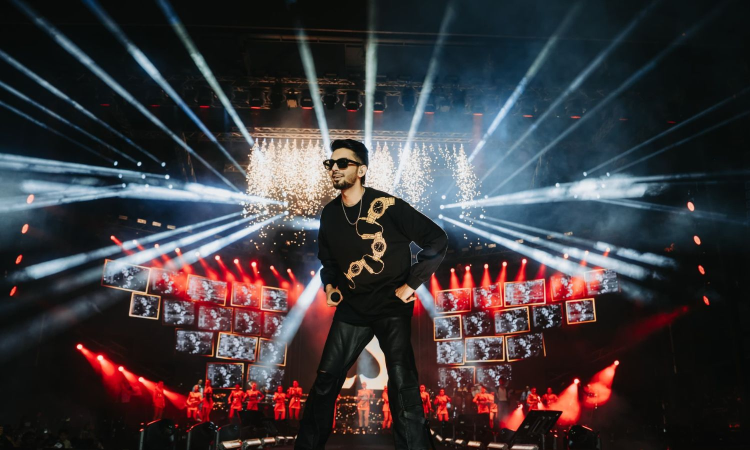
Anirudh is the complete embodiment of a Generation Z musician-instinctive, experimental, and unafraid. (Image courtesy: amazonaws)
His collaborations with Google’s AI music models reveal a future in which:
- AI tools become creative companions.
- Lighting rigs become reactive storytellers.
- Stage visuals co-create the performance
Anirudh’s concerts now feature synchronized AI elements that change with:
- Bass drops
- Vocal transitions
- Emotional peaks
He doesn’t treat AI as a novelty but as a source of energy.
8. Harris Jayaraj : Artisan of AI-Enabled Cinematic Concerts
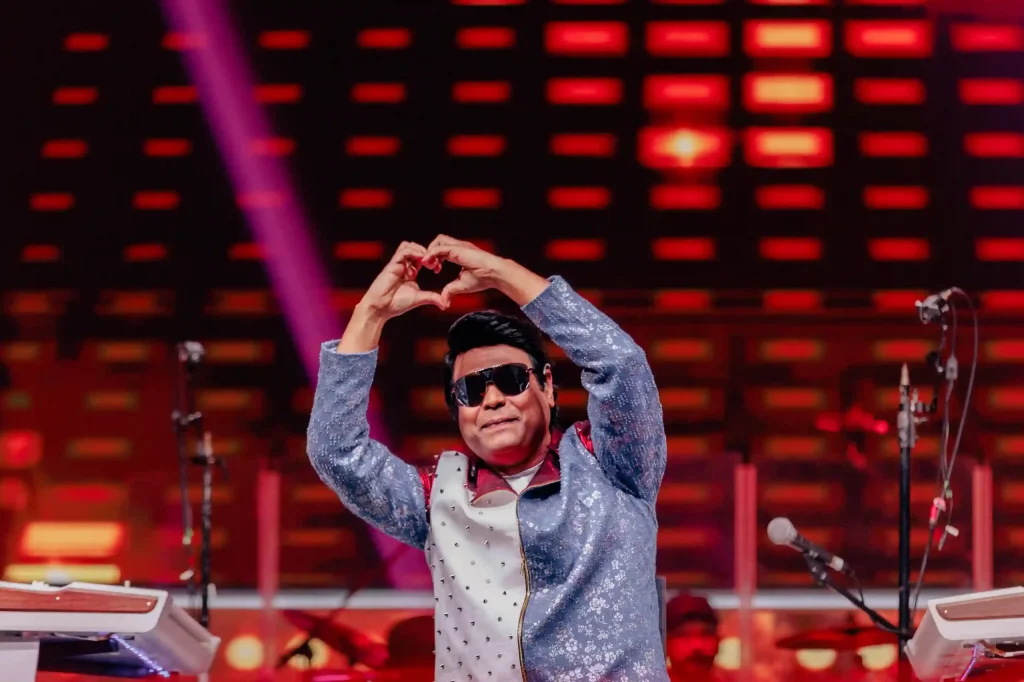
Harris Jayaraj wasn’t content with static lighting or predictable arrangements. (Image courtesy: moviewingz)
His concerts now include:
- AI-generated sound textures
- Lighting which maps on to rhythms
- Visuals that depict musical motifs
- Experimenting with AI-generated instrumentation
Harris uses AI in ways to enhance emotion, not overwhelm it.
How AI in Live Music Is Transforming Fan Engagement
1. Real-time personalization
AI research: (Image courtesy: liveinnovation)
- Crowd reactions
- Energy spikes
- Applause patterns
- Social sentiment
This allows artists to switch up setlists or change pacing live, creating a show unique to each audience.
2. Impossible Collaborations Come True
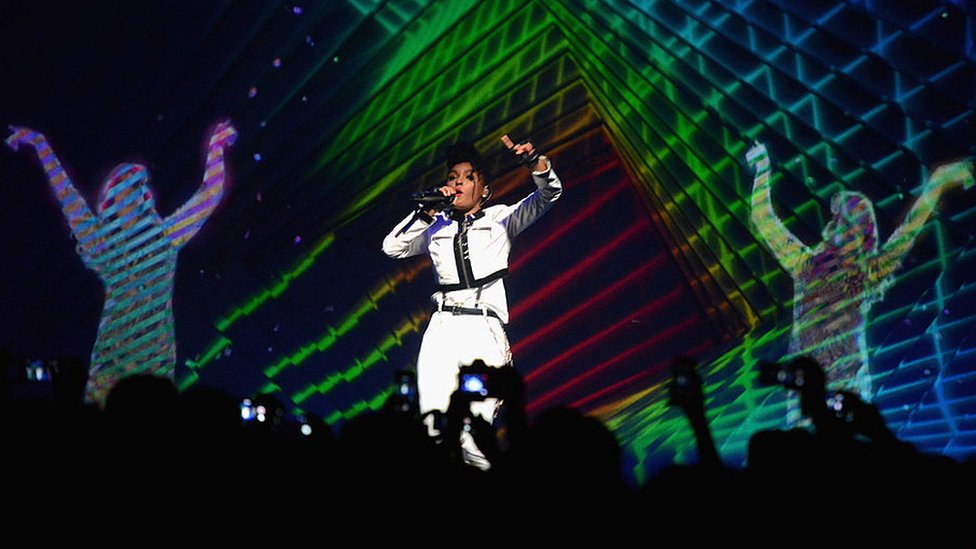
- Rafi × Sonu. (Image courtesy: bbci)
- Michael Jackson × Future AI Vocalists.
- Lata Mangeshkar × Contemporary Artists.
AI unlocks duets that history didn’t allow.
3. Concerts look different every night
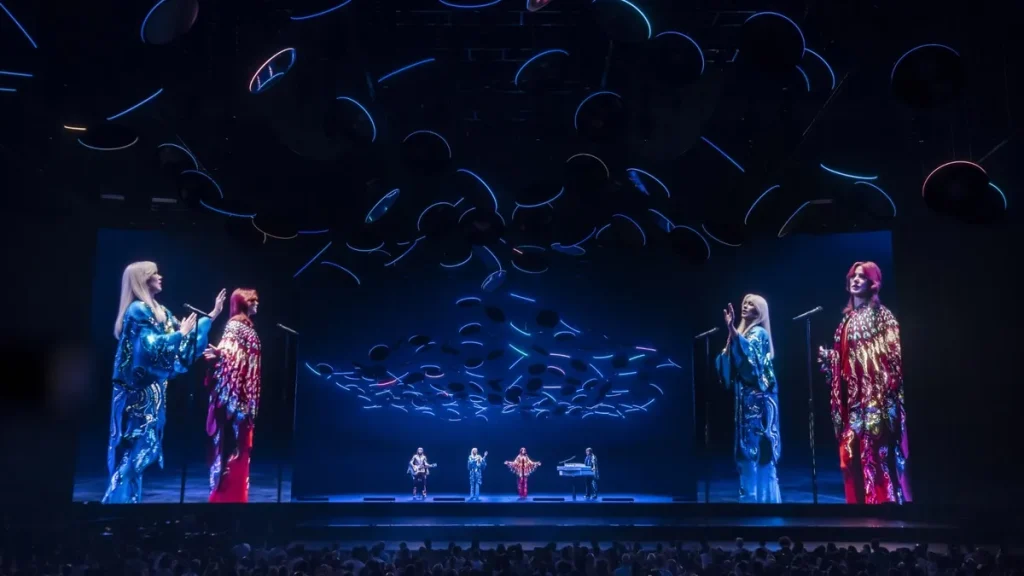
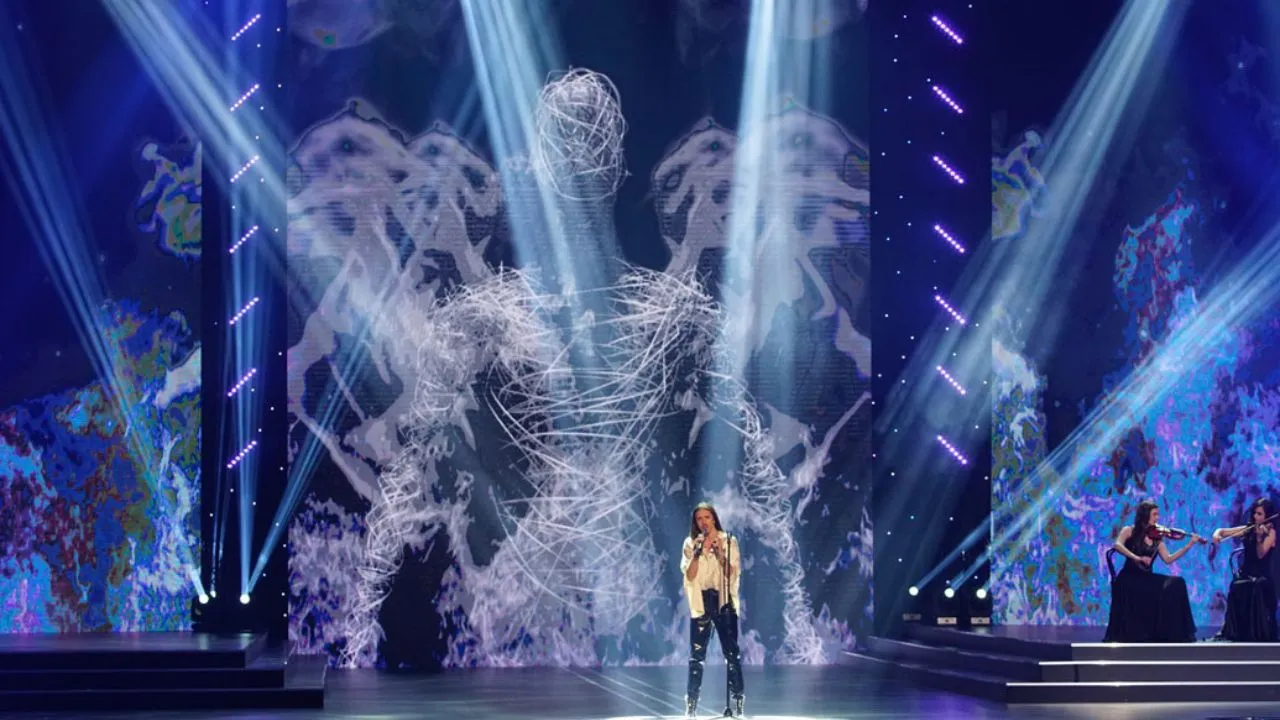
AI-driven visuals, lighting, and soundscapes ensure no two shows are ever quite the same. (Image courtesy: consequence)
The system evolves every night.
4. Hyper-immersive stages
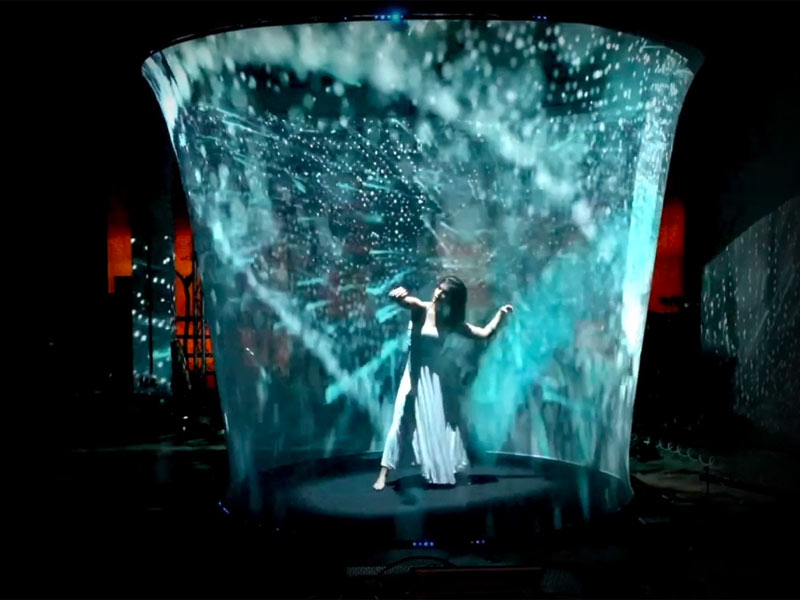
Stages, with AI, become: (Image courtesy: talents-productions)
- Interactive
- Sensor-driven
- Motion-sensitive
- Emotion-aware
Movement from a singer can immediately set off cascades in lighting or visual ripples.
5. Safer, Smarter Fan Spaces
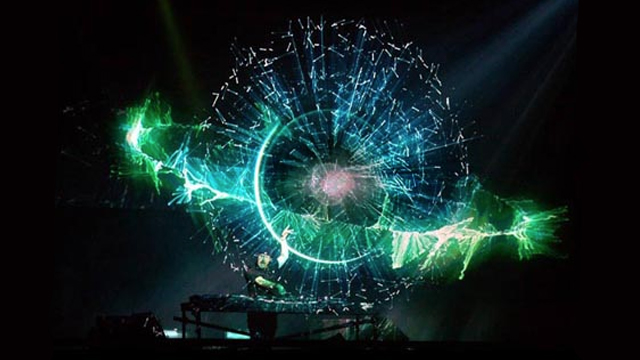
AI helps by: (Image courtesy: holotronica)
- Threat detection
- Crowd heat mapping
- Entry flow management
- Predicting safety risks
- The concert becomes a safer emotional space.
New AI Technologies Rewrite the Concert Experience
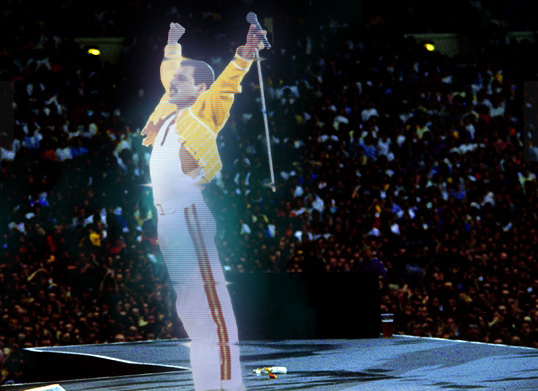
- AI-powered stage lighting (Image courtesy: azernews)
- AI-driven sound design
- Real-time adaptive visuals
- Facial recognition and crowd safety tech
- Generative AI vocals
- Motion-sensing digital backdrops
- Interactive AR/VR layers
- AI-enhanced acoustic optimization
- Predictive setlist personalization
These are not future plans. They are in use right now.
Is AI in Live Music the Future?
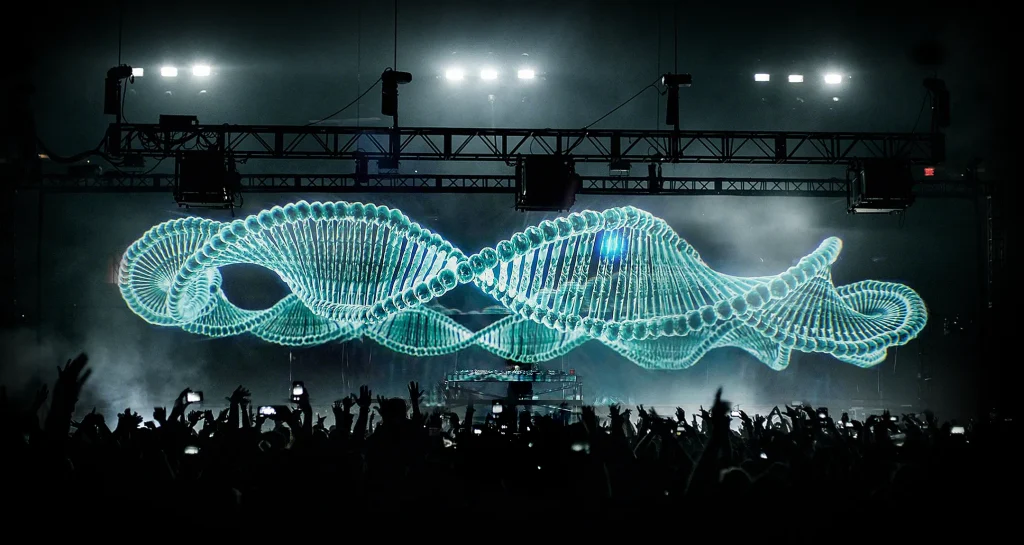
Here’s the Truth Short answer? (Image courtesy: theverge)
Yes-but not in the way many people fear.
AI is not here to replace musicians. It is here to expand creativity.
Decades were spent with technology shaping music:
- Synthesizers Auto-tune
- Electronic mixing
- Digital sound engineering
AI is just the latest tool.
What artists do with it is where the real magic lies.
Conclusion: The Future of Live Music Isn’t AI vs. Artists: It’s AI × Artists
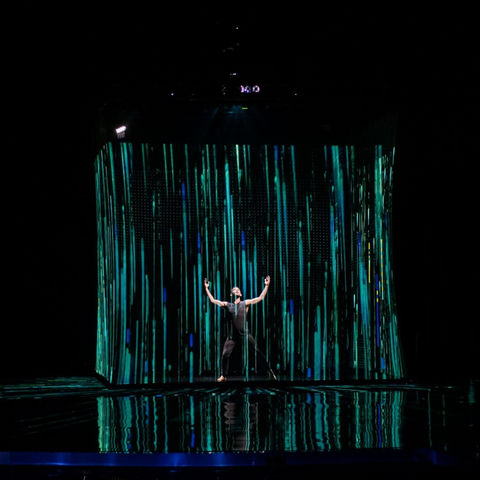
The jugalbandi of Sonu Nigam and AI-generated Mohammed Rafi wasn’t a stunt. (Image courtesy: globalsources)
It was a signal-a moment that told the world:
- AI in live music is here, and it’s transformational.
- It can resurrect voices.
- It can co-create visualizations.
- It can understand audiences.
- It can build worlds on stage.
And when well-known artists like A.R. Rahman, Taylor Swift, Katy Perry, Anirudh, DJ Snake, Harris Jayaraj, and Major Lazer embrace it, the future becomes not just technologically advanced but emotionally richer.
Concerts are not just performances anymore. They are experiences, worlds, memories, journeys. And AI? It’s becoming the invisible artist shaping them.
To bring such transformational voice to your stage, book through engage4more—India’s top platform for keynote speakers, singers/band and talent. With over 2,500 artists such as Prateek Kuhad, Javed Ali, Anuv Jain and many more, pacy bookings, and free event publicity, engage4more makes inspiration accessible, unforgettable, and meaningful. Also, enjoy our value adds like complimentary quizzing for your events along with free publicity by our post-event coverage via our social media handles!