



A strategic playbook for mastering motivational speaker selection aligned to culture, context, and business outcomes
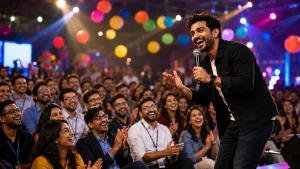
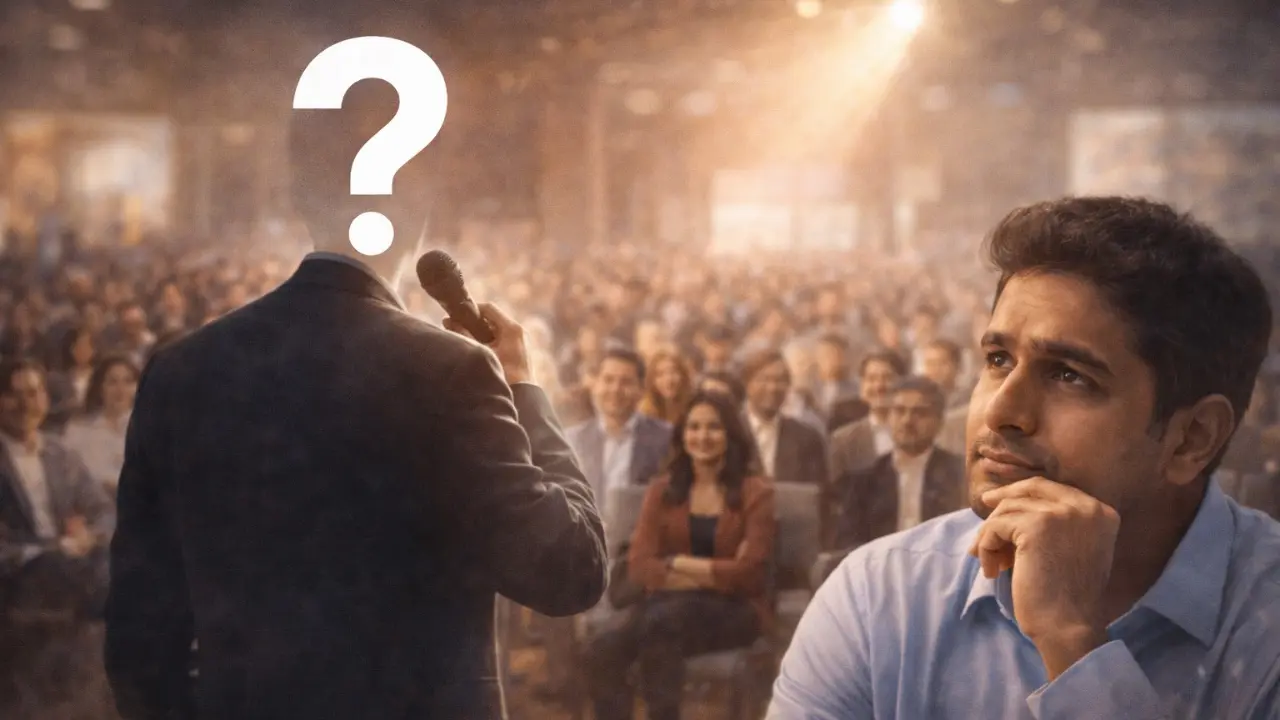
In 2026, the corporate world has moved past the era of “celebrity for celebrity’s sake.” Today, a successful event depends on a nuanced psychological match—what I call the “Vibe Test.”. Booking a motivational speaker isn’t just about finding someone with a gold medal or a viral reel; it’s about finding the protagonist who fits your organization’s current “Character Arc”.
After 5,000+ bookings, I’ve realized that a speaker is an asset only if their “Vibe” syncs with the audience’s frequency. If there is a mismatch, even a legend like Kapil Dev can feel like “noise” to a room full of introverted software architects.
Here is the engage4more blueprint for passing the Vibe Test and ensuring your next keynote is a cultural upgrade, not just a 60-minute distraction.
1. The Demographic ‘Vibe’ Match: Influencers vs. Icons
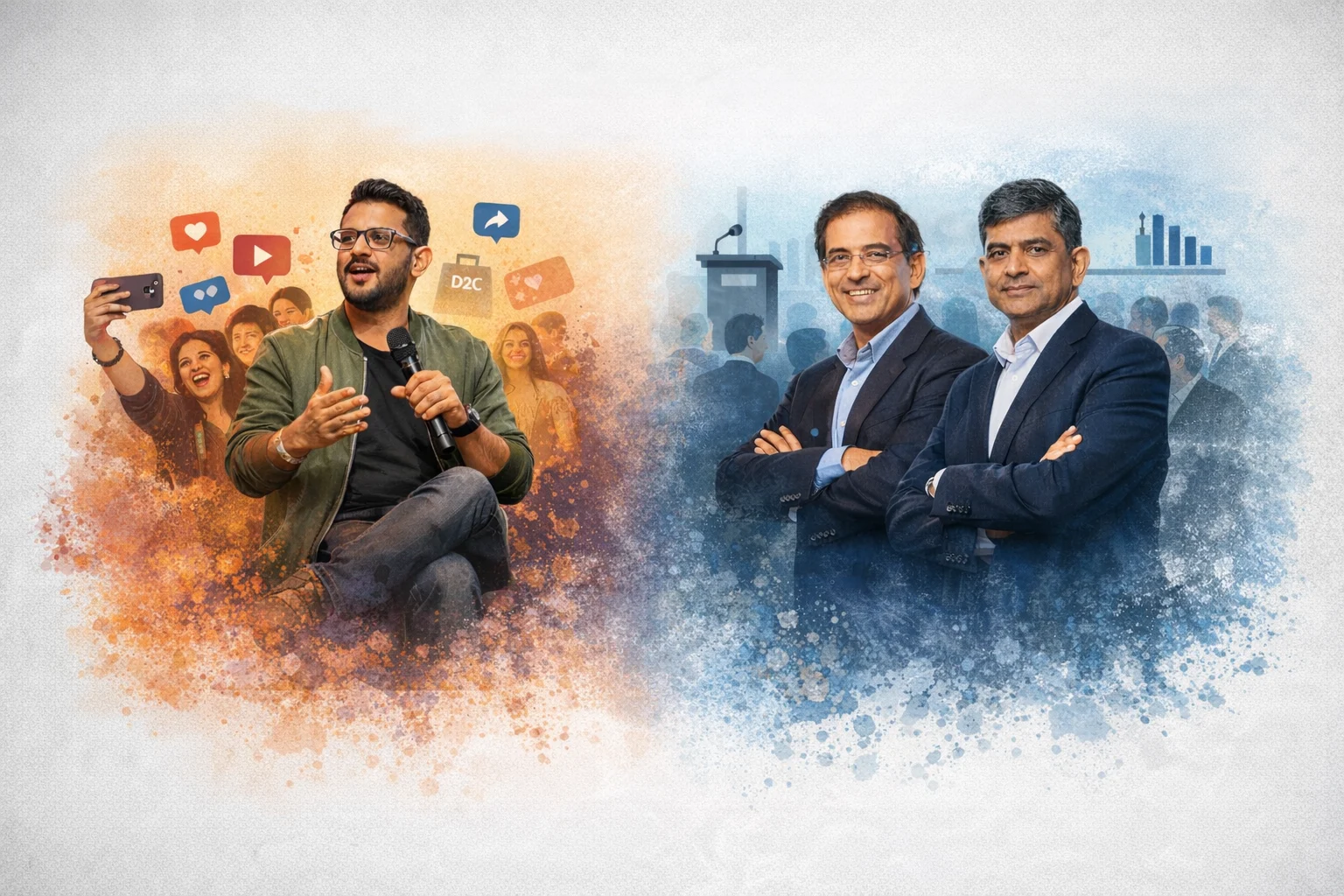

One of the biggest mistakes in event planning is ignoring the “Generational Gap.”
- The Gen-Z & Millennial Vibe: If your audience is young and thrives on the “Hustle Culture,” they don’t want a lecture; they want a conversation. Influencers like Aman Gupta resonate because they speak the language of D2C, branding, and modern failure.
- The Warning: Be cautious of the “Short-Term Influencer.” While they bring high attention, their content often lacks the “Information Gain” needed for long-term behavioral change.
- The Choice: For a younger crowd, look for a “Practitioner-Influencer” who has skin in the game. For seasoned leadership, go for the gravitas of Shiv Shivakumar or Harsha Bhogle.
2. The ‘Pure Play’ Emotion: War Zones & Resilience
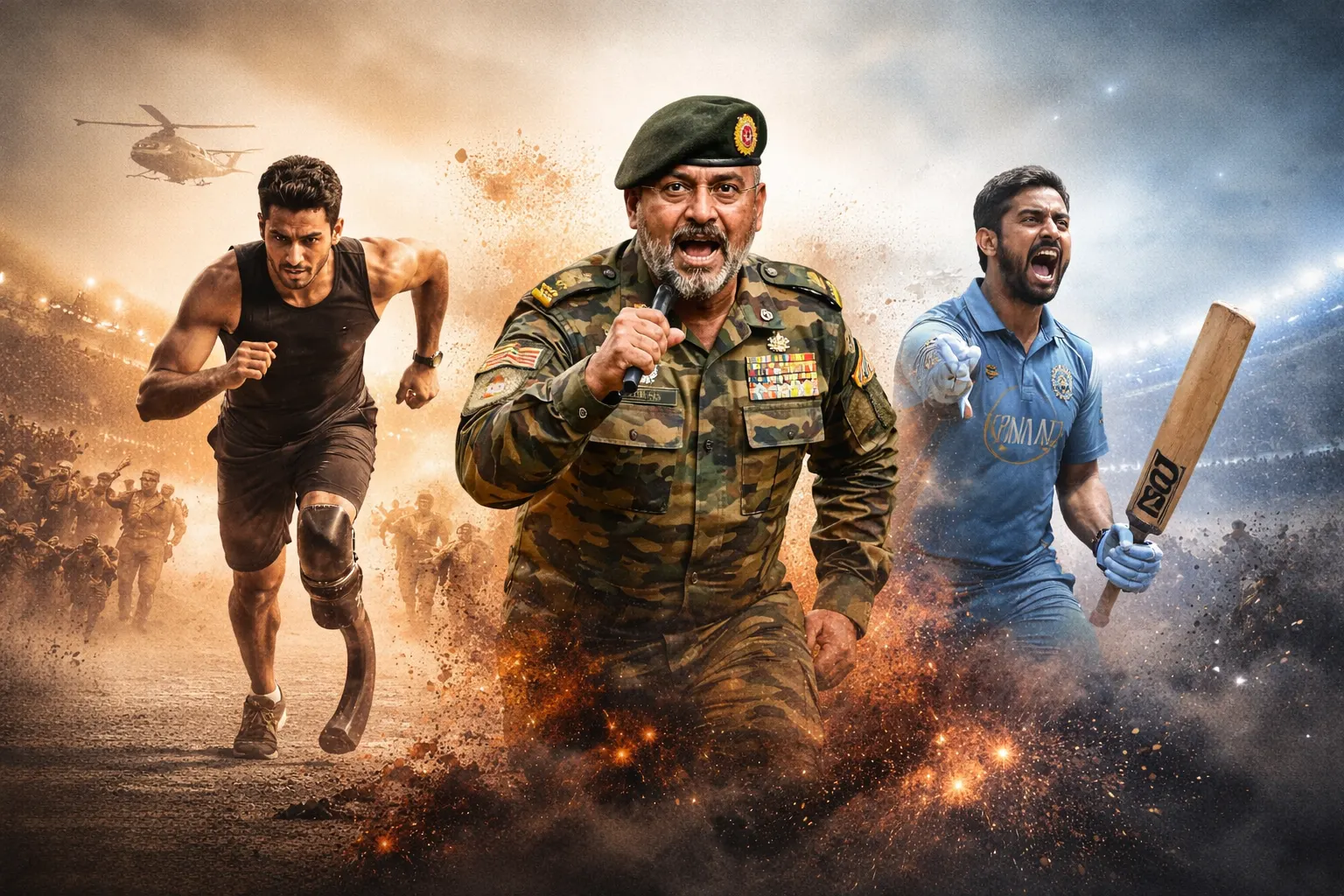
Sometimes, a company isn’t just looking for inspiration; they are looking for a War Cry.
- The Vibe: High-stress transformations, post-merger integration, or a “do-or-die” sales quarter.
- The Strategy: When you need your team to go “all out,” look toward resilience and leadership speakers.
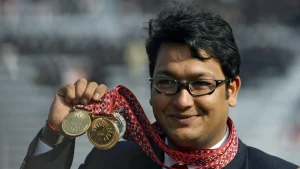
- The Choice: This is the domain of the Lt. Gen. KJS Dhillon effect. War veterans, Paralympians, or folks who have made the “impossible” happen bring a level of sincerity that can’t be faked. They provide a battle plan for the soul that moves the needle on pure play emotions.
3. The Specialist Vibe: Women’s Day & Lifeline Moments
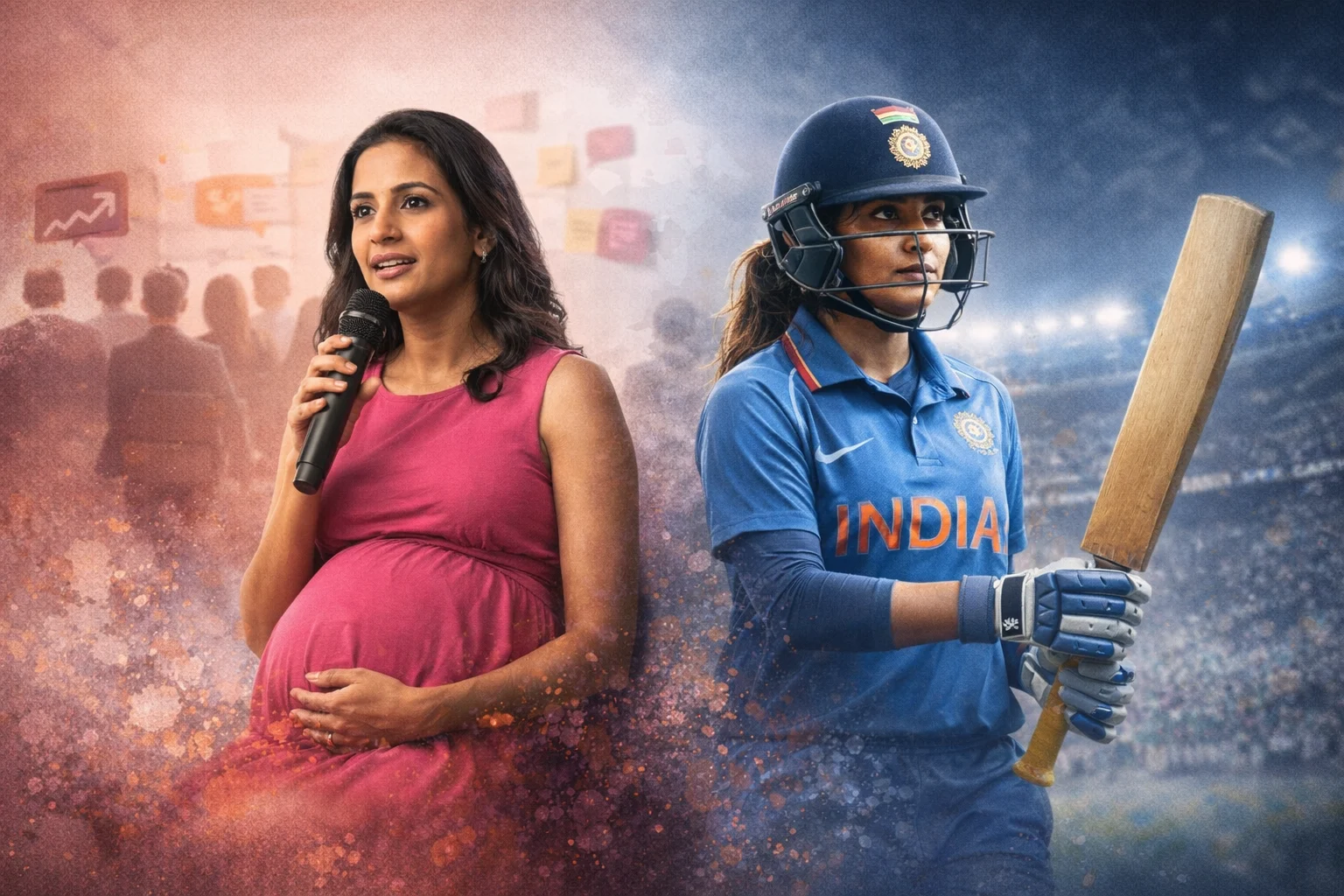
Special occasions like International Women’s Day often fall into the trap of “Generic Empowerment.”
- The Vibe: Authentic, relatable, and pioneering.
- The Strategy: For Women’s Day special speakers, search for “Lifeline Moments.” These are specific, vulnerable stories that demonstrate resilience.
- The Choice: Vineeta Singh talking about the “Gobar moment” of facing a pregnancy during a funding round is a thousand times more impactful than a generic speech on “Breaking the Glass Ceiling.” Similarly, Mithali Raj’s story of reclaiming her captaincy is a masterclass in quiet, unflappable strength.
4. The STRIVE Framework: Managing the ‘Intensity’
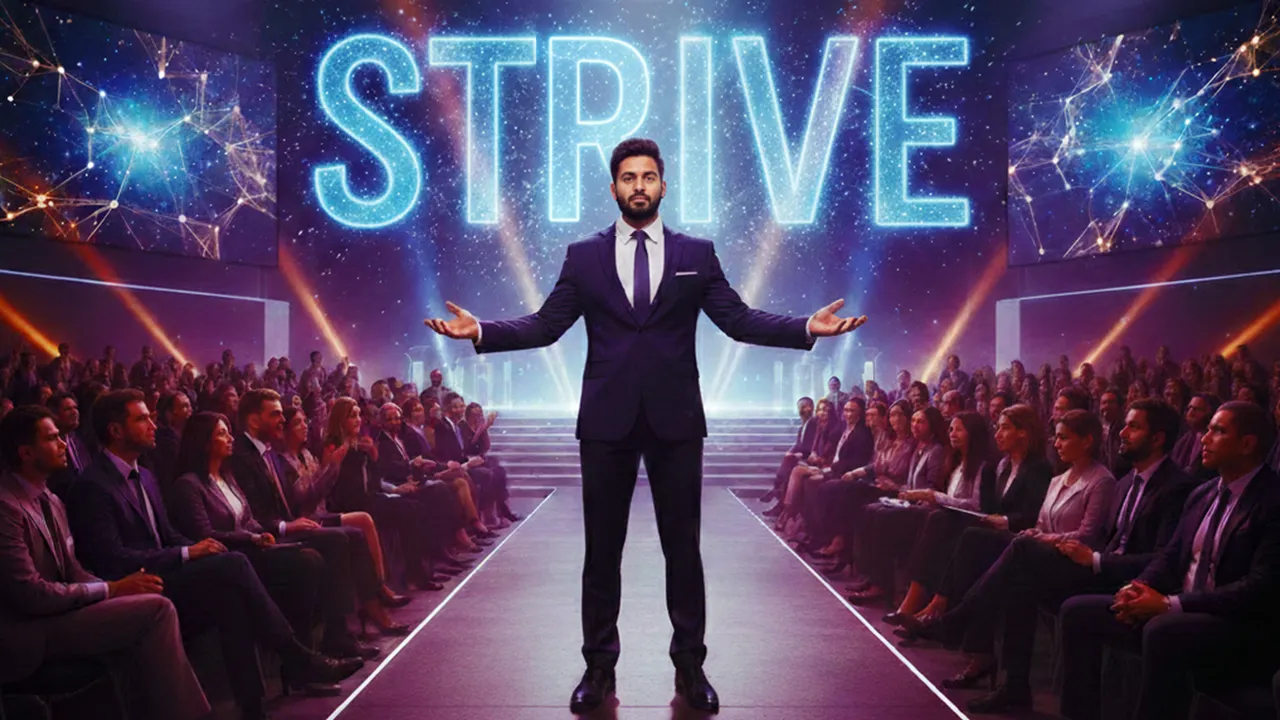

When we scout for speakers, we don’t just look at their bio; we look at how they STRIVE to impact the room. We’ve improvised this framework to ensure that every session—whether it’s a 20-minute spark or a 90-minute deep dive—hits these psychological triggers:
- S – Startle: Arresting the room with a contrarian truth. (e.g., Anand Neelakantan starting with “The Asura’s Guide to Success”).
- T – Twist: A cognitive surprise that flips the expected narrative. (e.g., Pullela Gopichand discussing the pain of his students leaving him).
- R – Resonance: Building an agreement bridge through shared pain. (e.g., Vineeta Singh on the founder’s struggle).
- I – Ignite: The emotional spark that moves from “What” to “What If.” (e.g., Yuvraj Singh on redemptive resilience).
- V – Validate: Providing the practitioner’s proof. (e.g., Aditya Ghosh on operational excellence).
- E – Execute: The “Monday Morning Rule.” (e.g., KJS Dhillon or Harsha Bhogle giving a specific playbook for action).
5. The Behavioural Upgrade: Moving Beyond the Stage
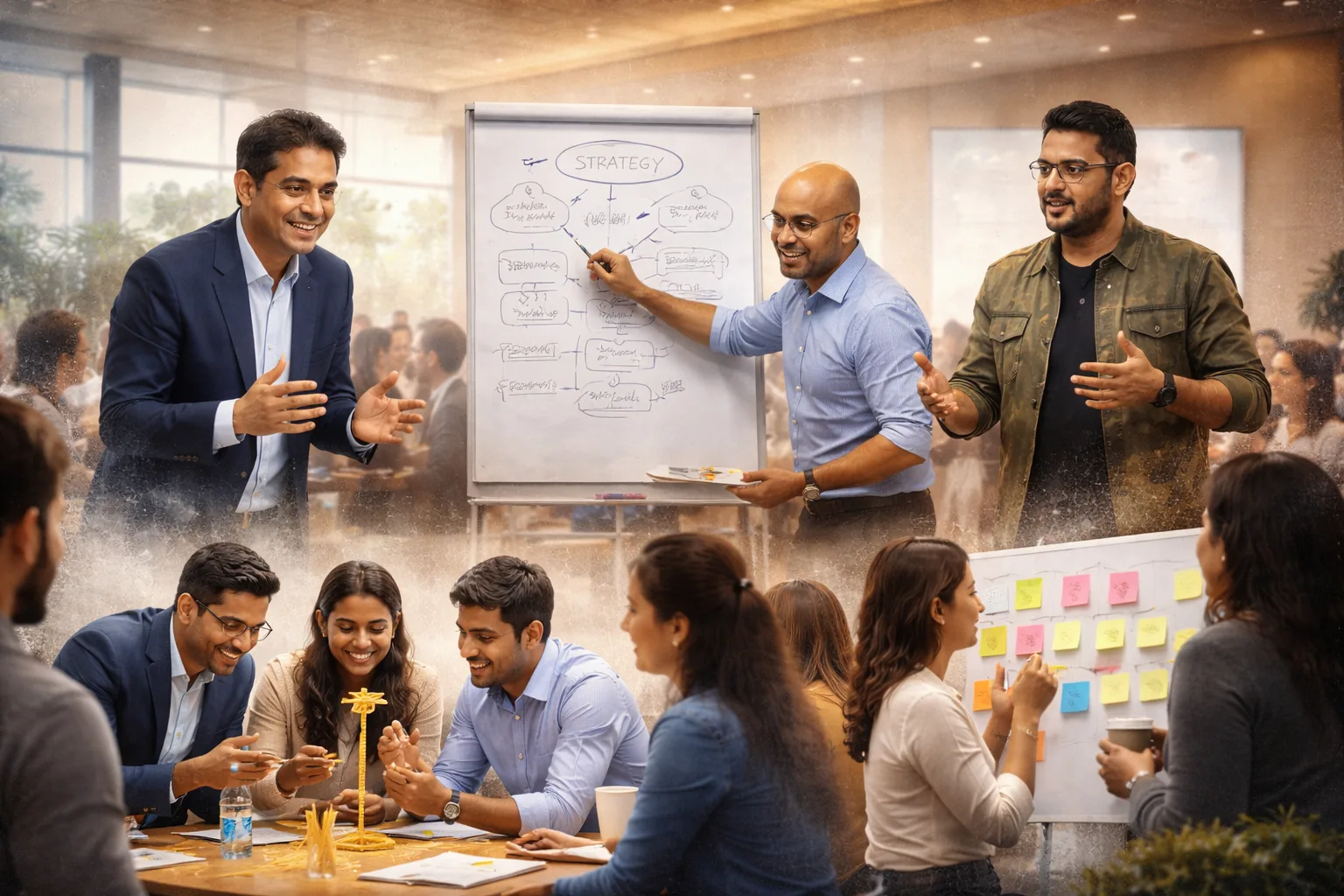
If you are looking for a permanent shift in culture, the “Vibe Test” must extend into a Masterclass format.
- The Strategy: If your goal is a behavioral upgrade, look for management and leadership speakers who can deliver a workshop-style session.
- Deepening the Impression: To make the session stick, always sandwich it. Do a Team Building Activity before the session to break the ice, or a structured debrief afterward to “arouse the intent to act.”
The engage4more Discovery Checklist: 3 Questions to Ask
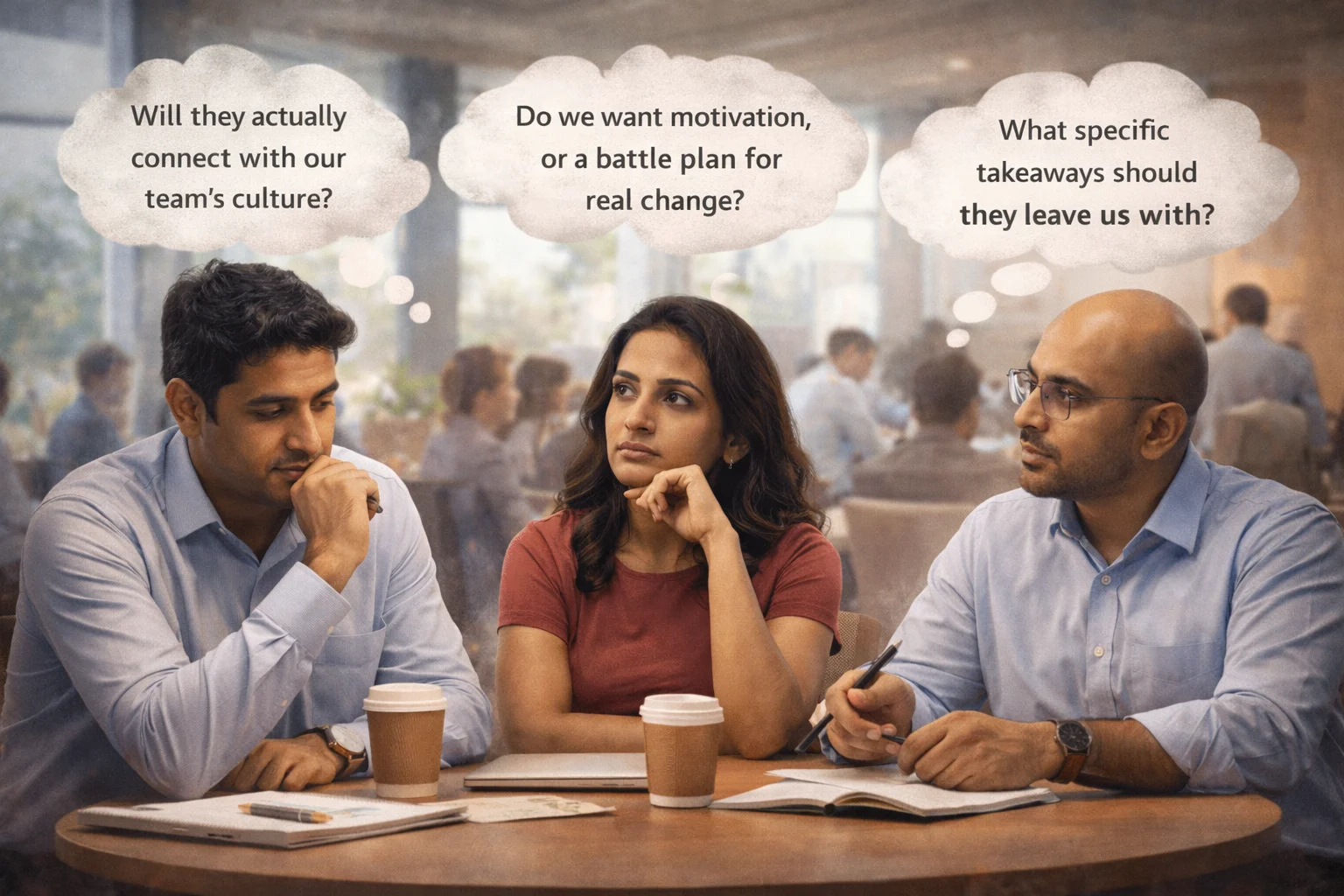
To ensure the “Vibe” is right, our scouts at engage4more always ask these three questions during the discovery phase:
- What is the ‘After-Taste’? Do you want your team to leave feeling like they can conquer the world (High Energy) or feeling like they need to introspect (Deep Thought)?
- Is the audience ‘Cynical’ or ‘Seekers’? Cynical audiences (IT, Finance) need practitioners with “Strategic Proof.” Seekers (Sales, HR) thrive on emotional ignition.
- What is the Monday Morning Rule? If the speaker cannot give your team one specific thing to do differently tomorrow, the “Vibe” was just a “Vapor.”
Conclusion
In today’s evolved corporate ecosystem, success lies not in who speaks, but in who fits. Effective motivational speaker selection is about cultural chemistry, emotional timing, and actionable relevance. When the right speaker aligns with the audience’s mindset and the organization’s moment, inspiration turns into execution.
At engage4more, motivational speaker selection is treated as a strategic decision, not a checklist item. Because when the selection is right, the impact lasts beyond applause, influences Monday-morning behavior, and quietly upgrades culture from within.
FAQs
1. What is motivational speaker selection in a corporate context?
Motivational speaker selection is the process of choosing a speaker whose mindset, experience, and delivery align with company culture.
2. Why has motivational speaker selection become more strategic in 2026?
With audience fatigue rising, motivational speaker selection now focuses on relevance, credibility, and psychological alignment, not celebrity value.
3. How can HR and leadership teams improve motivational speaker selection?
By evaluating audience maturity, emotional need, business phase, and post-event behavior expectations before finalizing a speaker.
4. What are common mistakes in motivational speaker selection?
Choosing speakers based solely on fame, viral popularity, or generic inspiration without cultural or contextual alignment.
5. How does engage4more approach motivational speaker selection differently?
engage4more uses a discovery-led approach, STRIVE framework, and behavioural intent mapping for effective motivational speaker selection.
Ready to find the perfect cultural fit for your next event? Discover our 2026 Scouted Roster of Motivational Speakers.
About the Author
Nishant Parashar is the founder of engage4more and host of The Good Gobar Show. Having worked with giants like Times of India and Standard Chartered Bank, he now specializes in “Virgin Stories”—connecting corporate leaders with practitioners who deliver raw, podcast-style truth on stage.